Electrification Shifts Energy Security From Fuel Imports to Durable Equipment
Solar, batteries and EVs still rely on global trade, but they can reduce the recurring fuel imports that leave energy buyers exposed.
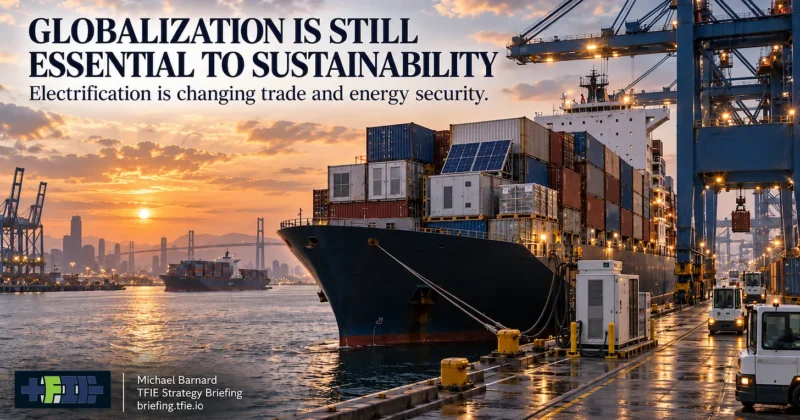

Electrification is changing the kind of dependence that matters in energy security. Oil, gas and coal must be bought and delivered repeatedly because combustion consumes each shipment. Solar panels, batteries, electric vehicles, transformers and power electronics are also traded across borders, but they can provide useful service for years after import. For countries that rely on fuel purchases, that difference can ease pressure on supply and foreign currency.
The shift doesn’t end international dependence. It changes what countries depend on: supply chains for equipment and components, alongside access to electricity and the systems that deliver it. The resilience question becomes how to avoid relying too heavily on a single supplier or route while building enough domestic capacity to weather disruptions.
Interconnection adds options
Europe’s response to the Russian gas shock included finding alternative fossil-fuel supplies. At the same time, countries have expanded cross-border electricity links rather than trying to operate as isolated systems. Connections to neighboring grids can provide access to additional electricity and flexibility alongside domestic generation, storage and demand management.
Ukraine shows why those links can matter during a severe disruption. After Russia’s 2022 invasion, Ukraine and Moldova synchronized with the Continental European power system. The connection did not remove the danger to Ukrainian energy infrastructure, but it gave the country access to support from a wider network when parts of its own system were damaged.
That’s a practical form of resilience: domestic resources paired with connections to other systems. Building more generation and storage at home can reduce exposure, while interconnection gives grid operators more options when local supply is disrupted.

Solar can cut recurring fuel costs
Pakistan illustrates how imported equipment can reduce the need for imported energy. The country rapidly expanded decentralized solar, and its central bank estimated capacity at roughly 50 GW by the end of 2025. The State Bank of Pakistan estimates that lower energy imports saved about $7.1 billion in foreign exchange over six years. It also projects that the installed solar base could reduce the 2026 energy import bill by another $5.2 billion to $7.8 billion.
Much of the hardware came from abroad, including large volumes from China. That creates exposure to international equipment supply, but the panels now generate electricity from sunlight in Pakistan. They don’t require a new fuel shipment each time they produce power. The central bank’s analysis indicates that accumulated fuel import savings have broadly offset the foreign-exchange cost of the imported panels.
The economics depend on more than equipment prices. Solar needs a grid that can use its output, and batteries or other forms of flexibility can help shift electricity to times when it’s needed. The source figures show the scale of Pakistan’s potential import savings, while the wider lesson is that equipment imports can replace a recurring commodity bill with assets that continue producing.
EVs change oil demand
Electric vehicles apply the same logic to transport. The International Energy Agency estimates that the global EV fleet displaced about 1.7 million barrels of oil per day in 2025, with China accounting for roughly one million barrels per day. An oil-importing country may import the vehicle and its battery, but the car doesn’t need petroleum for every kilometre it travels.
That shift is especially relevant where fuel purchases absorb scarce foreign currency. Ethiopia linked restrictions on new combustion-vehicle imports to reducing fuel dependence while encouraging electric mobility. Charging access and vehicle maintenance remain constraints. The energy source matters too: as more EV charging draws on domestic electricity, each vehicle can reduce the need for imported fuel over its operating life.
Imports can seed local markets
Africa’s clean-energy trade offers a view of how equipment imports might support broader industrial development. Sustainable Energy for All estimates that African countries imported more than $12 billion of solar modules, lithium-ion batteries and assembled EVs between 2022 and 2024. China supplied more than 90% of the solar modules, leaving a clear concentration risk.
At the same time, installed equipment creates demand for local installers, maintenance, financing and logistics. Solar and batteries can replace diesel generation at mines, farms, telecom sites and commercial facilities. Electric motorcycles and buses add demand for electricity. Together, these uses can improve the case for generation and storage, while larger markets may support local assembly, components and manufacturing where there’s enough scale.
That growth doesn’t require every country to make every part of every technology before deployment begins. Requiring complete domestic supply chains could sacrifice the production scale that helped make solar, batteries and EVs more affordable. A more durable approach combines diverse suppliers and routes with selected domestic capabilities, stronger grids and enough storage to handle interruptions.
Security through diversified trade
Fossil-fuel trade was international, but it tied buyers to repeated purchases of resources concentrated in particular places. Electrified systems still rely on global trade in equipment, minerals and expertise. The key difference is that a larger share of each transaction leaves behind an asset that can keep supplying energy or transport services.
Renewable resources, mineral deposits, manufacturing capacity, engineering skills, capital and demand are spread unevenly around the world. Trying to contain every stage of production within national borders would make deployment slower and more expensive. The practical goal is to spread supply across more providers, maintain alternative routes, build capabilities that help absorb shocks, and reduce reliance on fuels that must be bought again whenever they’re burned.
The author’s updated TFIE Strategy Briefing on globalization, electrification and energy security explores these themes through European grid links, Ukraine, Pakistan, EV oil displacement and Africa’s emerging solar, battery and electric mobility markets. For buyers and energy planners, the useful measure is increasingly how much imported equipment can reduce future fuel demand—and whether the surrounding grid and service network can make that equipment work for years.