Mercedes-Benz Popemobile Exhibition Traces a Century of Papal Cars
A Vatican Museums exhibition pairs eight papal cars with Mercedes-Benz milestones, from a 1930 Nürburg 460 to today’s electric G580.
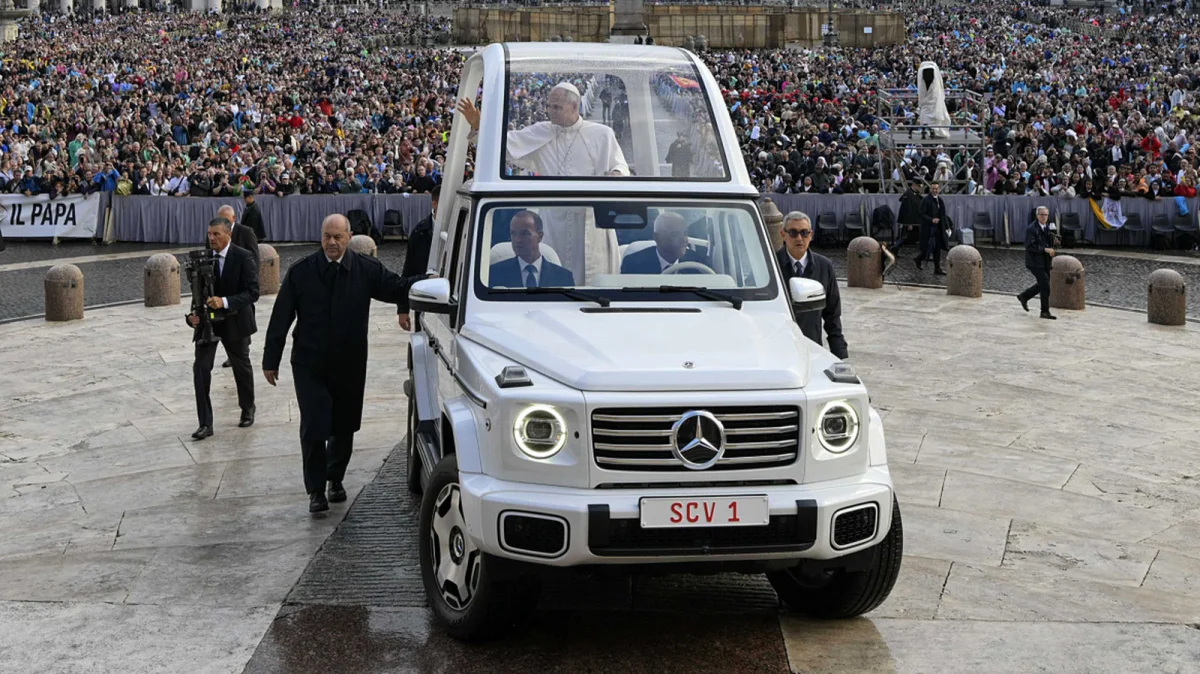
Mercedes-Benz’s place in papal motoring history is the focus of “A Century of the Popemobile,” an exhibition at the Vatican Museums running from October 28, 2026, through January 31, 2027. The display brings together eight vehicles used by popes, alongside an 1886 Benz Patent-Motorwagen and a current Mercedes S-Class. That framing gives visitors two stories at once: how papal transport changed over roughly a century, and how closely that history became linked to one manufacturer.
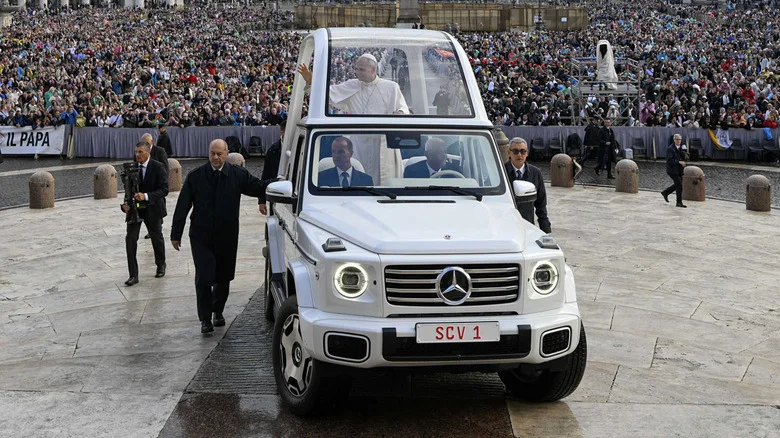
The exhibition is sponsored by Mercedes-Benz and will be staged in the museums’ Square Garden, near St. Peter’s Basilica. The surrounding setting lends the cars considerable weight, while the two bookend vehicles place them within a broader account of the brand’s history. The Patent-Motorwagen represents Benz’s early automotive era; the S-Class brings the display into the present. Between them, the papal cars show how changing expectations of comfort, visibility and ceremony shaped a distinctive kind of vehicle.
Sandro Barbagallo, curator of the Vatican Museums’ historical collections, described the exhibition through the idea of a journey, connecting the cars to the story of Peter’s arrival in Rome. Marc Langenbrinck, president of Mercedes-Benz Italia, likewise framed the display around that journey and Pope Leo XIV. Those messages give the show a religious theme, but the cars also invite a more practical question: how did the pope’s ride evolve from a protected rear seat to a vehicle designed for people to see its passenger?
From chauffeured limousines to the first Popemobile
The Vatican Museums haven’t published the complete vehicle list, but the exhibition is set to include several notable Mercedes models: a 1930 Nürburg 460, a 1960 300 d Pullman Landaulet, a 1965 600 Pullman Landaulet, a 1967 300 SEL Pullman Limousine and a 1980 230 G. The cars represent different approaches to papal transport, from spacious touring and limousine bodies to the open, high-visibility format that became the defining image of a Popemobile.
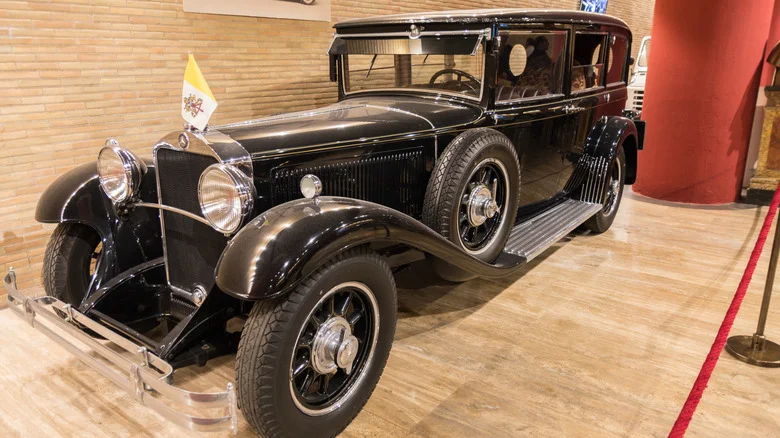
The Nürburg 460 marks a key early moment. Mercedes gave the car to Pope Pius XI in 1930, making it the first vehicle a pope used as an official car. An earlier attempt to put a pope in a motor vehicle came in 1909, when Archbishop John M. Farley of New York offered Pope Pius X an Itala. Pius X declined the gift; he reportedly preferred horse-drawn carriages.
For decades, popes rode in the back of a car and looked out through its windows. The exhibition’s 1980 Mercedes-Benz 230 G represents a shift in that arrangement: it was the first Popemobile, introducing the transparent dome associated with the role. The design made the papal passenger more visible during public appearances, while retaining a vehicle format built around a Mercedes G-Class. That balance between visibility and transport remains central to the Popemobile’s purpose.
The current Popemobile is a Mercedes G580 EV, the electric version of the G-Class. Pope Francis took one final ride in it the day before he died, and Pope Leo XIV may be seen riding in it at the Vatican. Its presence connects the exhibition’s longer history to the electric transition underway across the auto industry. The source doesn’t provide range, charging or technical specifications for the vehicle, so the display’s focus is its place in papal history rather than a comparison of EV performance.
Visiting the exhibition
The exhibition is included in admission to the Vatican Museums, which costs 20 euros, or about $22. Tickets can be booked through the Vatican Museums ticket office. Visitors can also see the museums’ permanent Carriage Pavilion, located beneath the Square Garden. It contains dozens of papal vehicles, including carriages and cars, giving the temporary exhibition a wider historical setting.
For buyers and car enthusiasts, this isn’t a direct comparison of the Mercedes models on display: most were built for a singular ceremonial role, and the exhibition doesn’t give prices or technical details. Its value is in showing how vehicle design followed the needs of the passenger and the occasion. The shift from enclosed limousines to a transparent-domed 230 G, followed by today’s electric G580, makes the most useful thread to watch as the display traces a century of papal motoring.