GM Puts Recycled Battery Minerals Into New EVs After Closed-Loop Pilot
GM says recycled nickel, cobalt and manganese now power cells in several new EV models, following a pilot that processed 80 end-of-life batteries.
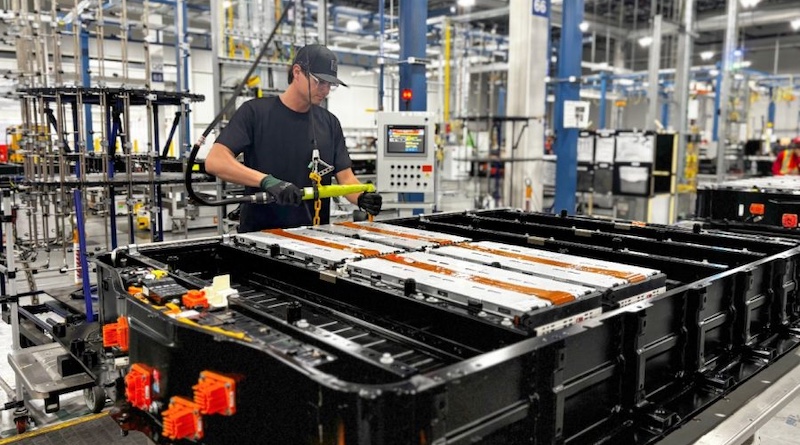

GM has moved recycled battery minerals from a pilot process into cells for new electric vehicles. Materials recovered from 80 end-of-life GM battery packs were refined into cathode material, then used to build cells for vehicles including the Cadillac LYRIQ and Chevrolet Silverado EV. The milestone offers a practical demonstration of a closed-loop supply route, though GM describes it as an early step in a much longer battery lifecycle effort.
The pilot’s new cathode active material contains 100% recycled nickel, cobalt and manganese. More than 12 metric tons were produced from recovered battery material. GM says the resulting cells met the same quality, performance and safety standards it requires for cells made with newly sourced materials.
From used packs to new cells
GM worked with recycling partner Cirba Solutions to collect and process the 80 packs. At Cirba’s facility, the batteries were dismantled and separated into “black mass,” a mixture of materials recovered from lithium-ion cells. That intermediate product then had to be refined into cathode active material, the cell component that contains key minerals and helps shape battery cost and performance.
Turning black mass into material suitable for a new cell is the demanding part of the loop. Recovered minerals must be processed to meet tight specifications, and the finished material needs to perform as expected in a vehicle battery. GM says testing confirmed the cells made with recycled content performed as well as cells made with virgin material.

Ultium Cells manufactured the pilot cells using cathode material with fully recycled nickel, cobalt and manganese. GM teams assembled cells into modules and packs at Factory ZERO and Spring Hill. The first vehicles fitted with these cells have rolled off the lines at Spring Hill Assembly and Factory ZERO, and are headed to customers.
The models named by GM are the Cadillac LYRIQ, LYRIQ-V, VISTIQ, ESCALADE IQ and IQL; the Chevrolet Silverado EV Trail Boss; and the GMC Sierra EV AT4. The company says these vehicles use its first battery cells with cathode active material made from the recovered minerals.
Why the loop matters
Battery minerals are a significant cost input for cells, so recovering and reusing them could help reduce costs over time. Recycling also offers a way to rely less on newly extracted material and build more resilience into battery supply chains. The size of the potential recovery depends on battery chemistry and processing conditions: current recycling methods can recover up to 95% of nickel, cobalt and manganese, and up to 80% of lithium, according to GM. Further advances could raise those rates.
Those figures describe what recycling processes may recover; they don’t mean every retired pack will yield those amounts or return directly to a new vehicle battery. Packs vary, and recovered material must pass through processing and quality checks before it can go back into cell production. The pilot shows that GM and its partners have completed that chain for a defined batch of batteries.
Getting there required years of work across engineering, quality, logistics, testing and manufacturing. Alongside Cirba Solutions and Ultium Cells, GM names LG Energy Solution among the partners involved. The company says one major lesson from the effort was the coordination required across each stage, from collecting old packs to building cells and assembling finished vehicles.
Battery life extends beyond recycling
GM’s approach puts recycling at the end of a wider lifecycle plan. Before a pack reaches that point, refurbishment and remanufacturing programs are intended to reuse more than 70% of its components. Reusing parts can extend a pack’s service life and reduce the need to build a complete replacement.
Some batteries can also move into stationary energy storage after their vehicle use ends. GM and Redwood Materials are deploying roughly 10,000 second-life GM batteries in energy infrastructure. The projects include what the companies describe as North America’s largest second-life battery microgrid, with further deployments planned at GM manufacturing sites.
These paths won’t apply to every pack: a battery’s condition and suitability will shape whether it is refurbished, repurposed for storage or recycled. The pilot makes one part of the strategy tangible by showing recovered minerals entering new EV cells. As more packs reach the end of their vehicle service over the coming decade and beyond, the next measure will be how well this chain can operate at broader scale, while meeting cell standards and helping reduce material costs and the battery supply’s carbon footprint.
GM says it plans to share more about its battery and circularity work at Climate Week NYC, where it is a title sponsor of the Nest Campus.