BattMan Targets Faster Battery Development for EVs and Energy Storage
DOE’s BattMan consortium will use testing, modeling and manufacturing research to speed battery development for transport and grid storage.
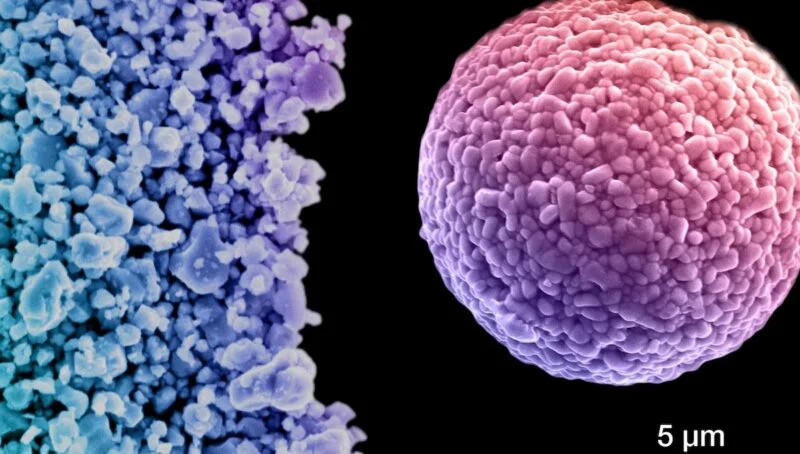
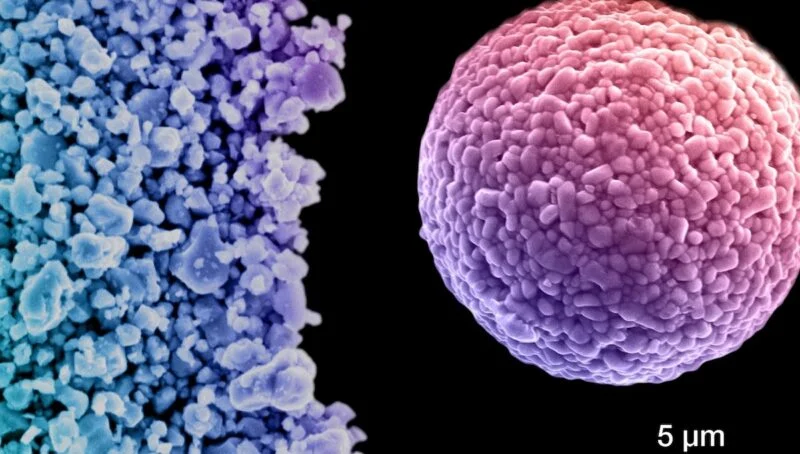

The BattMan battery accelerator is designed to tackle a costly bottleneck for electric vehicles: turning promising materials and cell designs into manufacturing processes that can be tested and scaled more quickly. Led by Pacific Northwest National Laboratory (PNNL), the new Energy Department consortium will work with research institutions and domestic companies on batteries for transportation, grid storage and other uses.
The effort arrives as automakers are pursuing both vehicle batteries and stationary storage. Ford and General Motors have moved into energy storage as US EV demand weakened, while the department’s stated goals also include transportation. That dual focus could give battery research a broader commercial base, while keeping improvements relevant to electric cars.
What BattMan is set up to do
The accelerator aims to lower manufacturing costs, move new battery technologies from laboratory work toward production, and strengthen US battery manufacturing. The department’s strategy sets targets of building a fully integrated domestic battery supply chain by 2030 and achieving US leadership in battery technology and manufacturing by 2035.
The demand forecast cited by the department spans both transport and energy storage. It projects that US battery demand across those applications will rise from 179 gigawatt-hours in 2025 to 707 GWh in 2035, nearly quadrupling. That projection gives the work a larger frame than EV sales alone: battery makers may be serving cars, power grids, medical devices and consumer electronics at the same time.
For vehicle buyers, the practical question is whether research can ultimately make batteries less expensive to produce and help manufacturers bring improved cells to market. BattMan is an early-stage development effort, so it does not provide a timeline for a specific EV, a cost reduction, or a change in a model’s range or charging time. Its near-term work is aimed at improving how batteries and production methods are evaluated.
Testing materials before production
Battery materials need extensive assessment for durability and performance. That work can be slow and expensive, and each new material or design may require substantial testing. BattMan partner National Laboratory of the Rockies (NLR), formerly the National Renewable Energy Laboratory, says it will contribute expertise in materials assessment, characterization and electrode design.

NLR plans to build physics-based machine-learning models that examine how defects and material variations could affect cell performance over time. The goal is to produce useful evidence earlier in the development process, before manufacturers commit to more costly production decisions. If the models prove reliable, researchers and companies could have a better way to compare materials and identify problems without repeating every part of a lengthy test program.
The lab’s approach is meant to connect microscopic observations to how a battery cell behaves. Variations in a material may influence performance in ways that only become clear after extensive testing. Modeling those effects could help researchers decide which designs deserve further work and which manufacturing changes are likely to matter. The source does not specify a performance threshold or promise that the method will eliminate physical testing; its stated purpose is to make data available earlier.
NLR also plans to work with companies across the battery and materials sector to test and validate manufacturing processes for commercial production. That connection matters because a material that performs well in a laboratory still has to be made consistently and economically. BattMan’s accelerator role is to help bridge that gap, bringing research and production questions into the same process.
A wider research group
PNNL leads BattMan through the Energy Department’s Office of Critical Minerals and Energy Innovation. The founding group also includes Argonne National Laboratory, Oak Ridge National Laboratory, the University of Washington, Binghamton University, the University of Alabama, Arizona State University and the University of Michigan-Dearborn, alongside NLR.
PNNL has prior experience coordinating battery research: in 2016, it launched the department’s Battery500 Consortium, which focused specifically on advanced EV batteries. BattMan has a broader remit, covering manufacturing and energy storage as well as transportation. Its mix of laboratories, universities and company partners is intended to link materials research with the processes needed for commercial output.
NLR describes a longer-term aim of self-optimizing manufacturing systems that use real-time data, automated feedback and digital twins. A digital twin links a virtual model with a real system so that researchers can test changes and look for ways to improve performance. For battery production, the idea is to use information gathered during manufacturing to refine processes, rather than rely only on inspection after a batch is complete.
The lab says statistically accurate models built from microscopic measurements could let manufacturers advance their work without each company having to invest in specialized equipment. That is a potential benefit for firms that lack the resources of large cell makers, though the source does not establish how much equipment or time the approach might save.
Georgia’s expanding EV footprint
The battery effort sits alongside manufacturing plans in Georgia, where the state’s electric mobility industry has grown through vehicle and battery investment. A University of Georgia report cited in the source says investments in EV and battery manufacturing have topped $31 billion since 2015, creating more than 38,000 jobs. The report says Georgia’s investment total exceeded Michigan’s by more than $10 billion over that period.
Rivian plans to build a factory in the state. The project received a conditional federal loan guarantee initially valued at $6.57 billion; that figure was later reduced to $4.5 billion, and a groundbreaking ceremony took place last year. Electric bus maker Blue Bird is another Georgia manufacturer. Audi has also discussed a possible $4 billion factory in Peach County, but its parent company Volkswagen’s supervisory board had not approved the plan at the time described in the source. Audi had not provided details of the models it might build there; its chief executive had previously outlined a plug-in hybrid strategy for the US market.
Those projects show why battery manufacturing and vehicle assembly are linked in regional development plans: local production can connect cell technology, suppliers and finished vehicles. BattMan’s research may support that wider industrial base, but its value for drivers will depend on whether its methods lead to battery improvements that reach production. The next concrete measure to watch is whether consortium testing produces manufacturing processes companies can adopt at commercial scale.
Photo: Pacific Northwest National Laboratory.