Chitty Chitty Bang Bang: The Movie Car That Made a Boy a Lifelong Car Guy
A childhood favorite becomes a real ride: the story, construction and surviving cars behind Chitty Chitty Bang Bang.
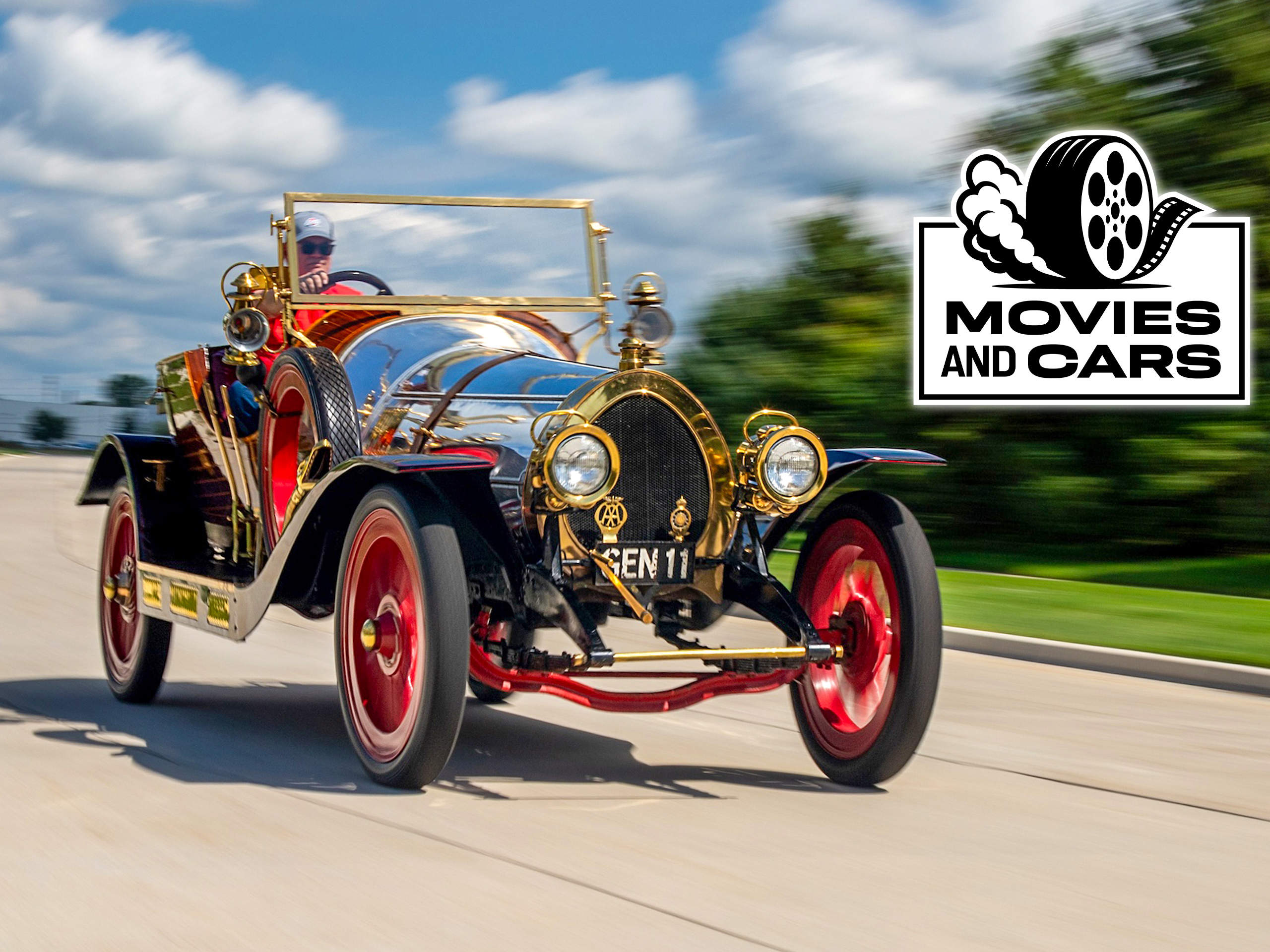
Chitty Chitty Bang Bang is more than a familiar movie car brought to life. It was designed as a character in its own right, built by a British motorsport workshop, and given a convincing physical presence through the work of specialist craftspeople. Seeing one in person makes clear why its appeal lasts beyond the film: the proportions, materials and small details make it feel like a machine imagined by an eccentric inventor.
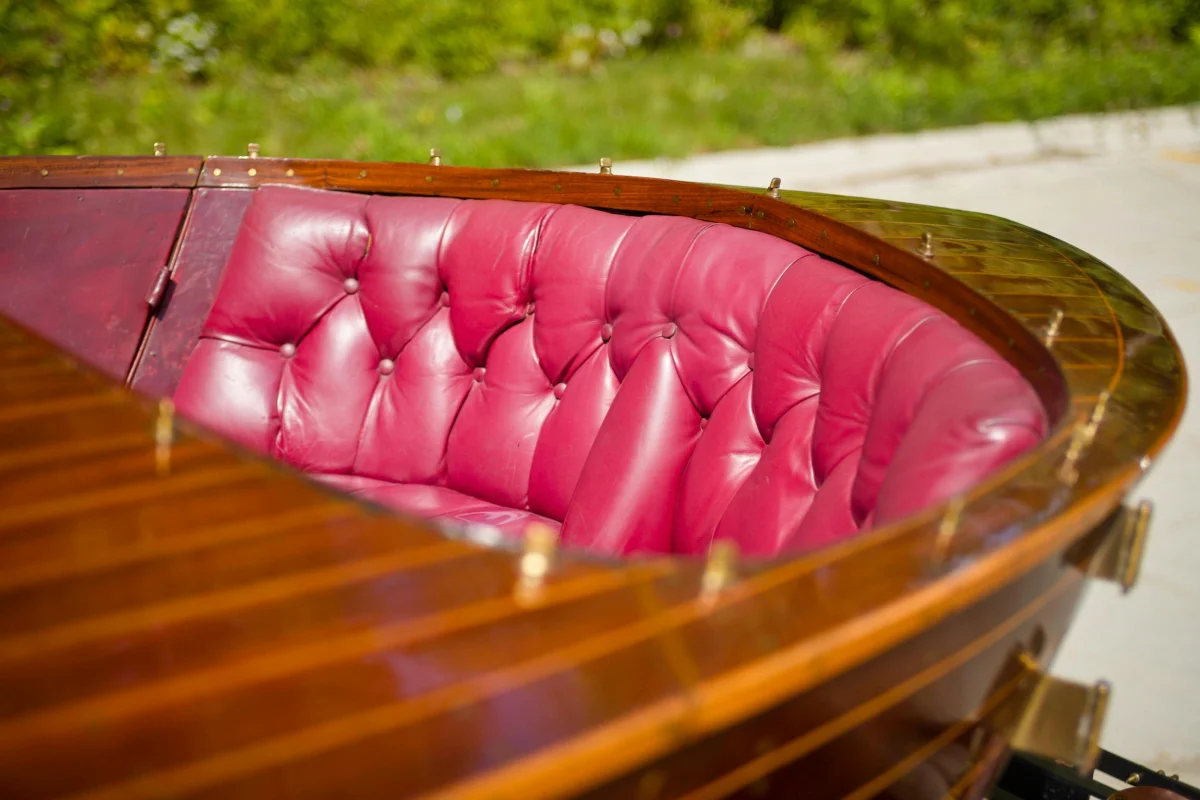
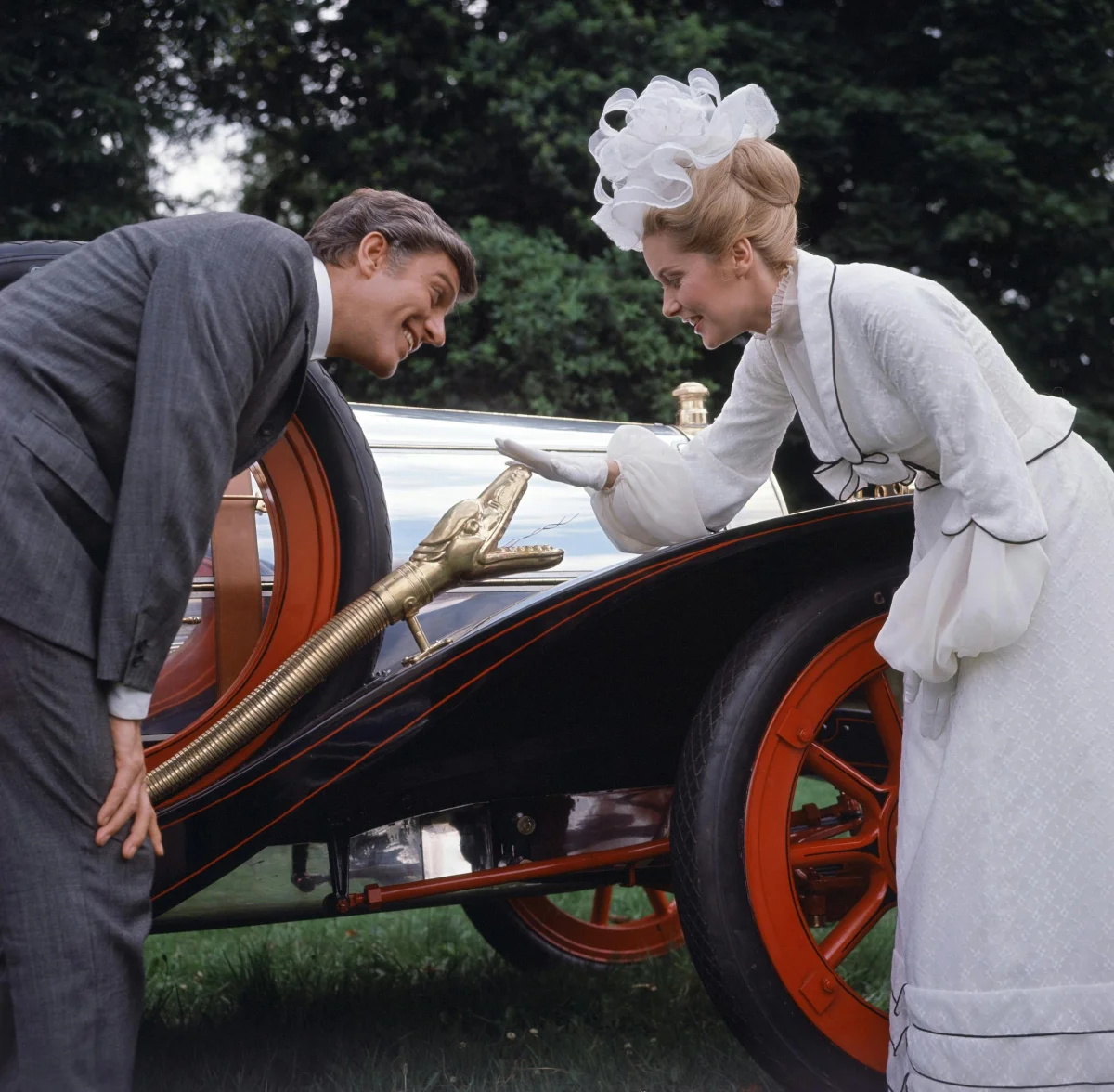
That impression first took hold for me at age seven. Cars were already part of family life: my father worked at Chevrolet in Flint, Michigan, and my grandfather ran a Texaco station in our rural hometown. Then, on Thanksgiving Eve in 1972, the family television showed old-fashioned racers roaring across the screen, and Dick Van Dyke appeared as Caractacus Potts. His children, Jeremy and Jemima, seemed close enough to my age that I could picture myself joining their adventures. Their extraordinary car clinched it. Chitty’s mix of metal, wood and red leather made an indelible impression; I still gravitate toward cars with red interiors.
Decades later, I learned that one of the two road-going movie cars was held by the Stahls Automotive Foundation in Michigan, less than half an hour from home. I made plans to meet the car that had shaped my childhood idea of what a car could be.
Welcome to the Hagerty Movies and Cars Celebration, exploring the relationship between cars and the silver screen.
From Ian Fleming’s stories to the screen
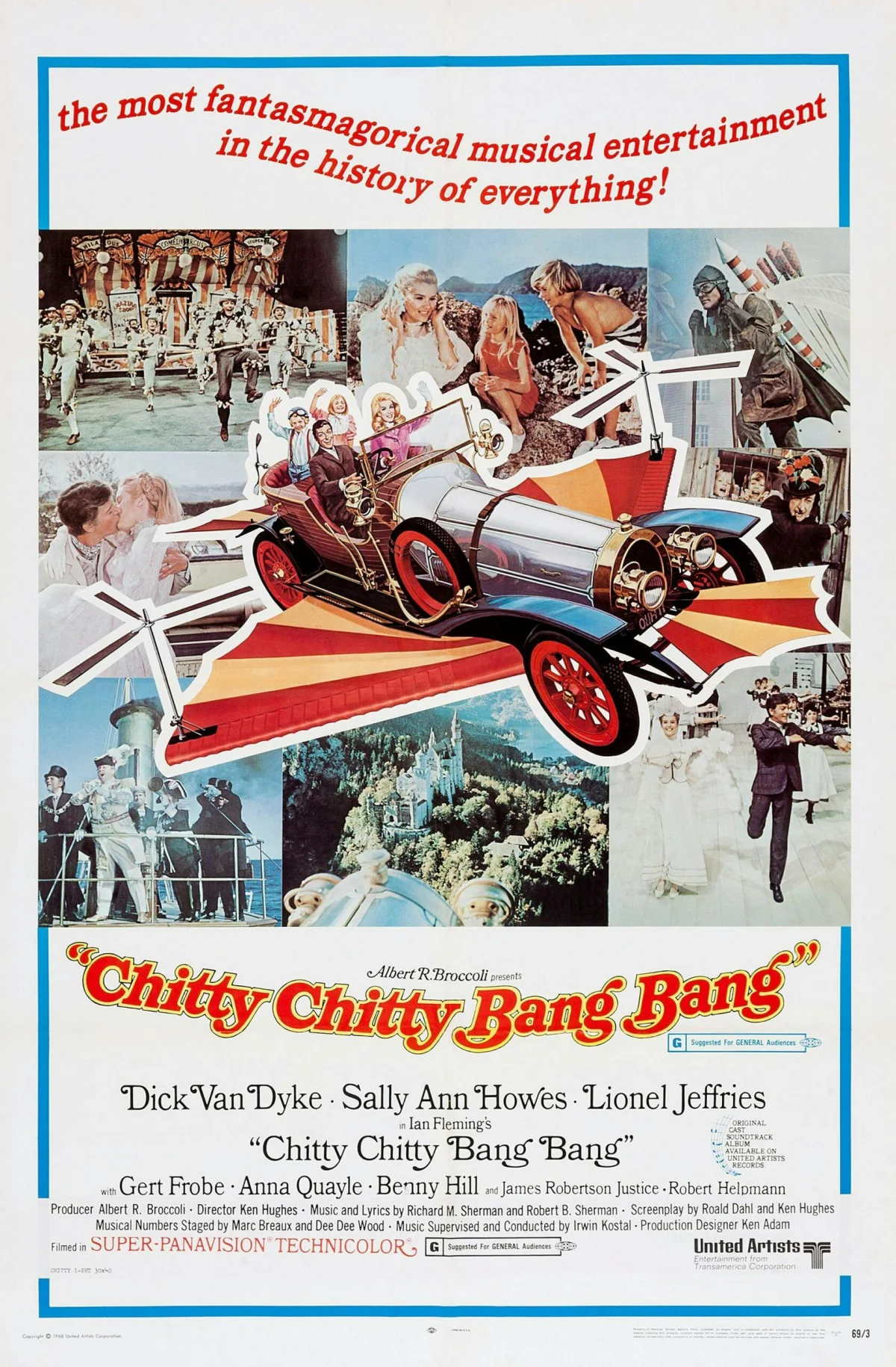
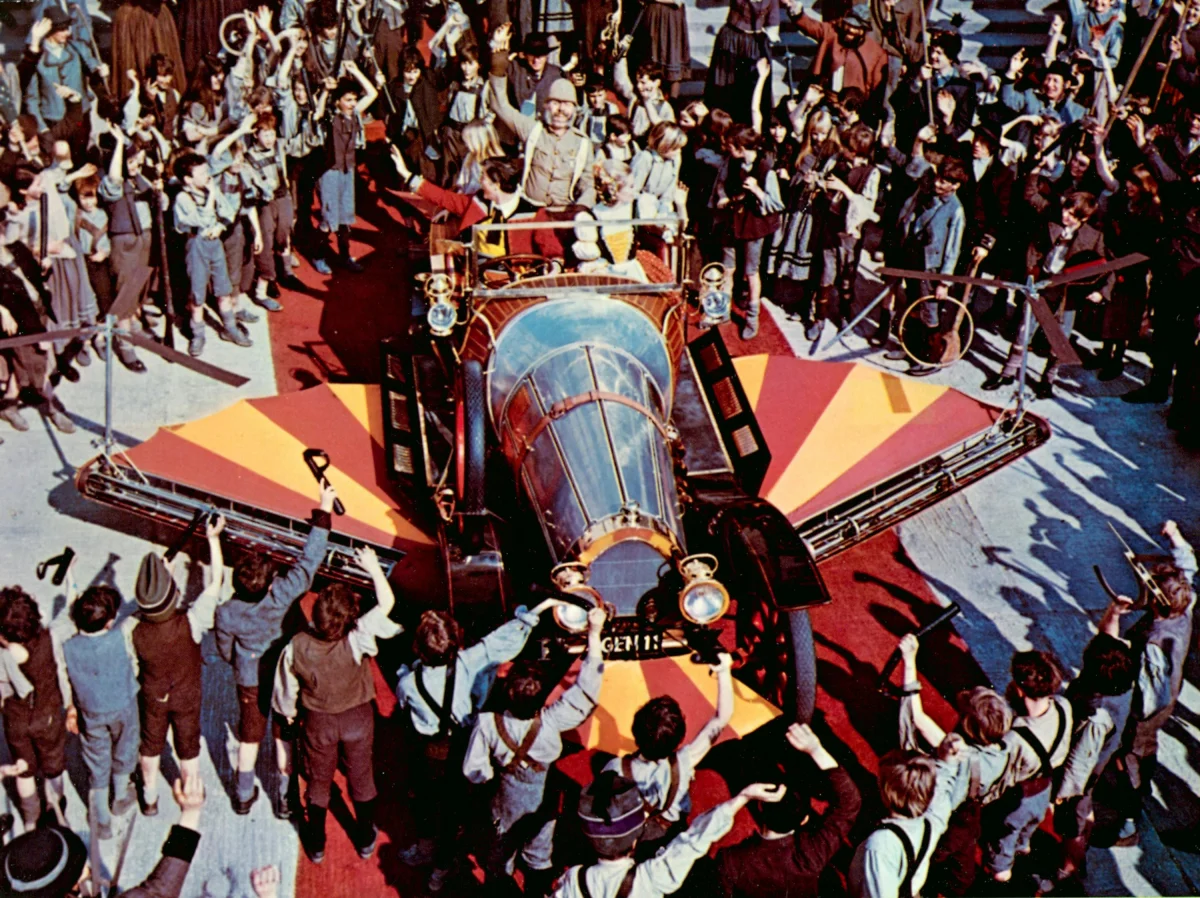
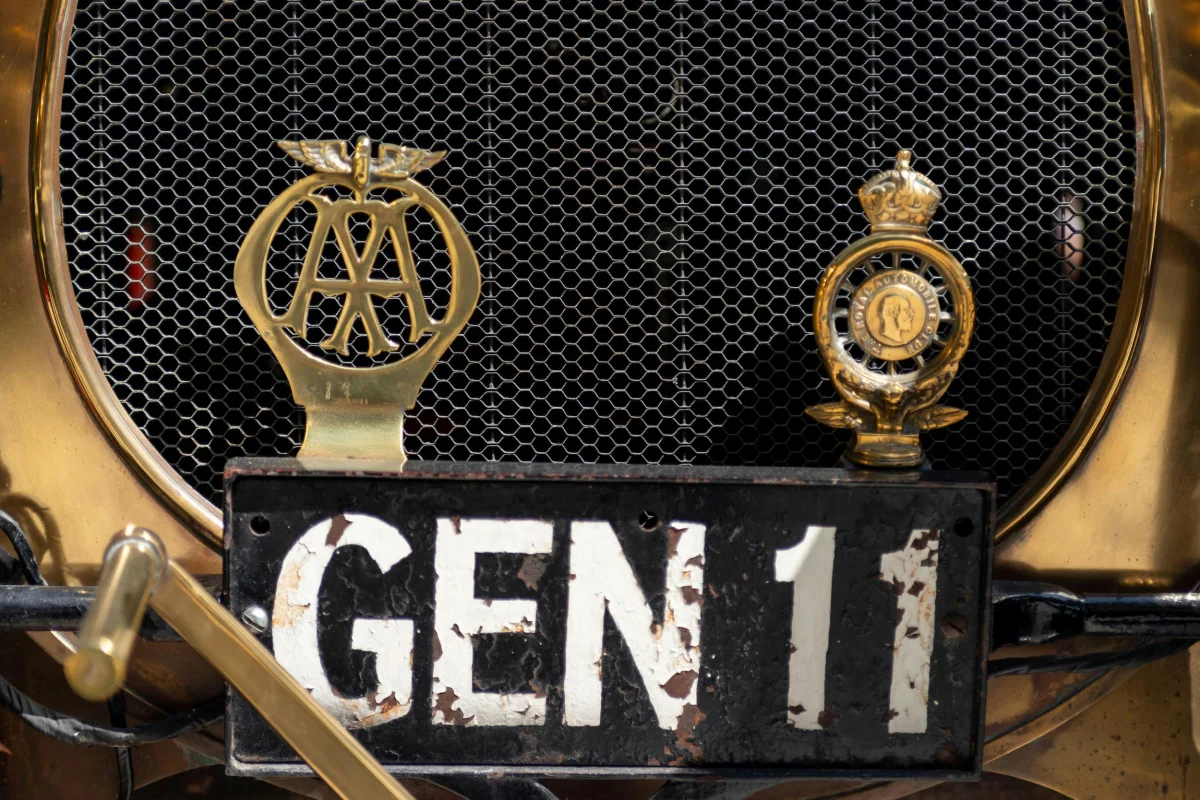
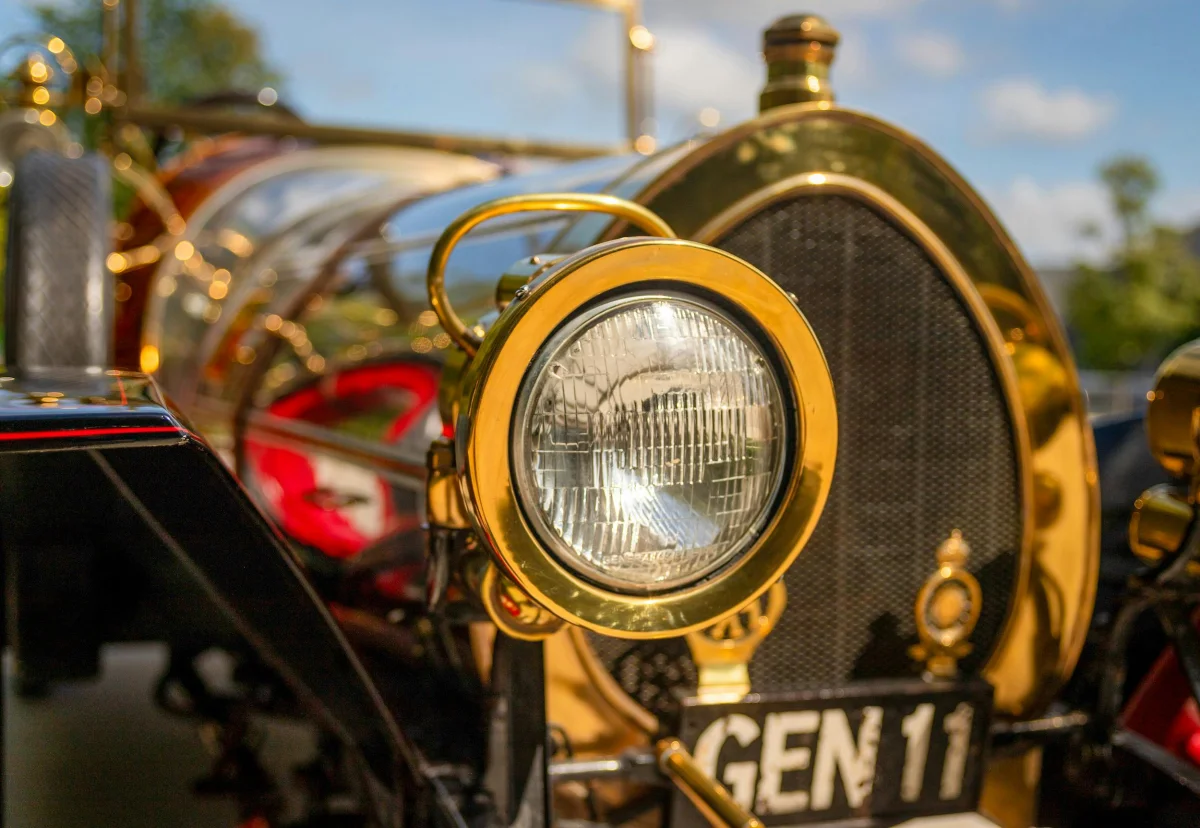
The film opened in U.S. theaters on December 18, 1968, drawing loosely on a children’s book by Ian Fleming, better known as the creator of James Bond. The connection makes sense once you look at the car. Chitty has the same appetite for clever devices as Bond’s Aston Martin DB5: it can drive itself, fly and travel on water. Its GEN11 number plate even suggests “genie.” The story adds far-flung settings, close escapes and villains whose plans are undone by ingenuity and British resolve.
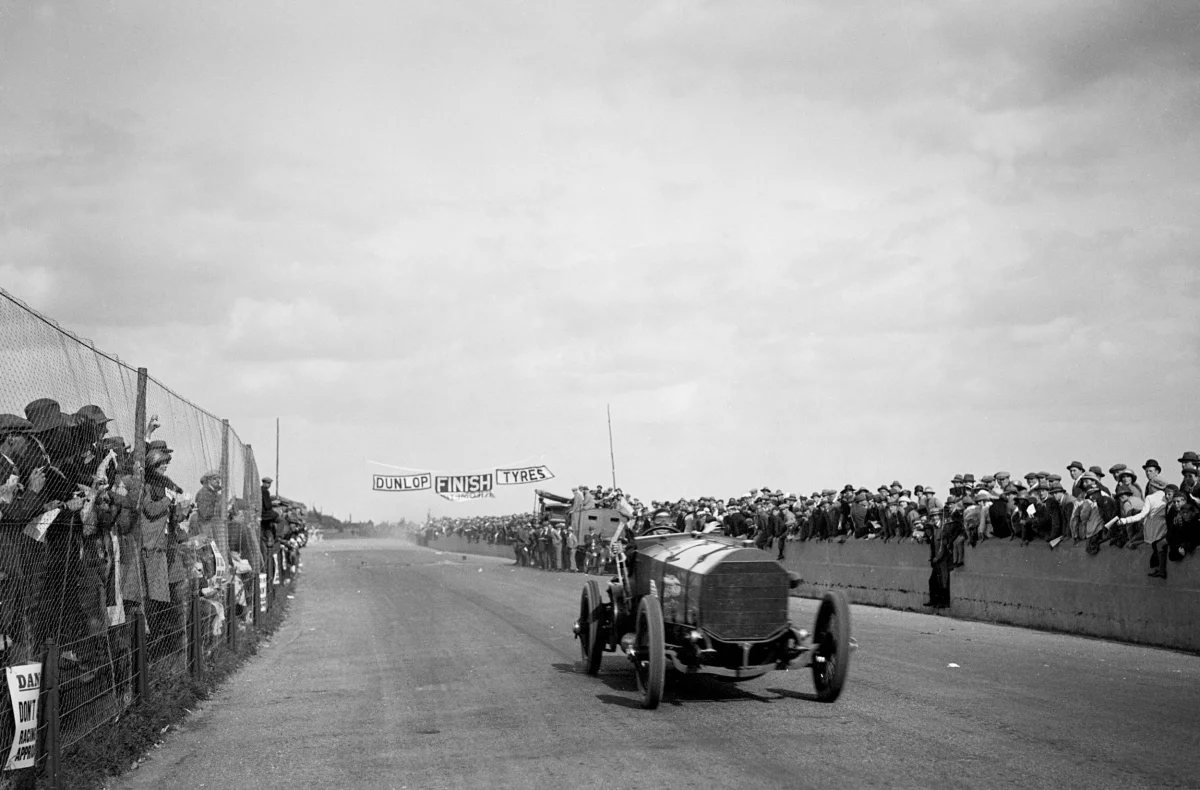
Fleming began writing the book after a serious heart attack in April 1961. His doctors ordered him to rest in bed and avoid even using a typewriter, so he wrote by hand. The tales grew out of bedtime stories he had told his young son, Caspar. For the car’s name, Fleming reached back to the huge aero-engined machines that raced in the early 1920s under the name Chitty-Bang-Bang.
Those real racing cars were built and driven by Count Louis Zborowski. His mother was an Astor; when she died in 1911, he inherited her fortune and became one of the world’s richest people under 21. Fleming had seen Zborowski race at Brooklands as a boy. He dedicated the book to the count and his machine, writing: “To the memory of the original Chitty-Chitty-Bang-Bang, built in 1920 by Count Zborowski on his estate near Canterbury.” John Burningham illustrated the book, giving Chitty a shape that recalled a Bentley.

Fleming died on August 12, 1964, aged 56, before the book appeared. His friend Albert R. “Cubby” Broccoli, producer of the Bond films and a cofounder of EON Productions, decided to adapt it. EON held the rights to Fleming’s works, including Chitty, and Broccoli saw an opportunity to make a musical in the wake of Disney’s success with Mary Poppins.
Broccoli hired Van Dyke, who had starred in Mary Poppins, and hoped to cast Julie Andrews as well. Andrews declined because the part felt too close to her role in that film and in The Sound of Music. Sally Ann Howes became Truly Scrumptious, Caractacus Potts’s love interest. The Sherman brothers, Richard and Robert, supplied the songs after winning two Oscars for Mary Poppins in 1965. They received another Best Song nomination for “Chitty Chitty Bang Bang.”
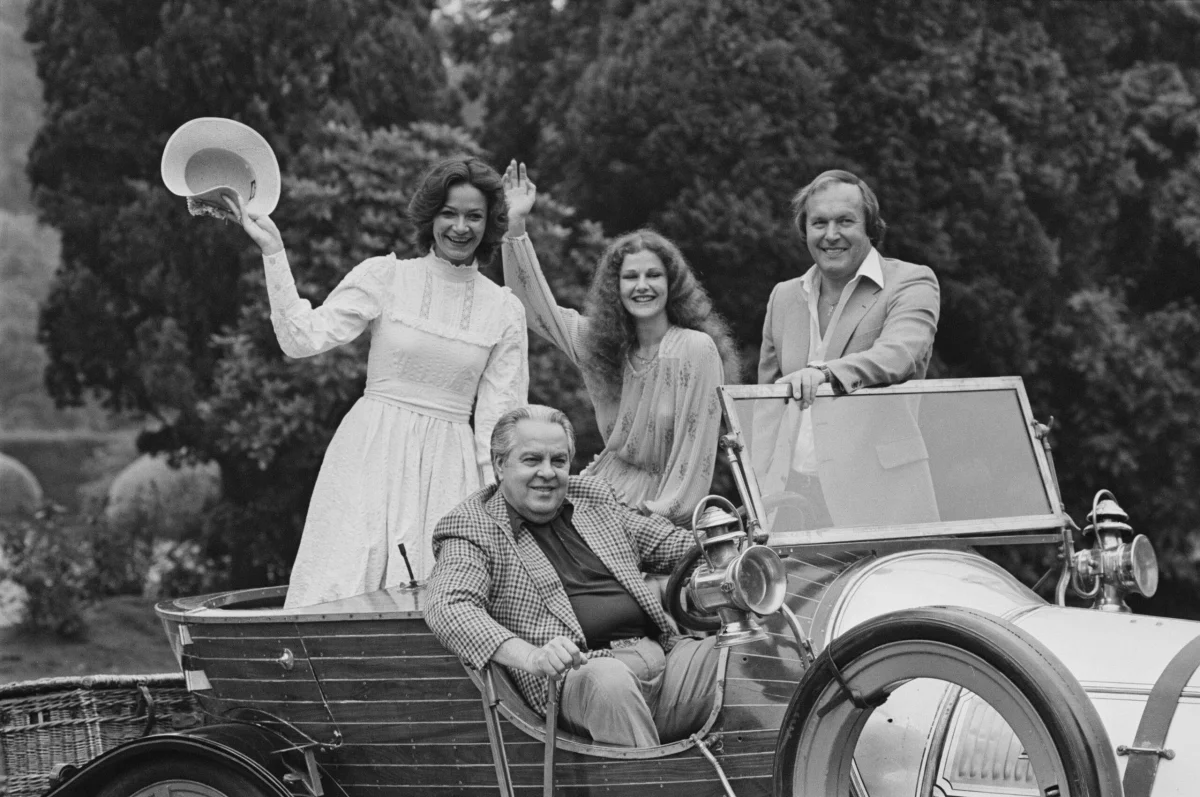
The cast and crew also brought strong Bond connections. Desmond Llewelyn, famous as gadget expert Q, played Mr. Coggins, the junk dealer who sells the wrecked car to Potts. Gert Frobe, who played Auric Goldfinger in Goldfinger, became Baron Bomburst. Designer Peter Lamont, special-effects expert John Stears and production designer Ken Adam also came from the Bond films, giving parts of Chitty a visual kinship with that series.
Adam’s reputation rested on his ability to create memorable spaces and machines. He helped establish the Bond films’ grand visual style beginning with Dr. No in 1962, designed Fort Knox’s gold vault and interior for Goldfinger, and created the SPECTRE boardroom in Thunderball. He also persuaded Aston Martin to supply a pre-production DB5 for Goldfinger. With Stears, he developed its on-screen devices, including revolving number plates, an oil slick, smoke systems and an ejector seat.
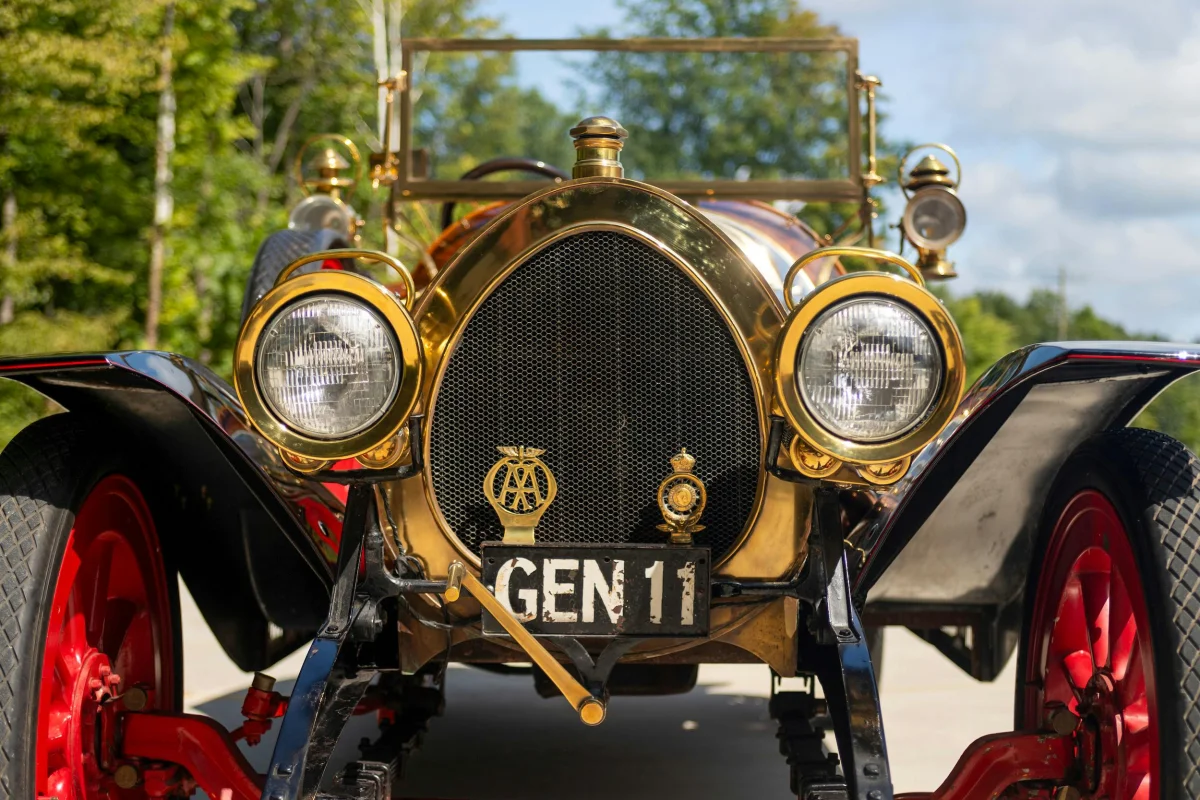
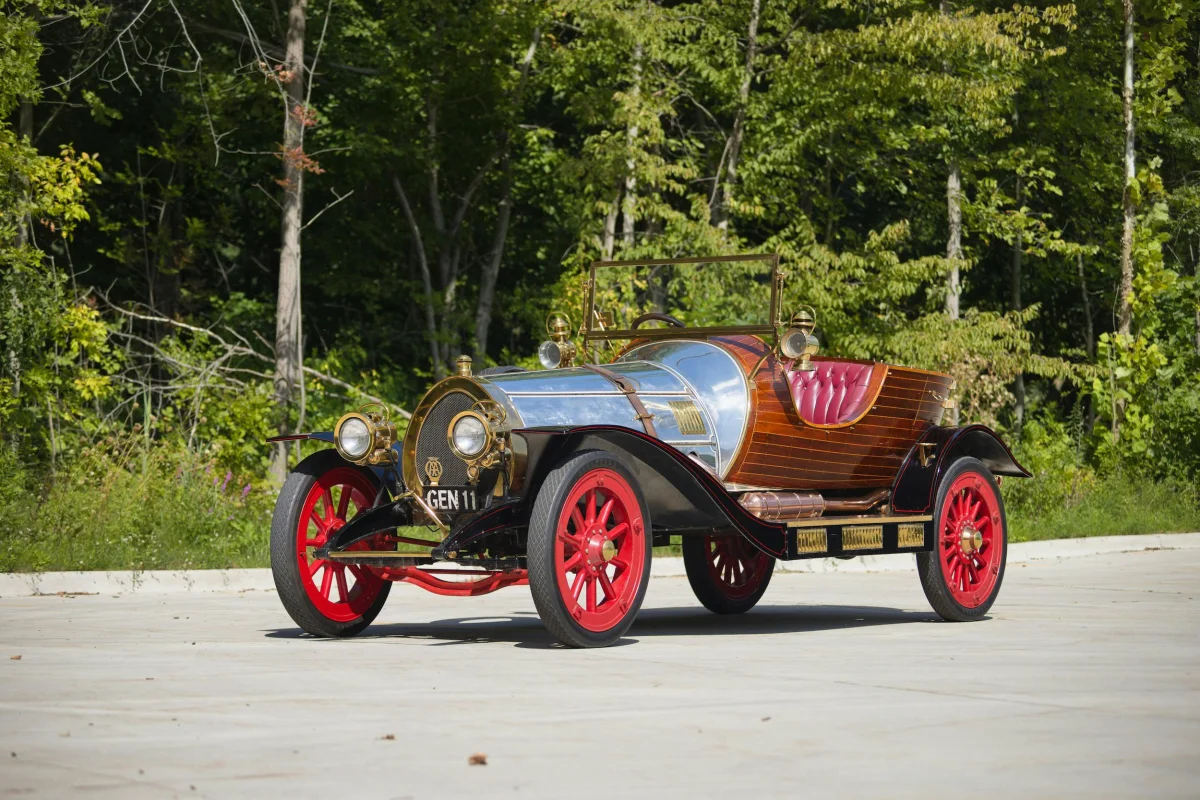
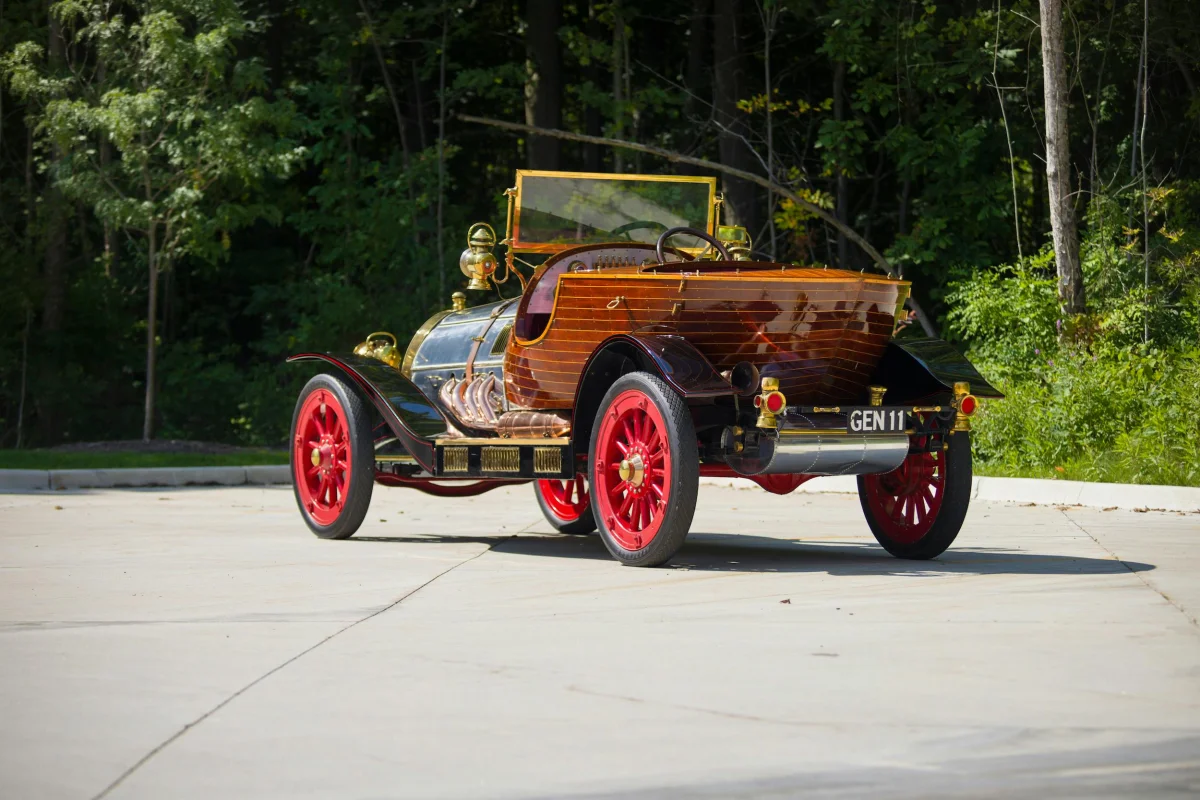
For Chitty, Adam wanted something more eccentric than the relatively ordinary car shown in Burningham’s illustrations. His design needed to hint at flight and sailing while still looking as though an Edwardian inventor might have built it. He drew on pre-World War I racing machines: long bonnets to cover large engines, narrow tall wheels, brass lamps and radiators, and open touring bodies. The resulting outline is recognizable from every angle, and its details make the fantasy feel tangible.
Alan Mann Racing turns the design into a car
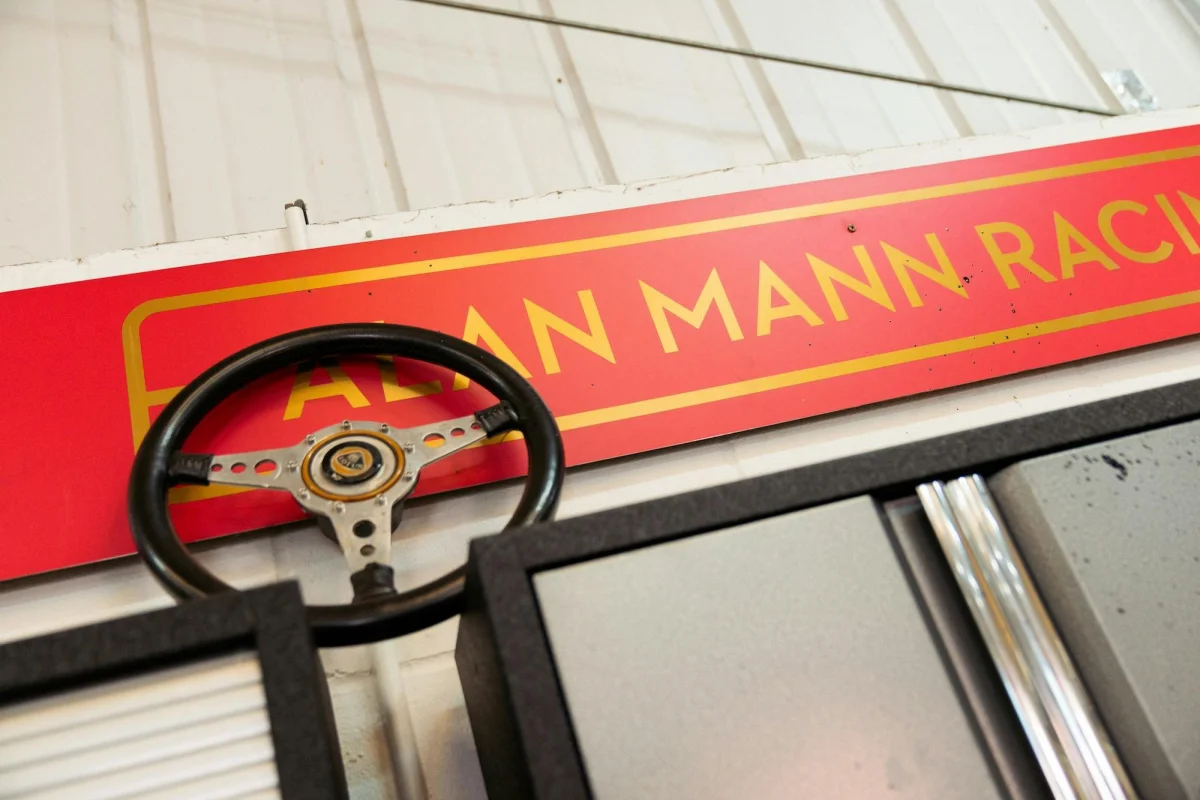
Alan Mann Racing (AMR), founded in 1963 in Woking, Surrey, had the skills and connections to build it. The team had become a major part of Ford’s 1960s motorsport program, working across rallying and touring cars, developing a lightweight GT40 for endurance competition and overseeing work on the Cobra Daytona coupe. Mann’s relationship with Ford motorsport executive Walter Hayes had also led to work on the cars in Goldfinger, followed by involvement in Thunderball and You Only Live Twice.
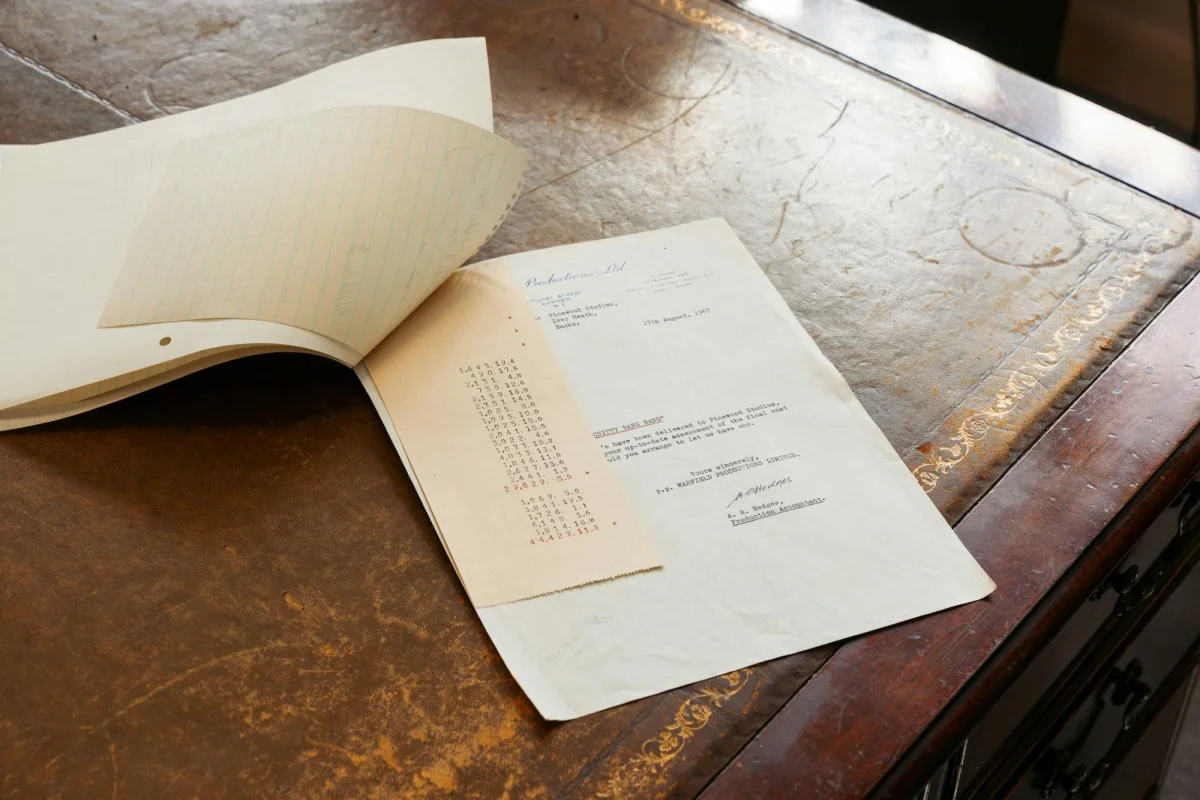
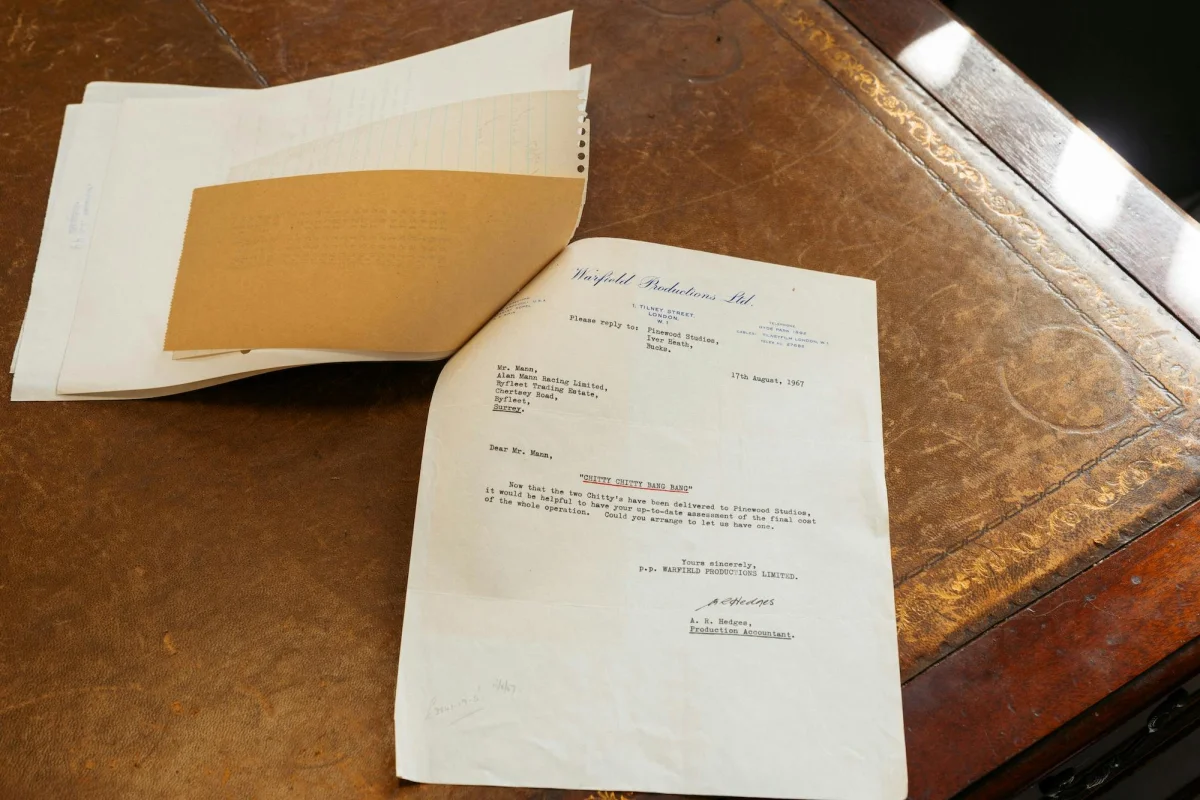
That experience helped earn AMR the job of building six Chitty versions for Broccoli: two road-going cars and four intended for close shots, water scenes and other effects work. The £80,000 contract was substantial for the small shop, equivalent at the time to about $225,000 and roughly $2.3 million today.
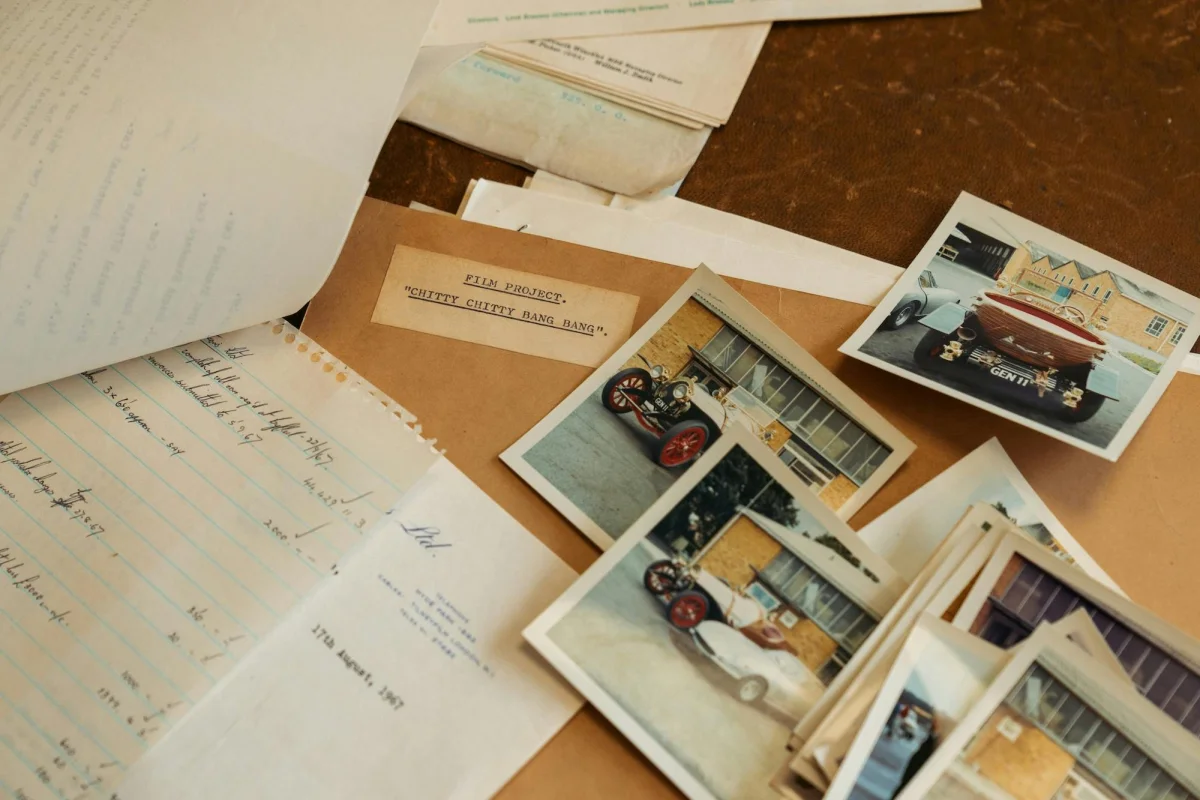
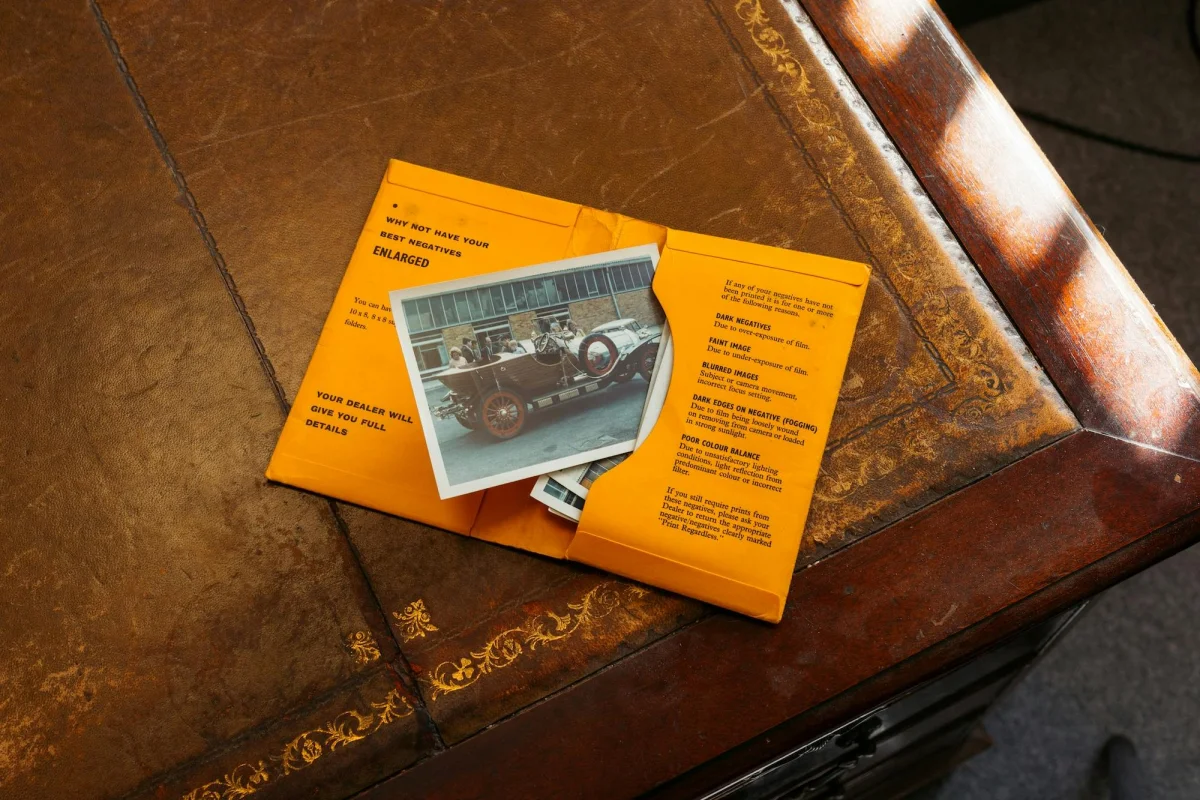
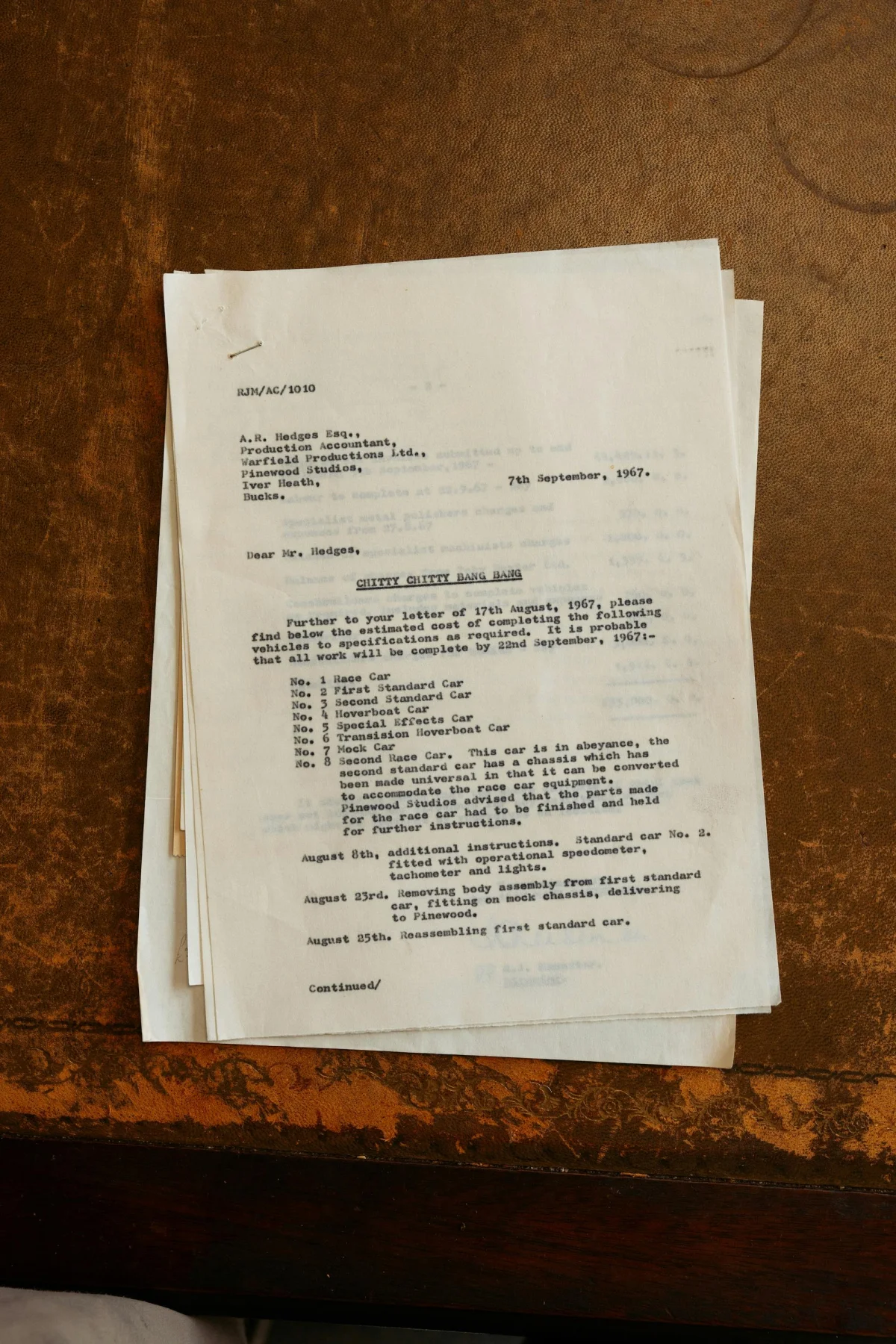
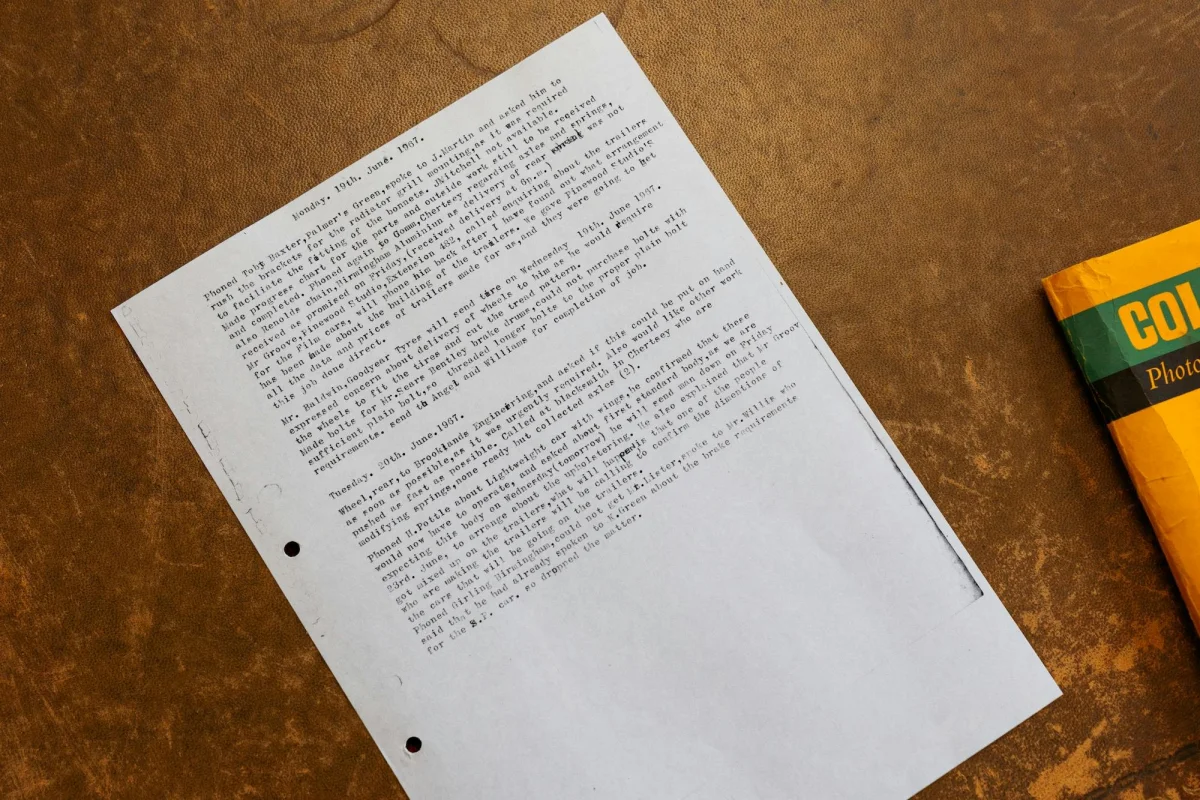
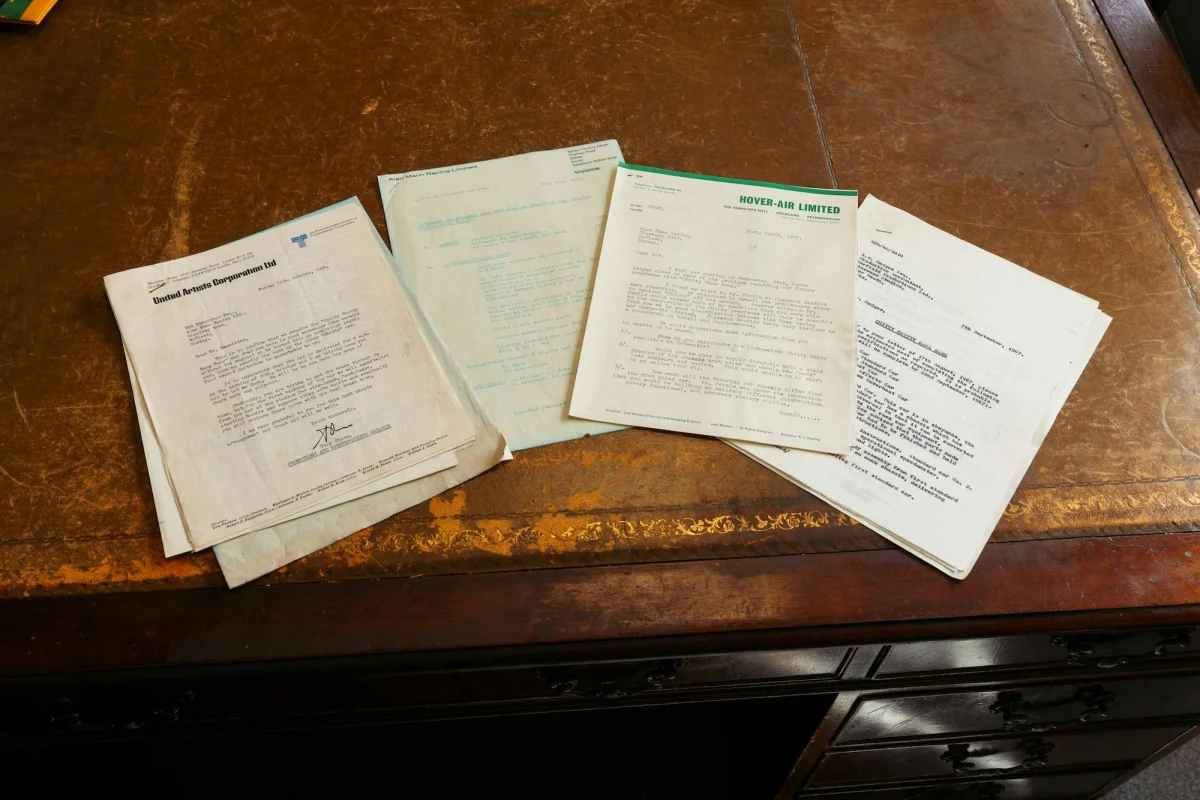
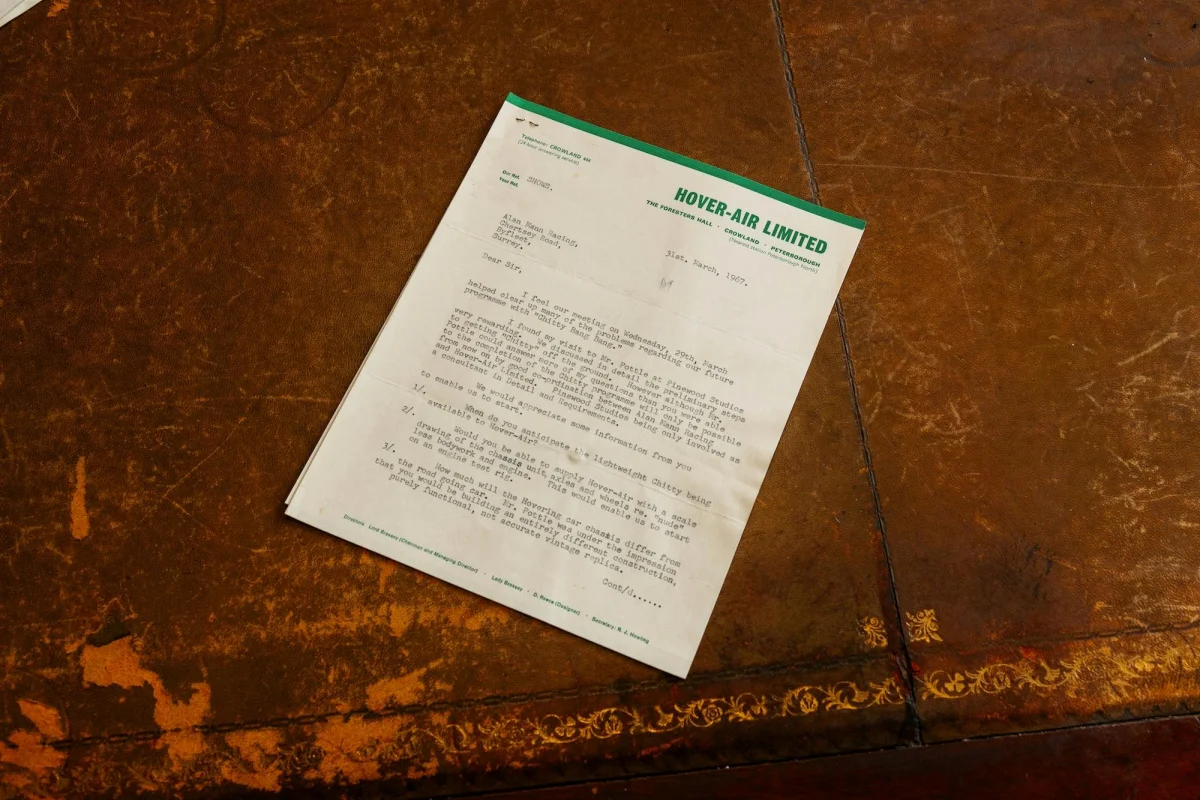
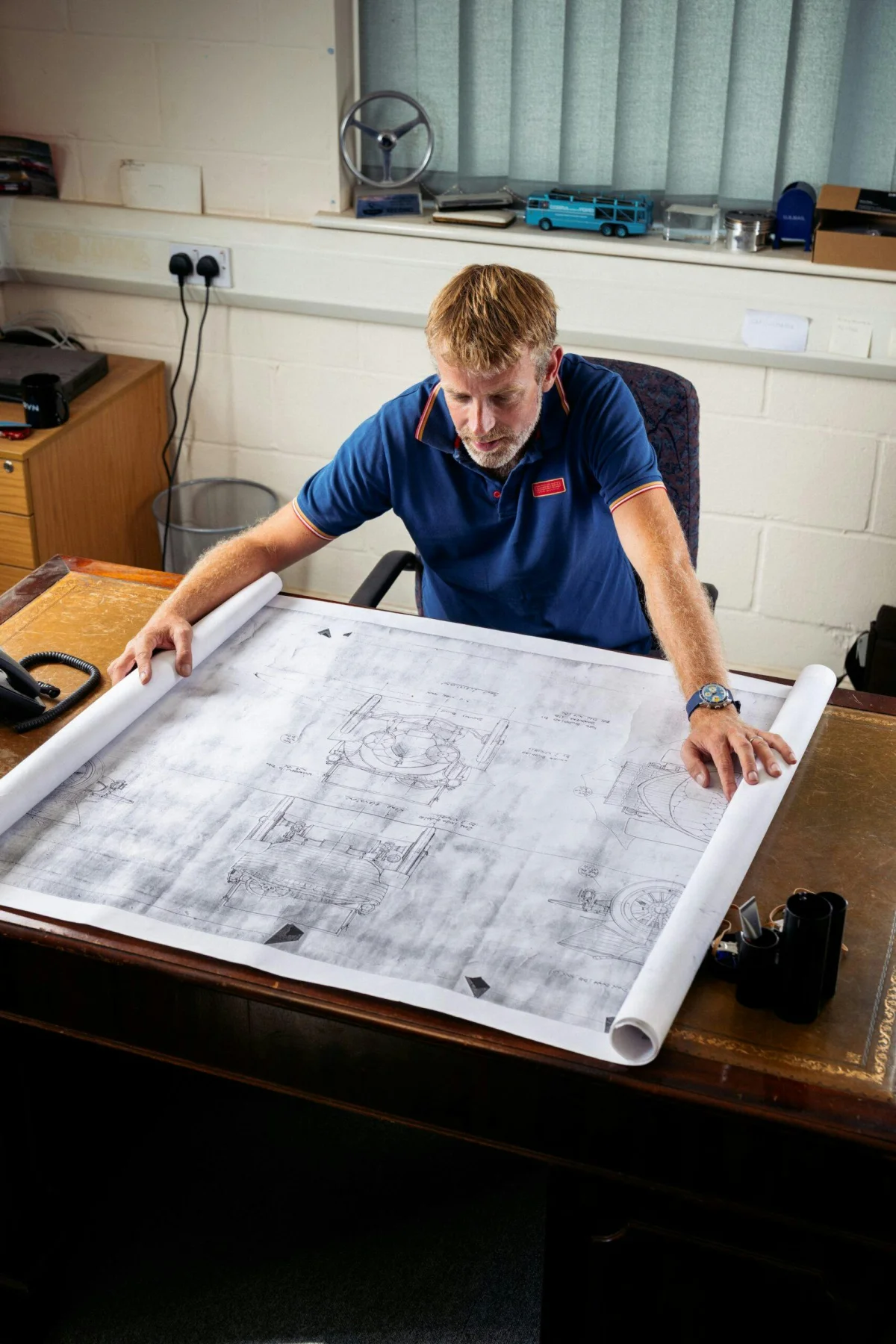
AMR remains in Woking and is now run by Henry Mann, Alan’s youngest son. The workshop still focuses on Fords from the 1960s, while its archives preserve the Chitty project’s paperwork: drawings, receipts, invoices and hundreds of pages of build notes. The first diary entry, dated Thursday, May 11, 1967, records research into anodizing aluminum to resemble mild steel, calls to Walton Plating in Derbyshire, and arrangements to source Ford rear axle casings, differentials and shafts.
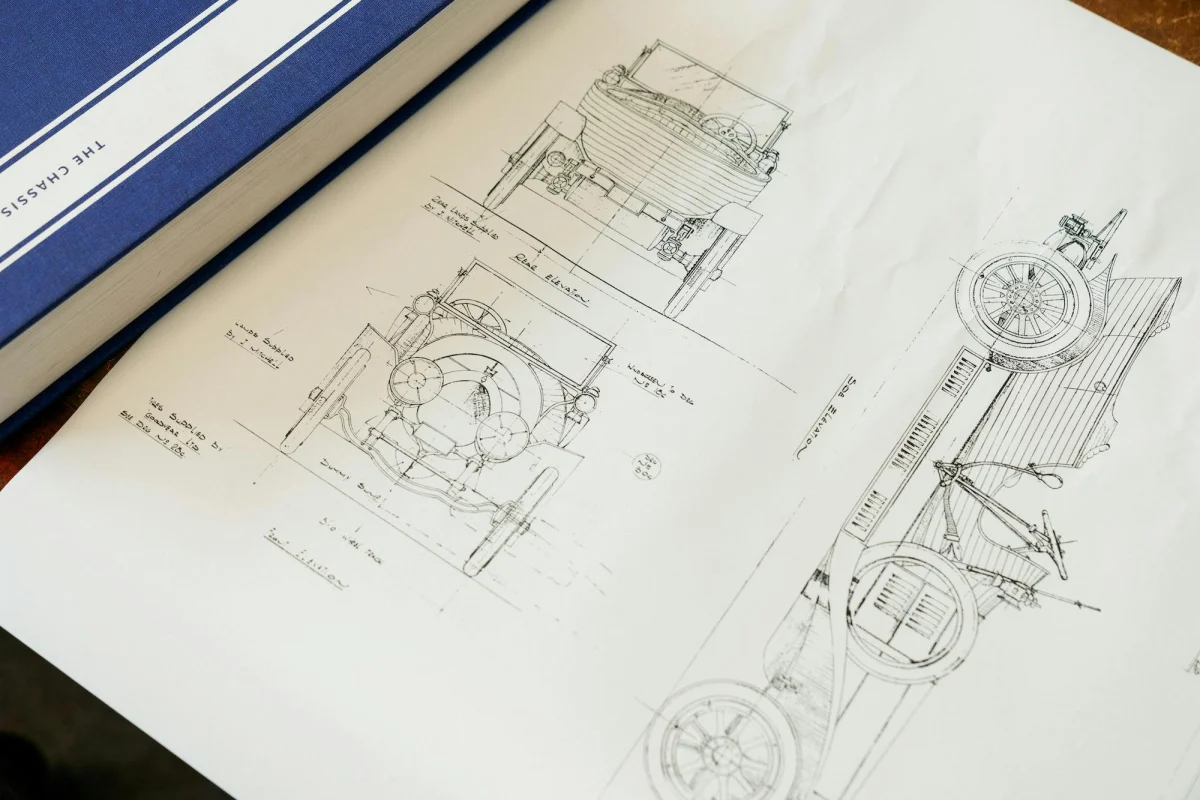
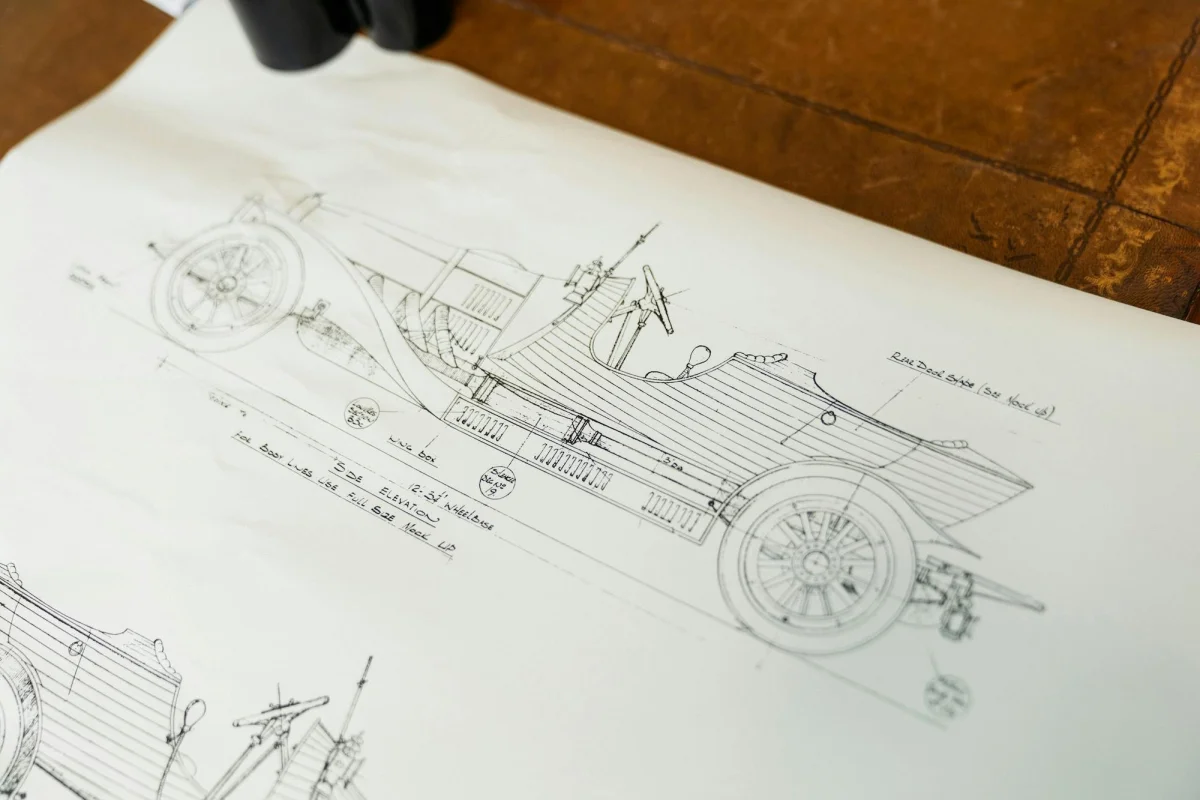
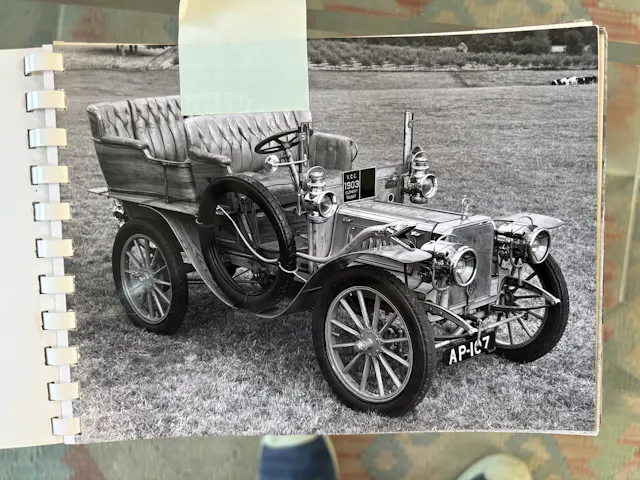
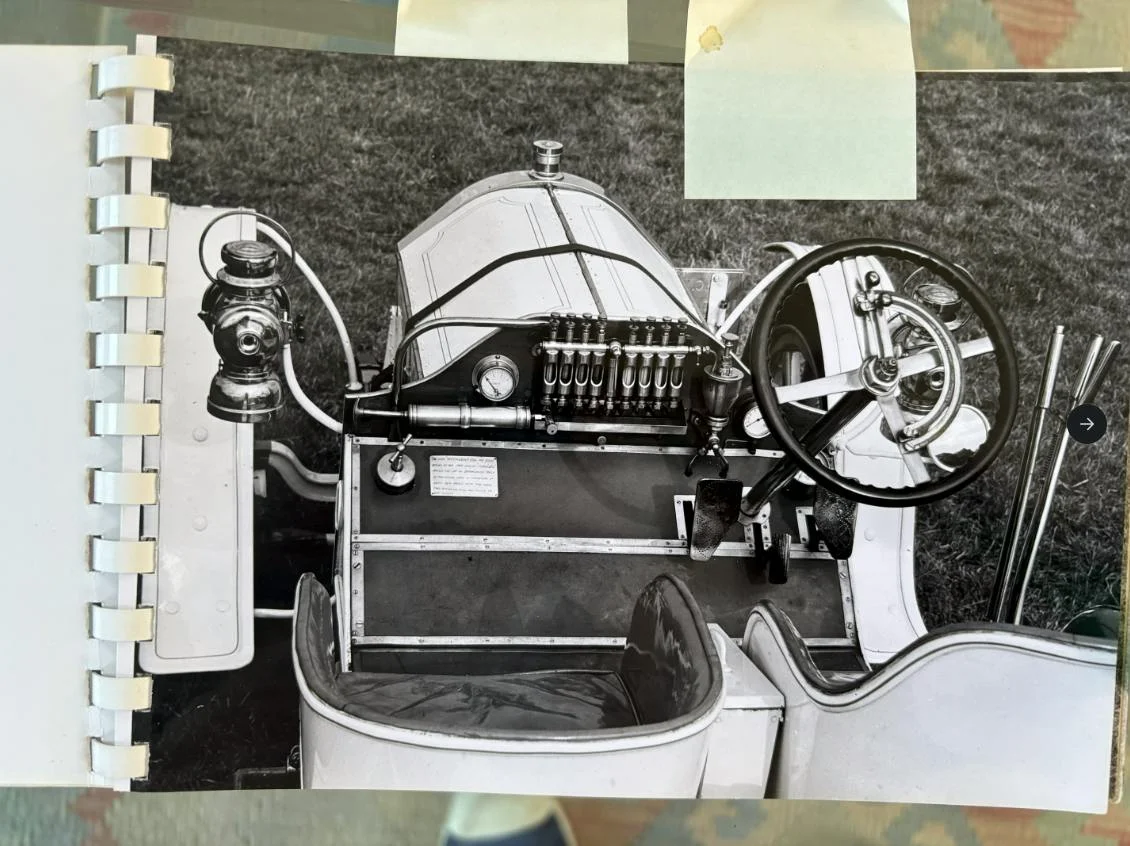
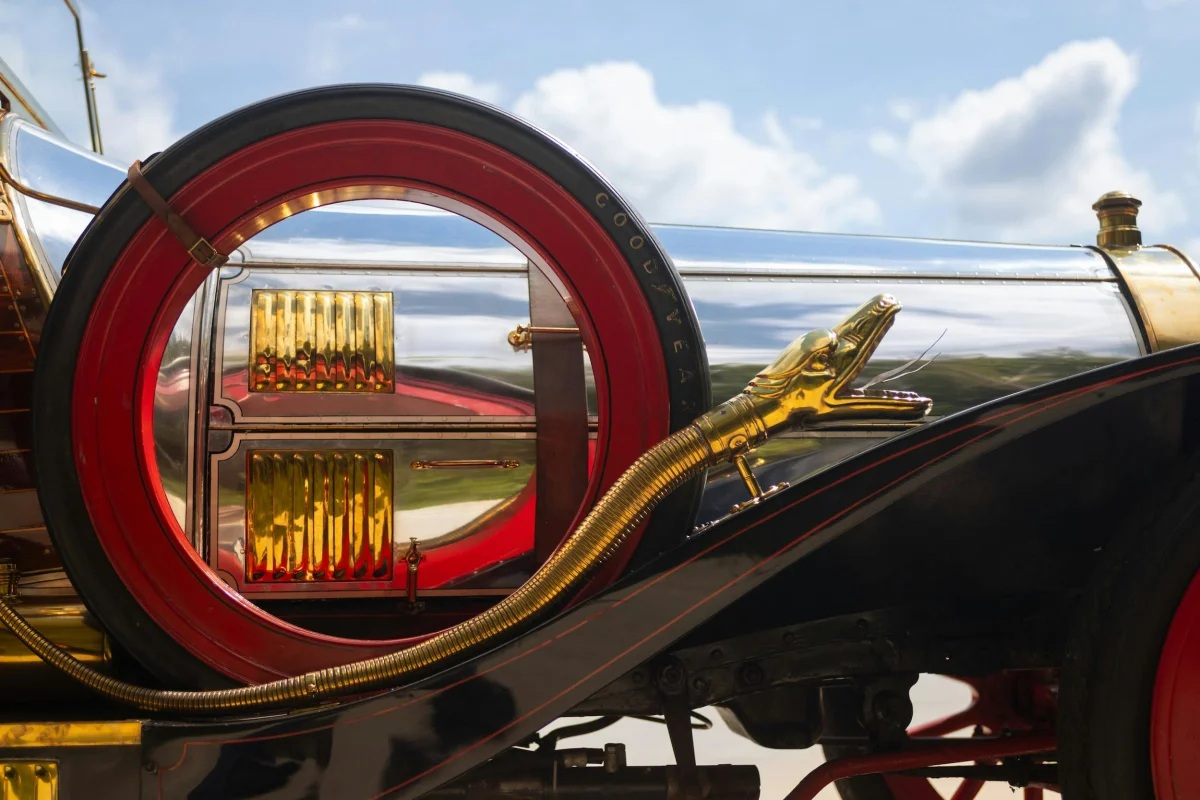
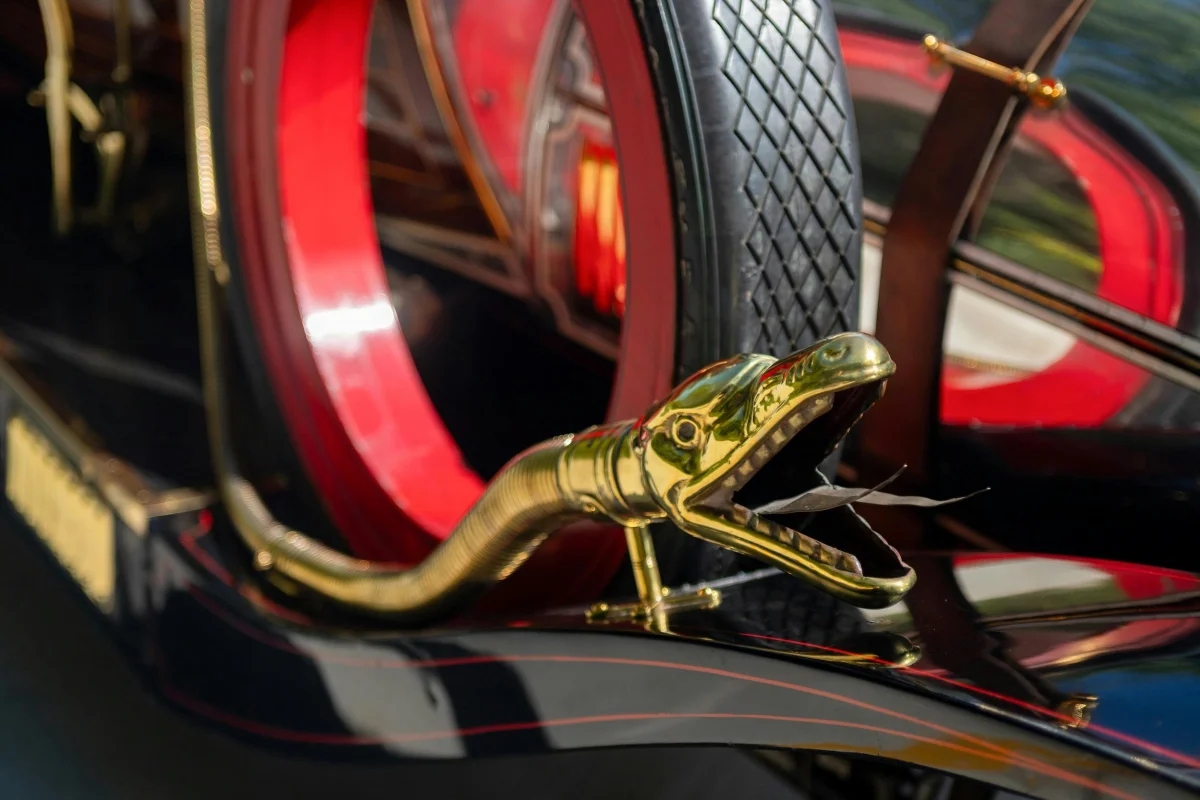
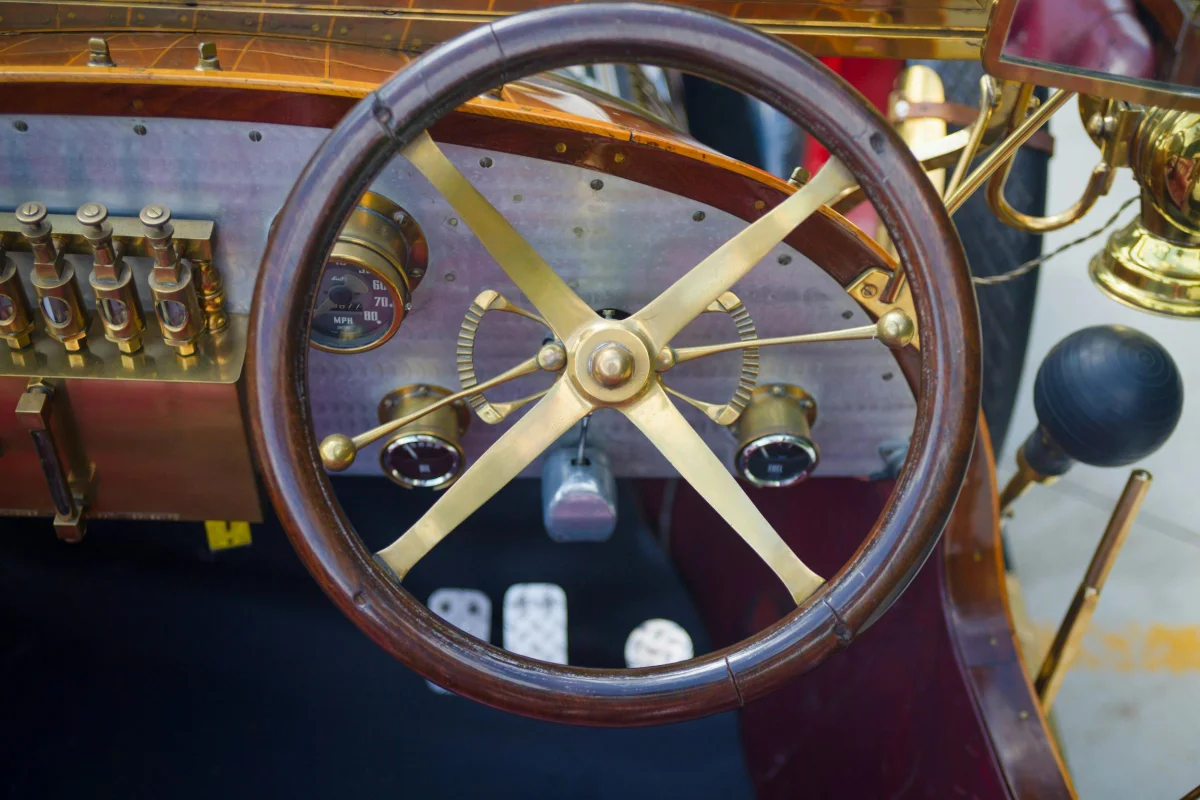
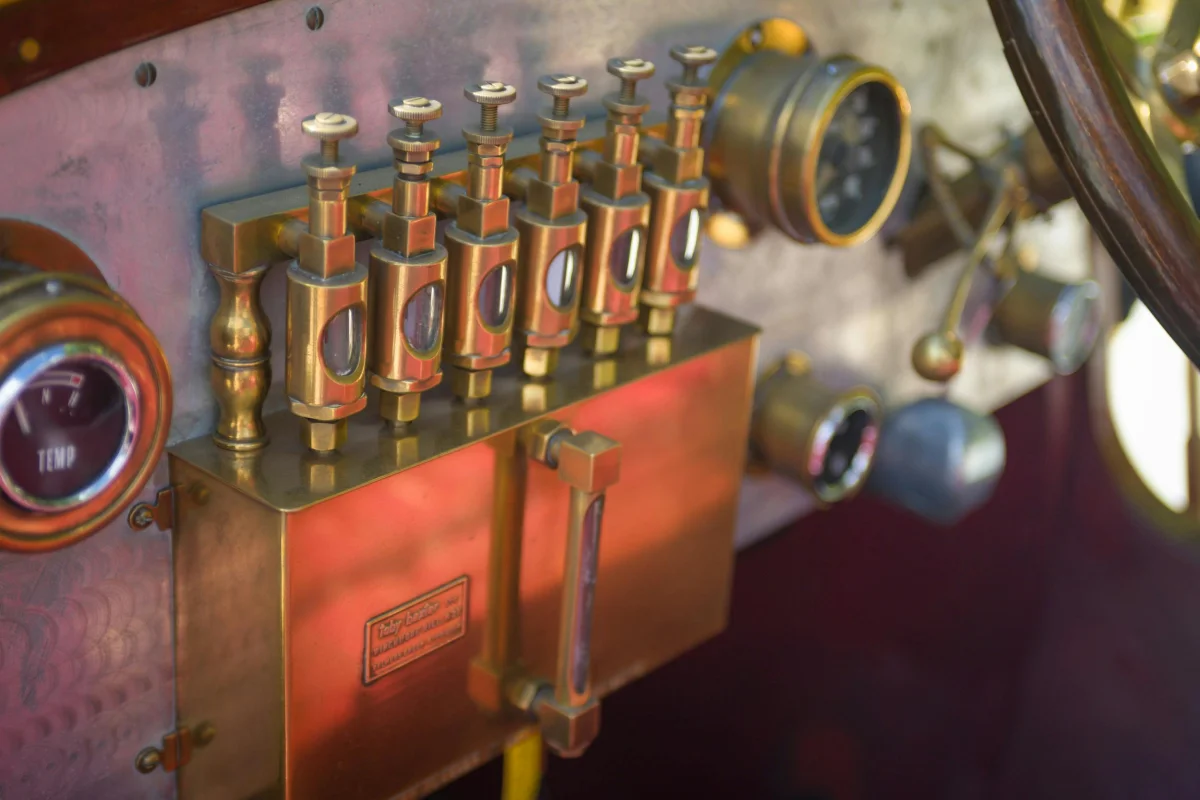
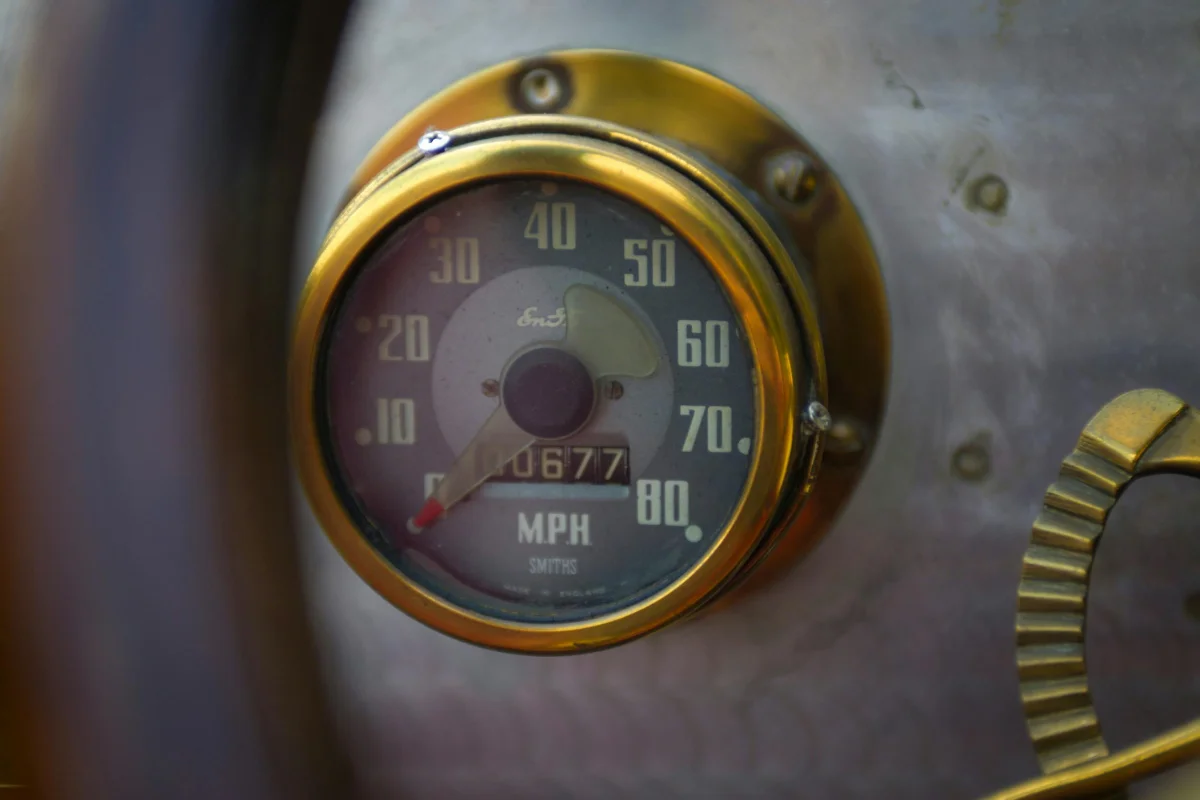
Adam arrived with a broad idea rather than a finished blueprint, Henry Mann recalls: an Edwardian-style car with a boat-like rear and hints of an aircraft. Alan Mann and Adam visited Stanley Sears, father of racing driver Jack Sears, whose collection held many prewar cars. They selected details from several examples. The dashboard oilers and lamps drew on a 1904 Mercedes 18/28hp Racing two-seater. The unusual boa constrictor horn came from a 1903 Clement Talbot Type CT4K 18hp. The Talbot’s red-painted wheels and red leather may also have informed Chitty’s finish, although the archive doesn’t confirm that link.
The build drew on a network of specialist firms. Bates Wharf Chertsey, a Thames boatyard with roots in the late 19th century, formed the wooden boattail. Gomm Metalcraft shaped the aluminum bonnet and other sheet metal. Founder Maurice “Mo” Gomm had learned to work lightweight alloys while helping construct Wellington aircraft during the war years; afterward, he moved into motorsport.
Gomm’s earlier work included the Lola Mk 1 prototype, designed and built with Eric Broadley in 1957–58, early aluminum monocoque tubs for Tyrrell Racing, the original Williams Formula 1 FX3 chassis, and oil tanks for the Ford GT40. He also prepared AMR Ford Escort bodies and some Ford factory rally cars. Chitty’s striking red spoked wheels were cast aluminum, made by Birmingham Aluminium Casting Company, established in 1903 and known for aluminum and magnesium castings.
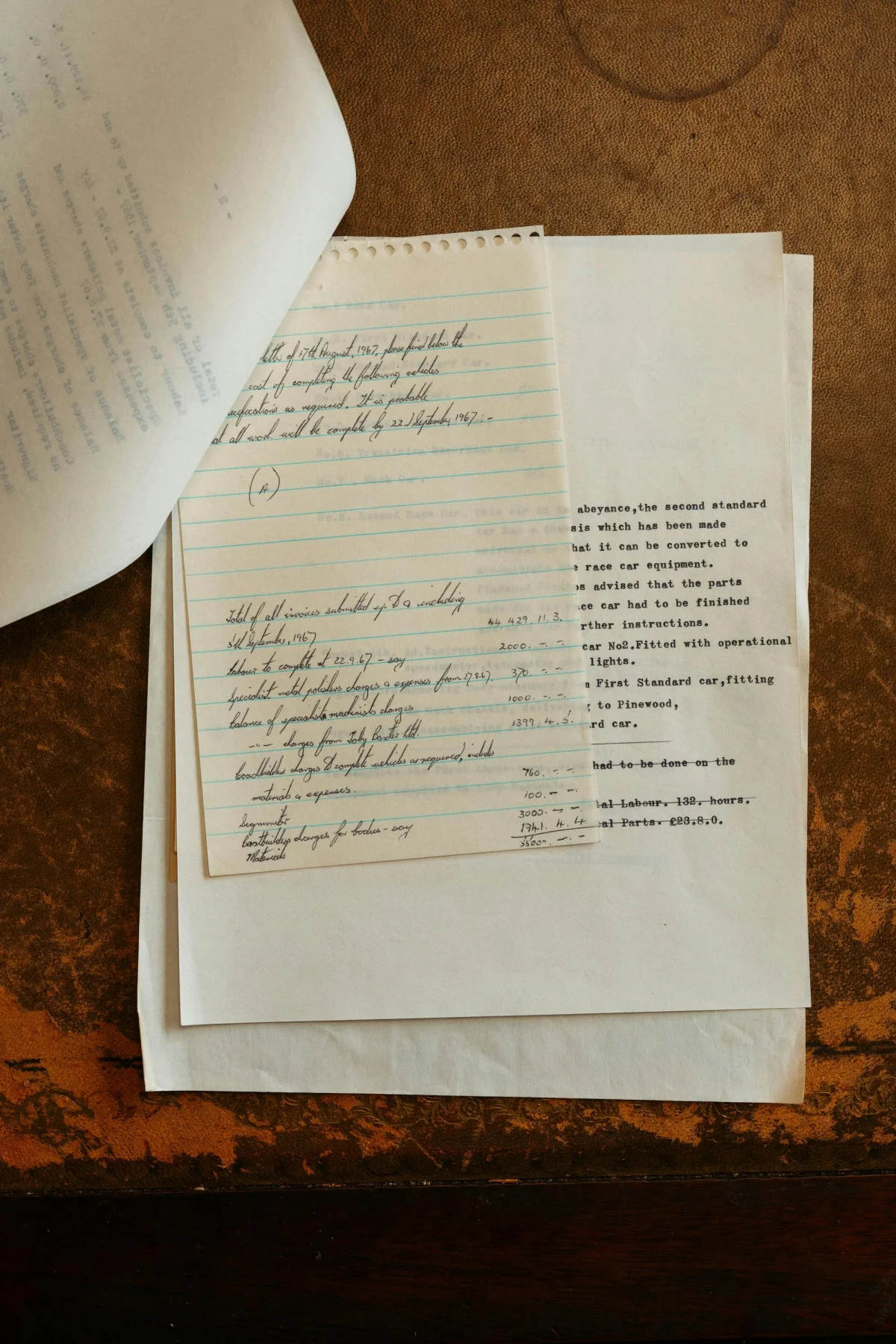
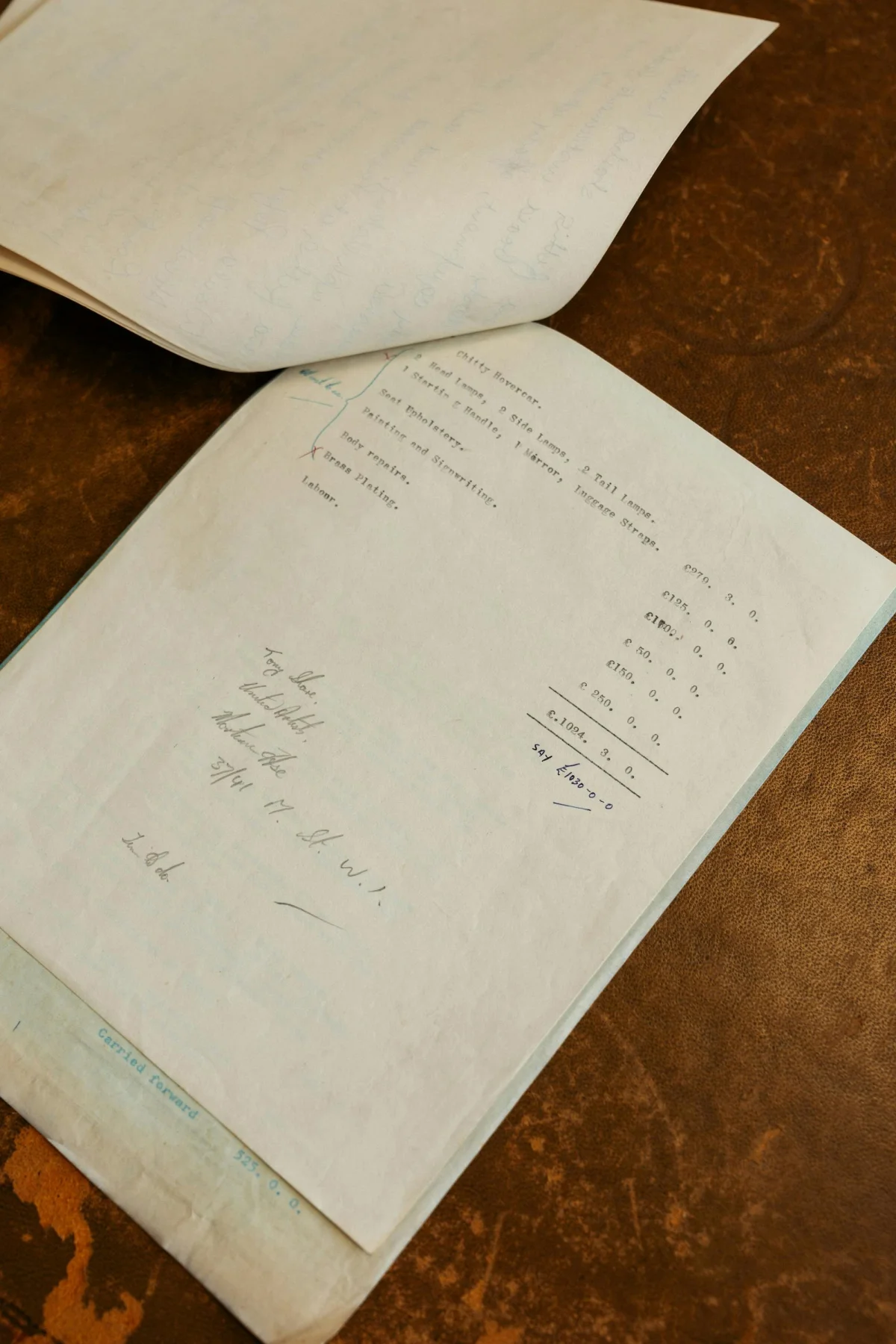
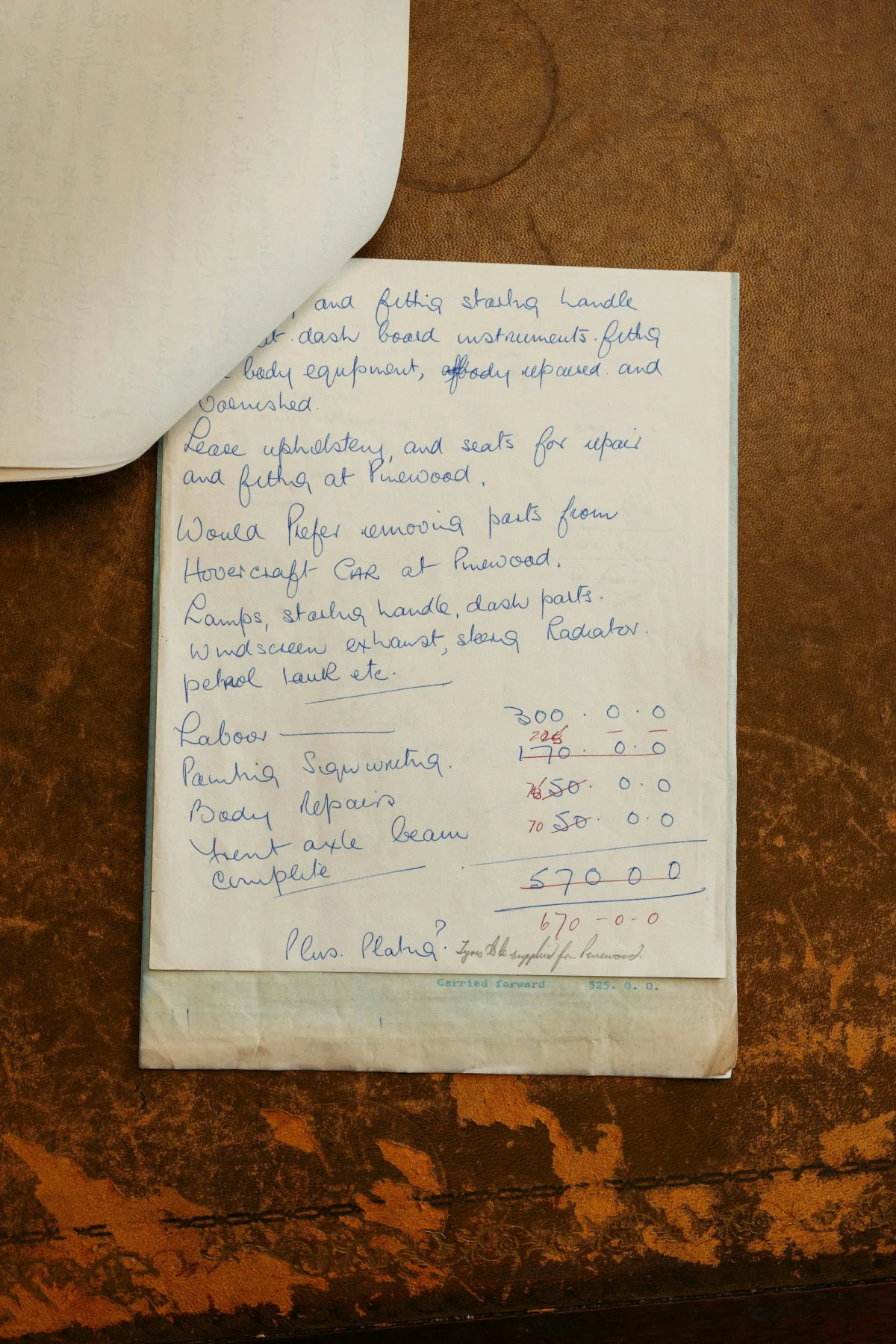
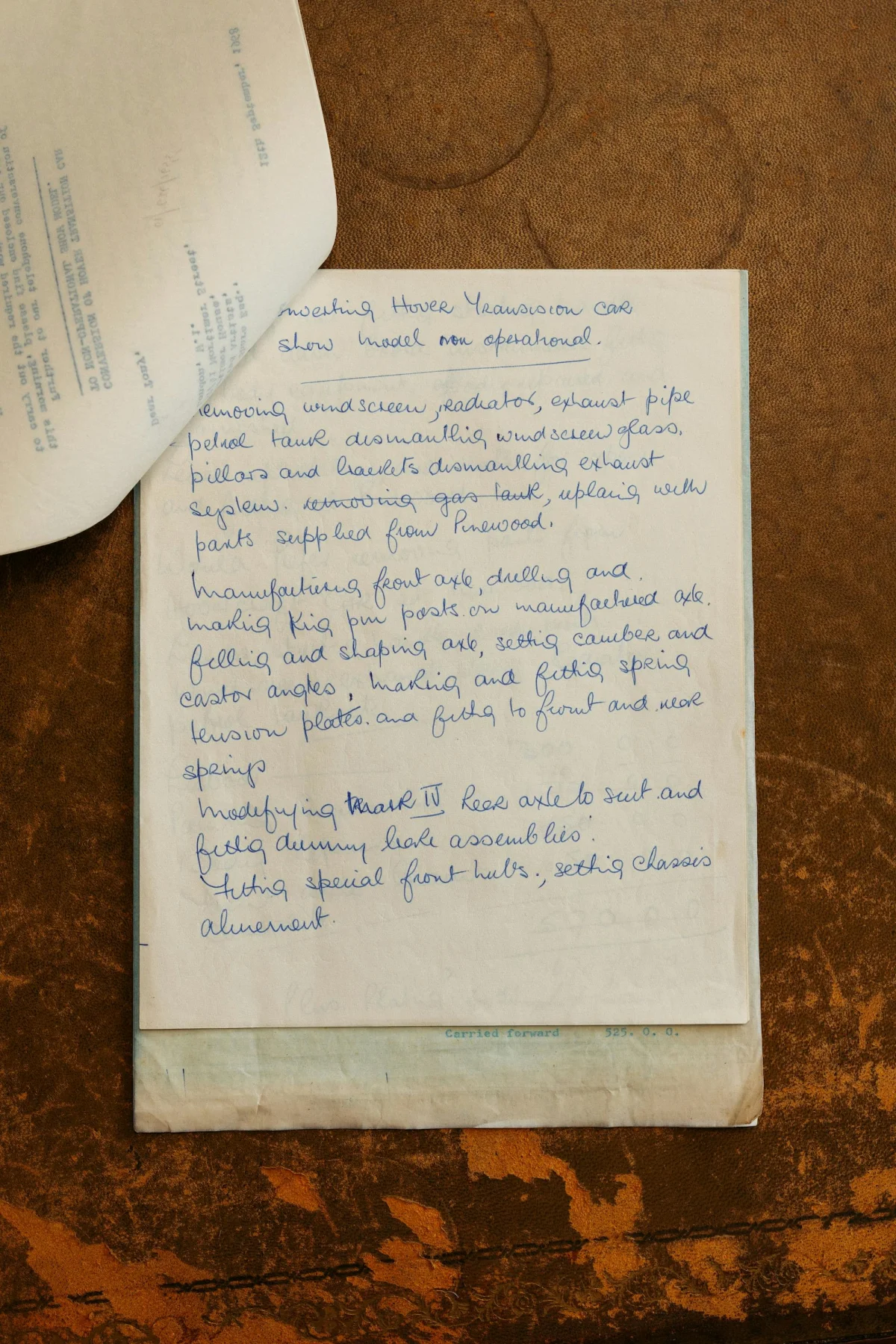
Lionel Whitehead, one of AMR’s earliest employees, joined in 1964 and stayed until the original shop closed in 1970. He handled much of the chassis work on the two road-going cars. The team first tried frames from Rolls-Royce hearses, then heavy-duty truck frames. Neither suited the job, so the crew fabricated complete frames from scratch.
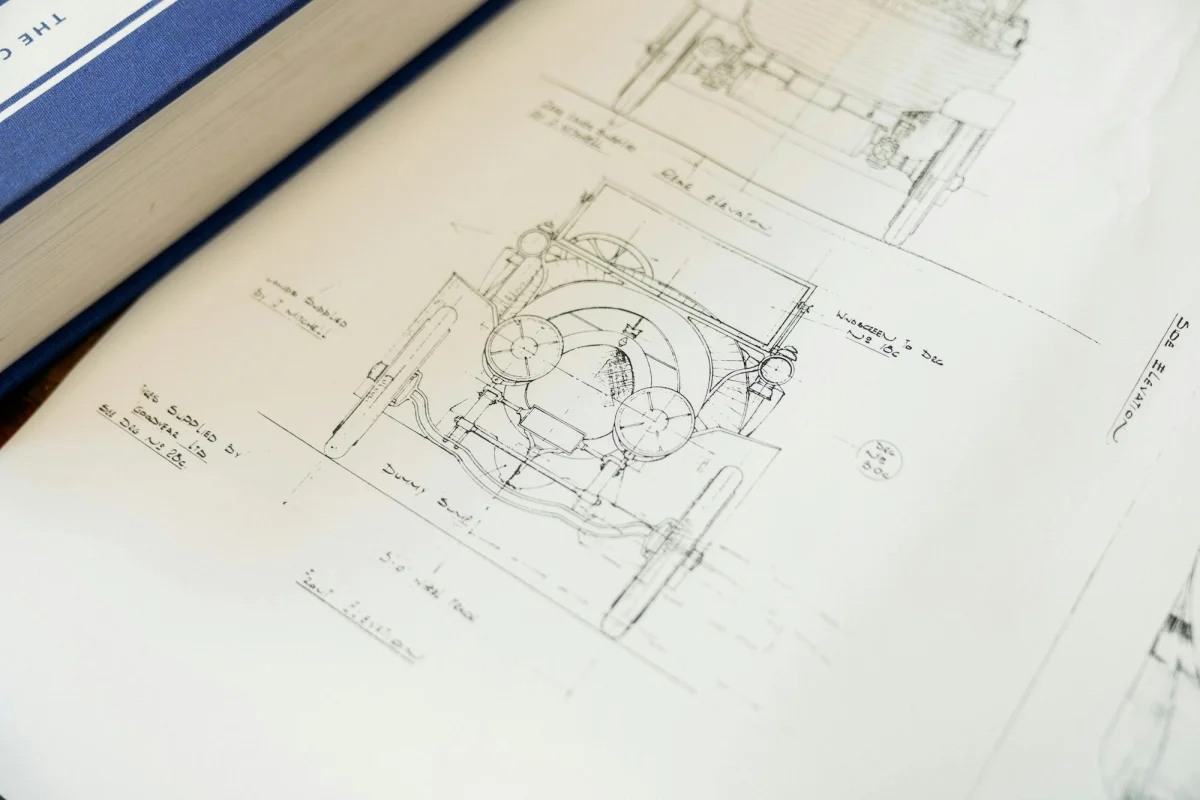
Whitehead also designed the front axle, then sent its construction to a blacksmith. It consisted of 11 parts welded together. The car had no front brakes; Ford Transit Mk 1 van components served at the rear, with truck-style rear springs made to order. The design was built around the movie car’s appearance and modest road use, not modern driving expectations.
Early attempts at frames found another purpose: they became some of the racers seen at the start of the film. The 4,000-pound Chitty needed pneumatic tires to provide some cushioning, and AMR used a 3.0-liter Ford Zephyr V-6 paired with an automatic transmission. That straightforward mechanical package sits beneath a body designed to suggest almost anything.
Pulling back the magic curtain to reveal the workaday reality does nothing to alter my love for this car.


From the Pinewood stages to Michigan
Filming began in England on Monday, July 17, 1967, less than a month after work wrapped on the fifth Bond film, You Only Live Twice. Much of the crew carried over, including the props and lighting teams, cameramen and Adam. Pinewood Studios in Buckinghamshire served as the production base. Nearby locations included Cobstone Windmill in Turville, used as the Potts family home. Poor weather later pushed part of the shoot to the south of France.
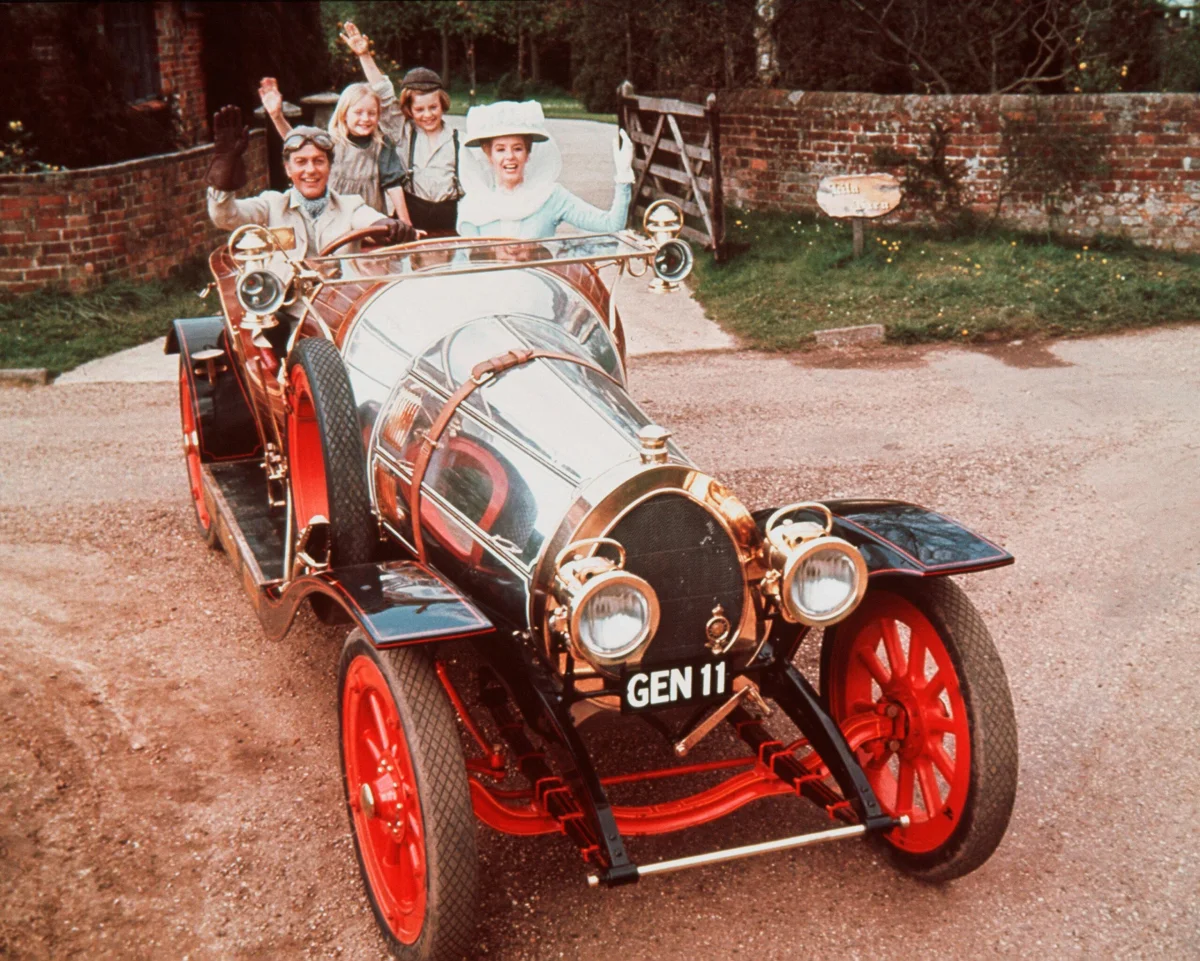
The first road-going “standard car” reached the production on July 26, just 76 days after work began. The second followed on August 17, 22 days later. Henry Mann was a child during AMR’s racing and movie-car years and didn’t know his father had built Chitty. He watched the film without that connection until the family cleared his grandmother’s belongings after her death and found a small model on her dresser. His father explained the story. Mann remembers thinking the information would have been useful when he was a schoolboy.
He’s still struck by the film’s reach: a machine made in a small Surrey workshop could inspire a viewer across the Atlantic and become an icon. That enduring affection is part of the car’s story, as much as the build notes and the six versions made for the production.
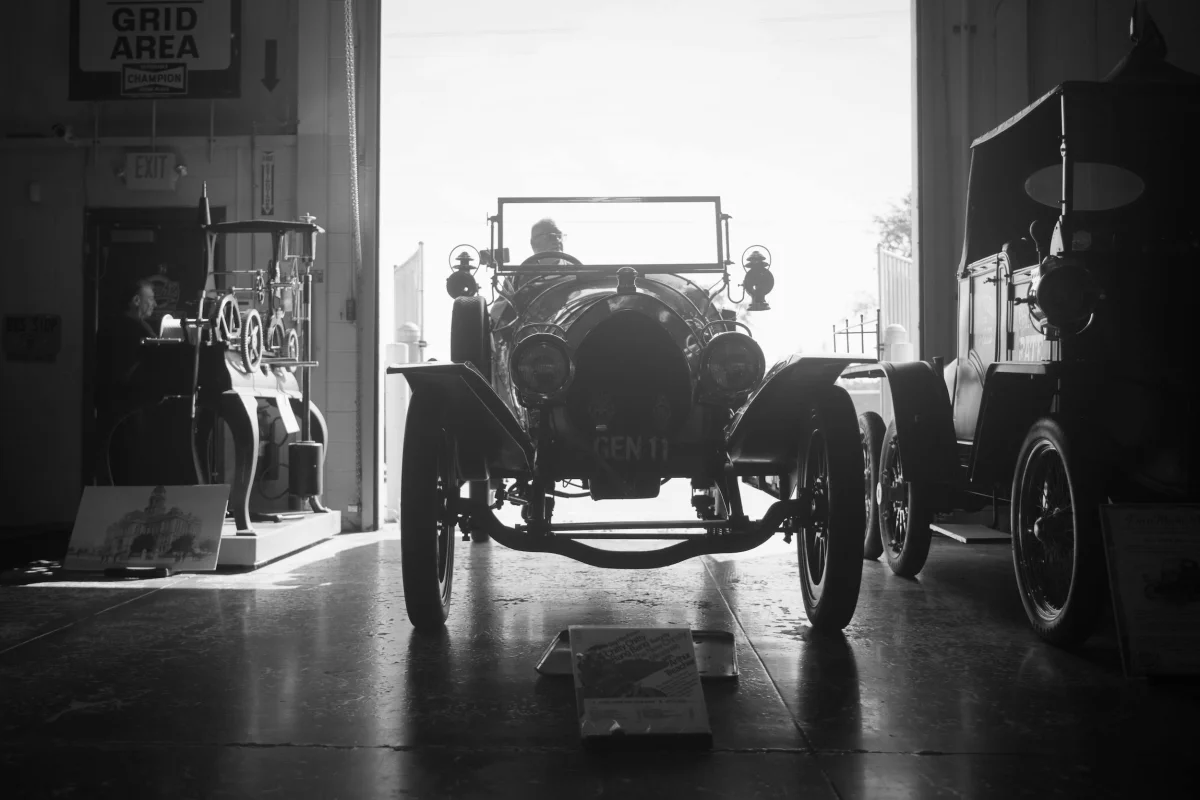
Both road-going cars survive. The first, sometimes called Chitty Prime, remained in private hands in England until 2011, when it was bought by Peter Jackson, director of the Lord of the Rings and The Hobbit trilogies. It now belongs to his collection of antique aircraft and cars in New Zealand. Chitty Beta, the second car, toured the United States to promote the film and later appeared in collections and museums. The Stahls Automotive Foundation of New Baltimore, Michigan, bought it in May 2021.
After learning that Chitty Beta was nearby, I contacted the foundation’s executive director, Jeff Stumb, who invited me to see it. The moment the garage door opened, the distance between childhood and the present seemed to collapse. I was 61, but for an instant the car carried me back to the seven-year-old who first saw it on television.
What the movie car feels like in person
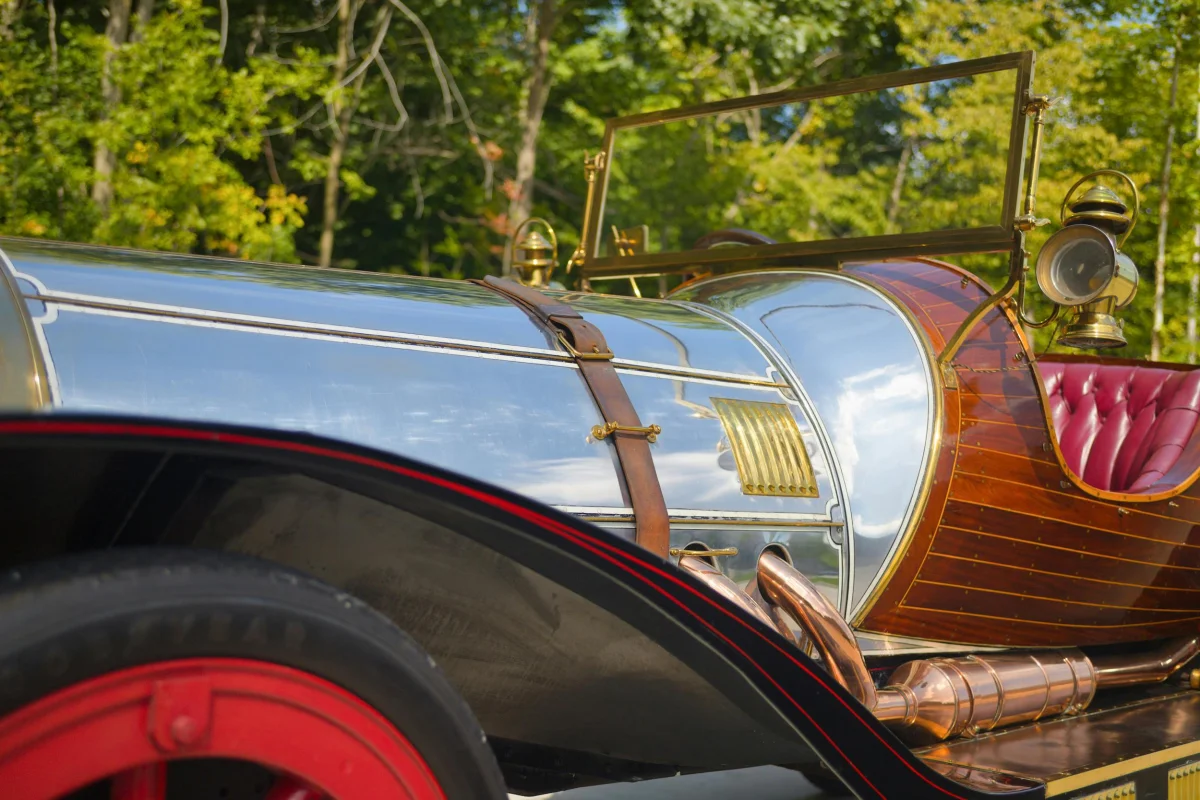
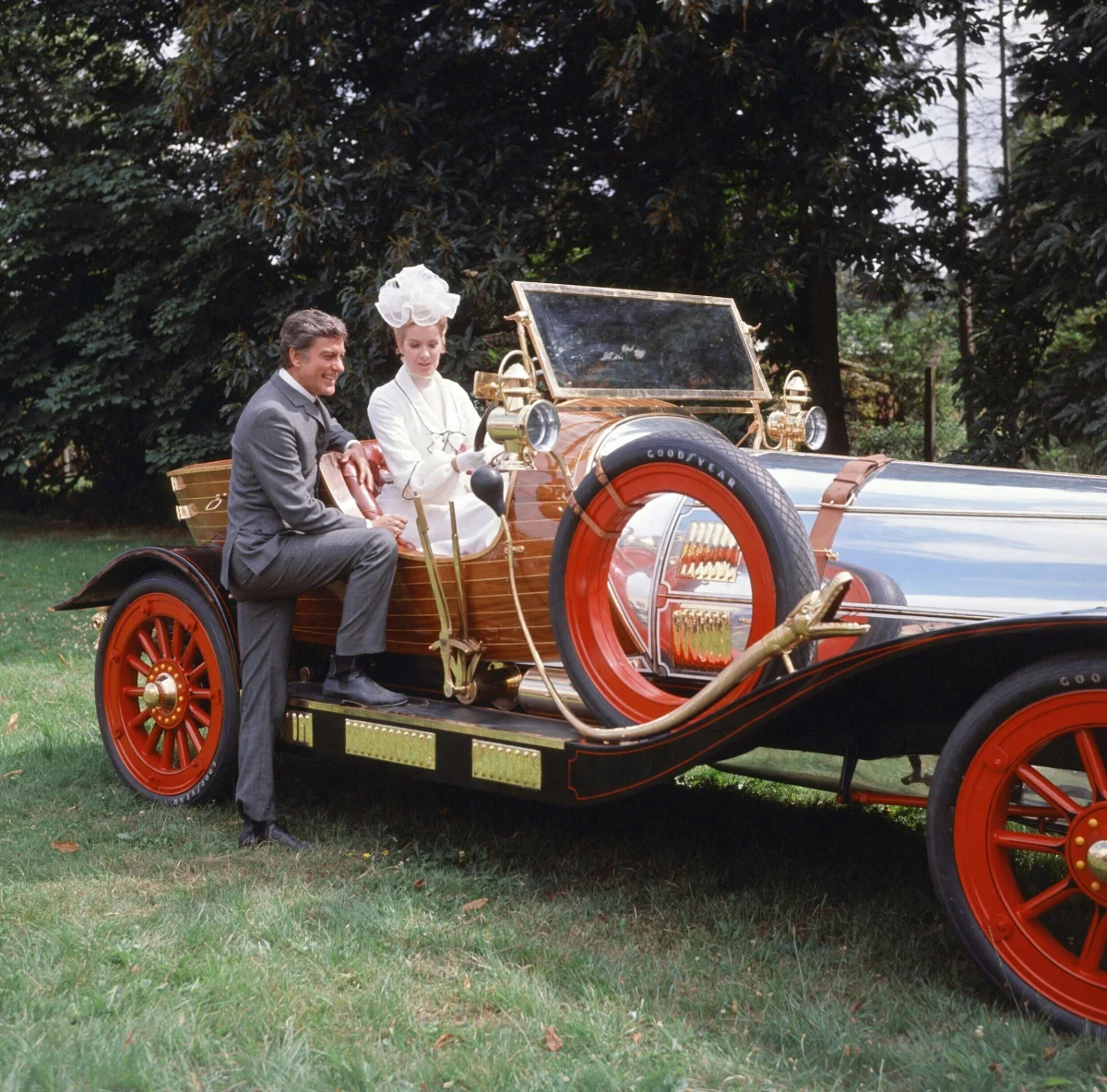
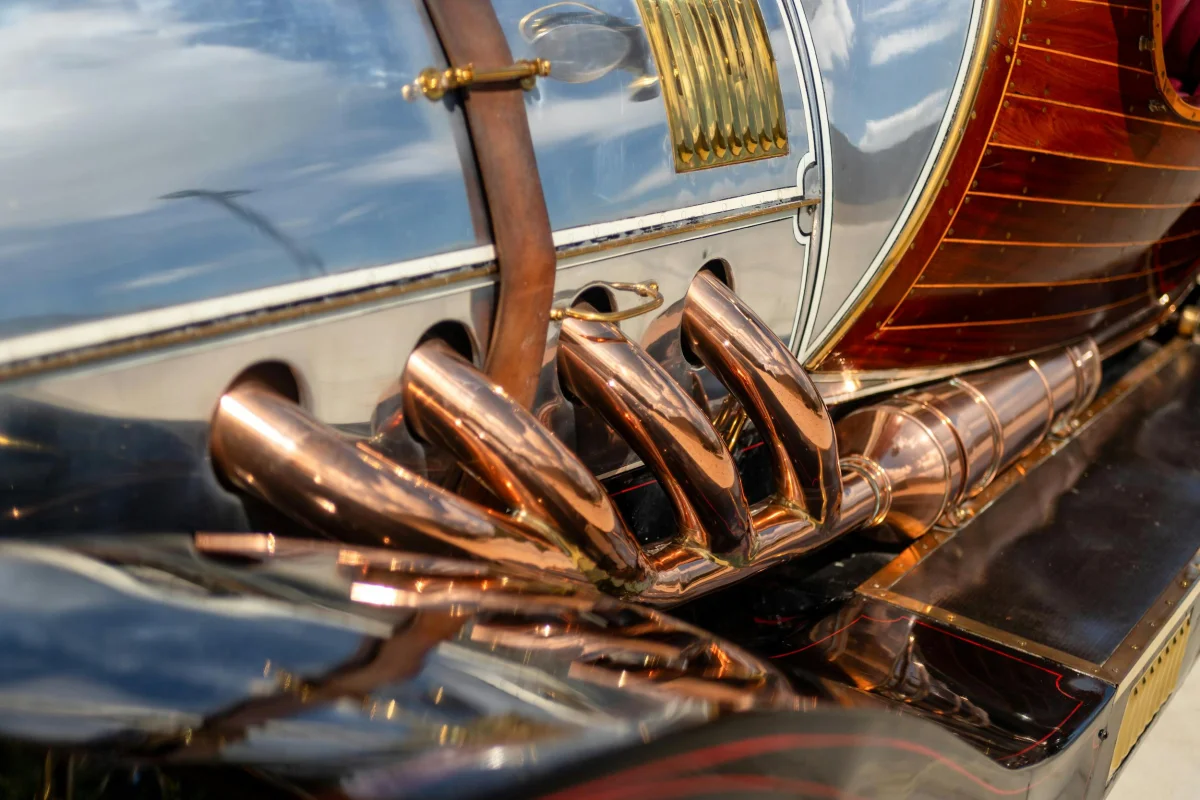
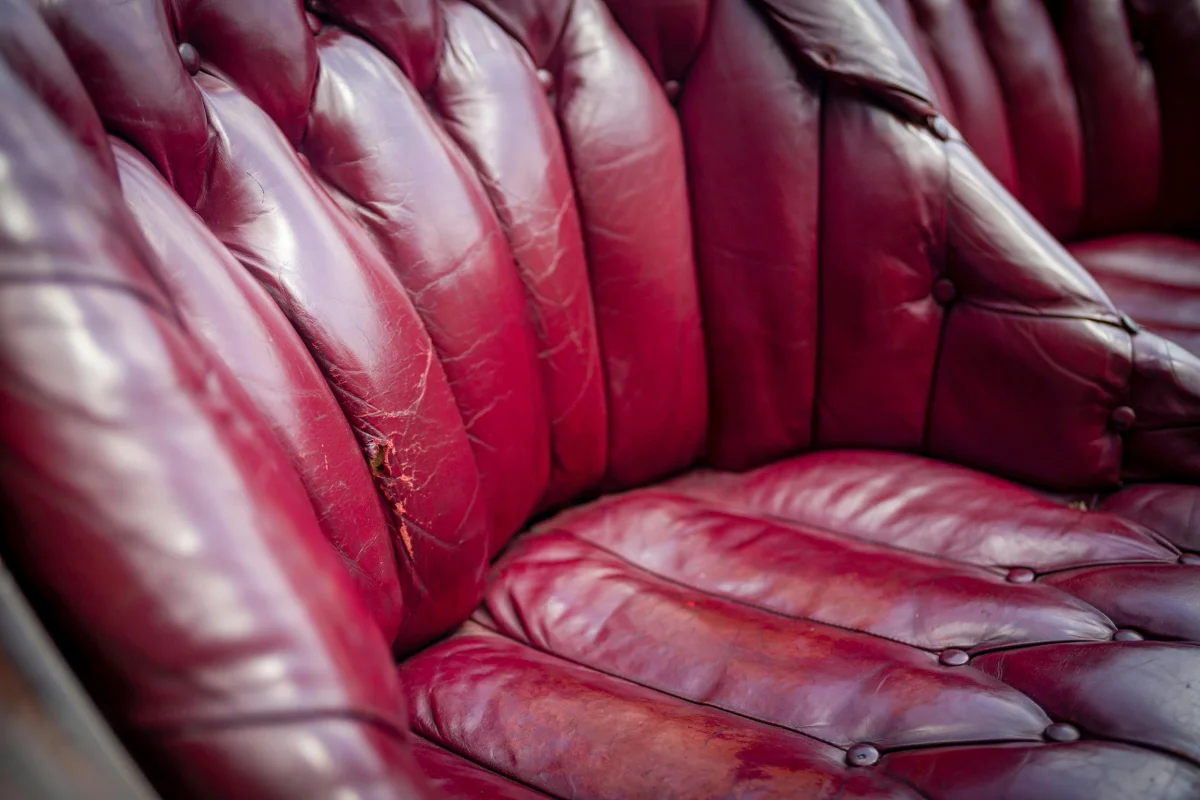
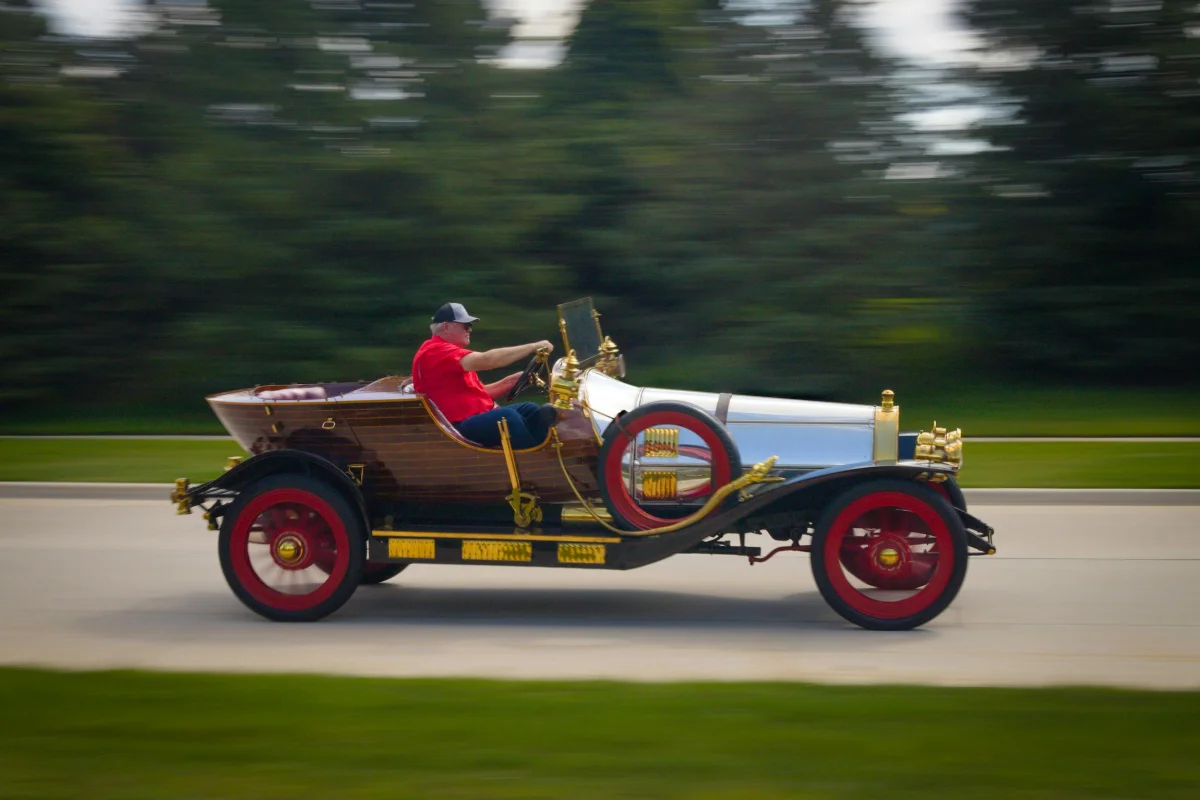
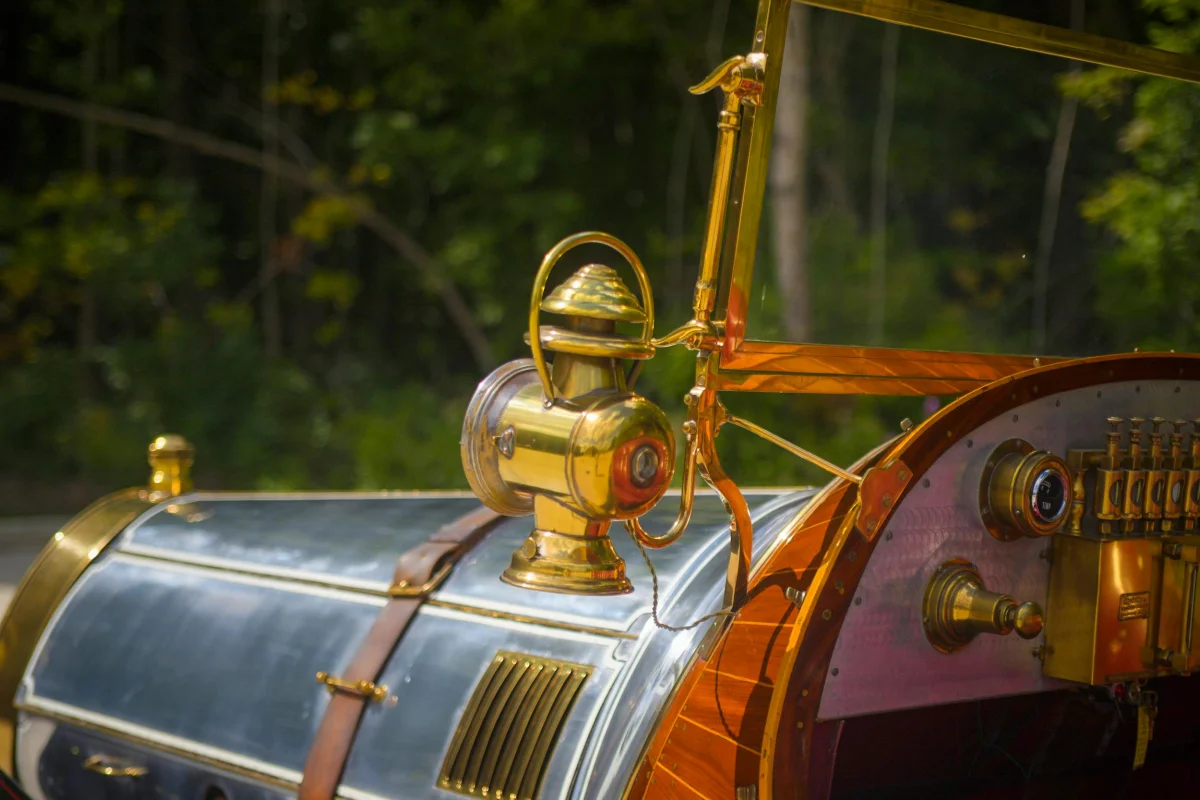
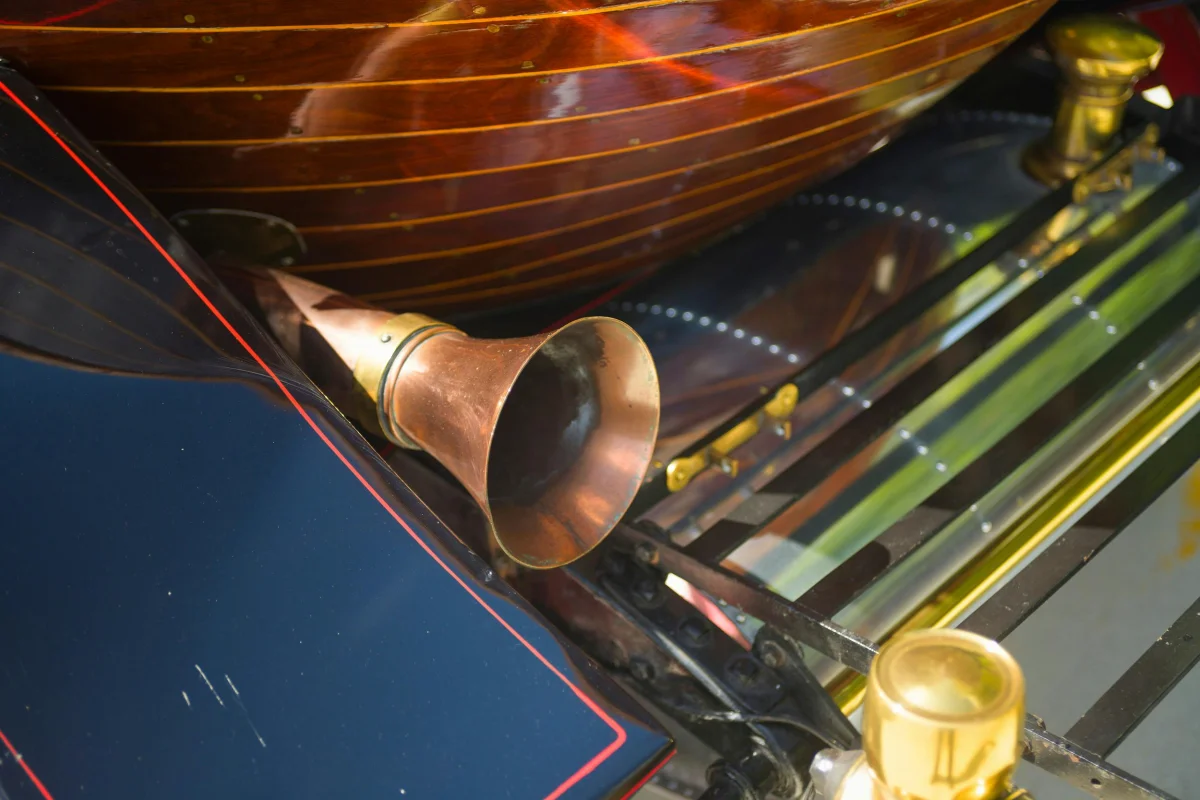
On screen, Chitty’s scale is difficult to judge. In person, it’s larger, more stately and more imposing than the image suggests. Its design holds together beautifully: the brass radiator with its Bugatti-like shape, black fenders edged in red, polished aluminum bonnet, copper-colored exhaust, leather strap and varnished wooden tail. Inside, the red leather has the soft, worn character of a favorite baseball mitt. The boat-inspired rear looks as if it belongs on a vintage Chris-Craft.
The proportions are the trick. Tribute cars can reproduce individual details, but it’s hard to recreate the balance of the original. Chitty looks like a machine that might have come from another time, with enough hand-built detail to reward a closer look.
The proportions are perfect and the details delicious.
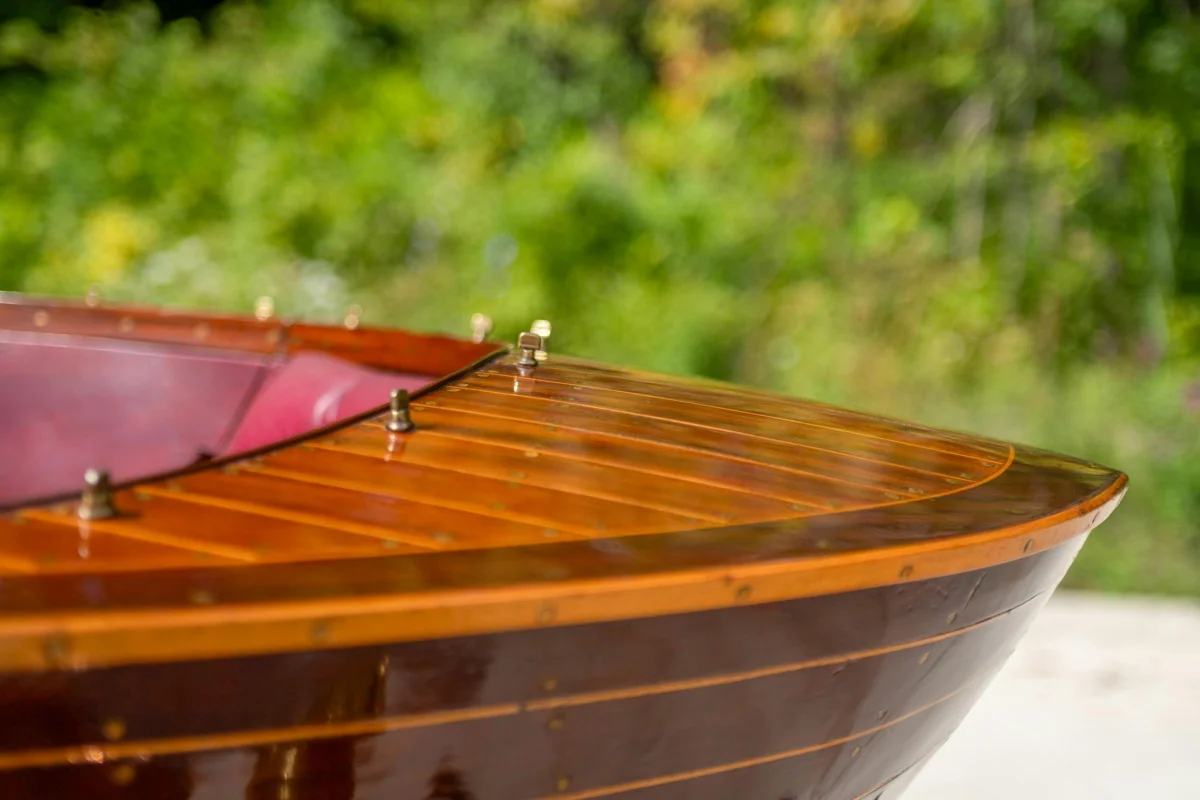
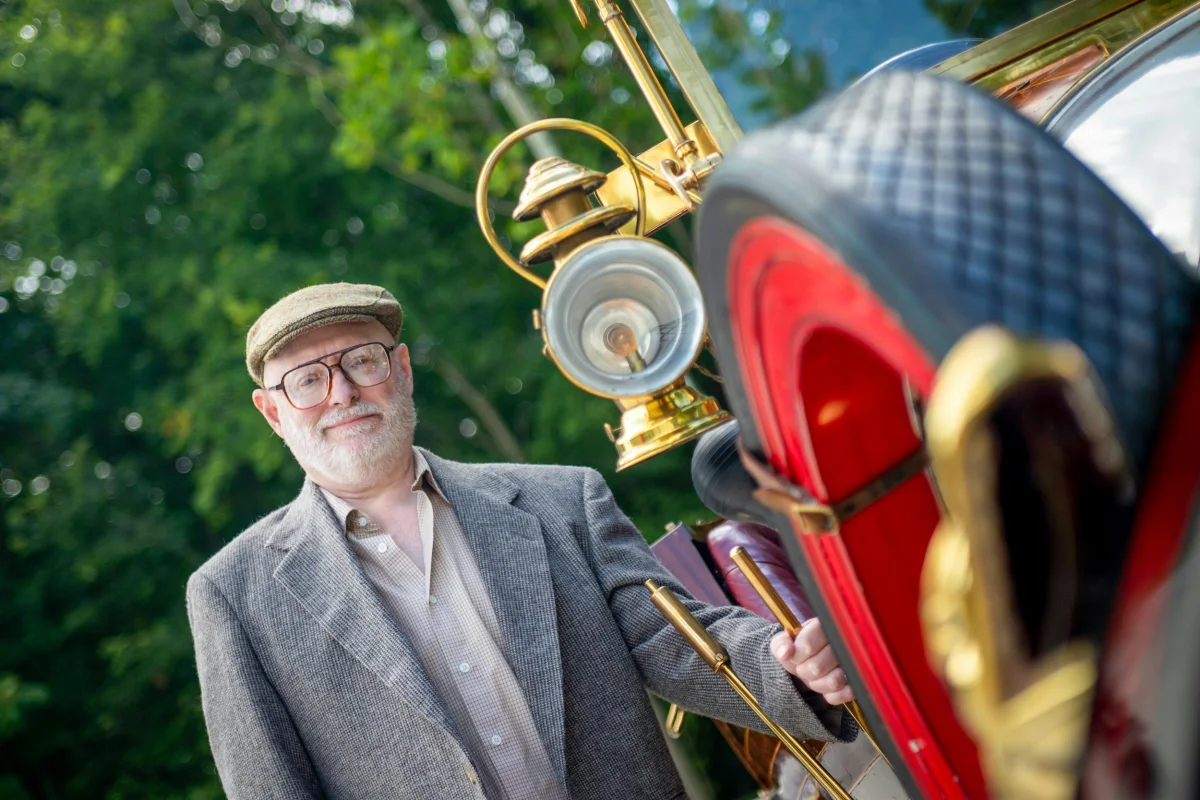
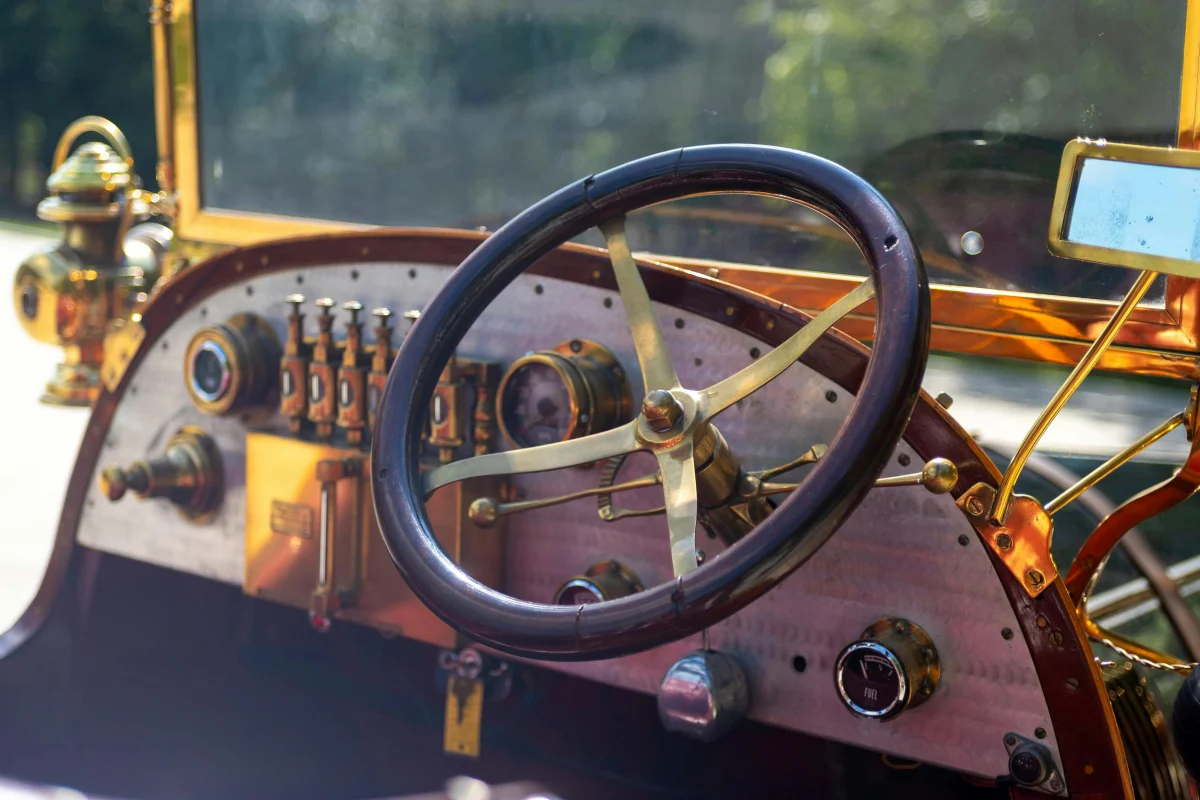
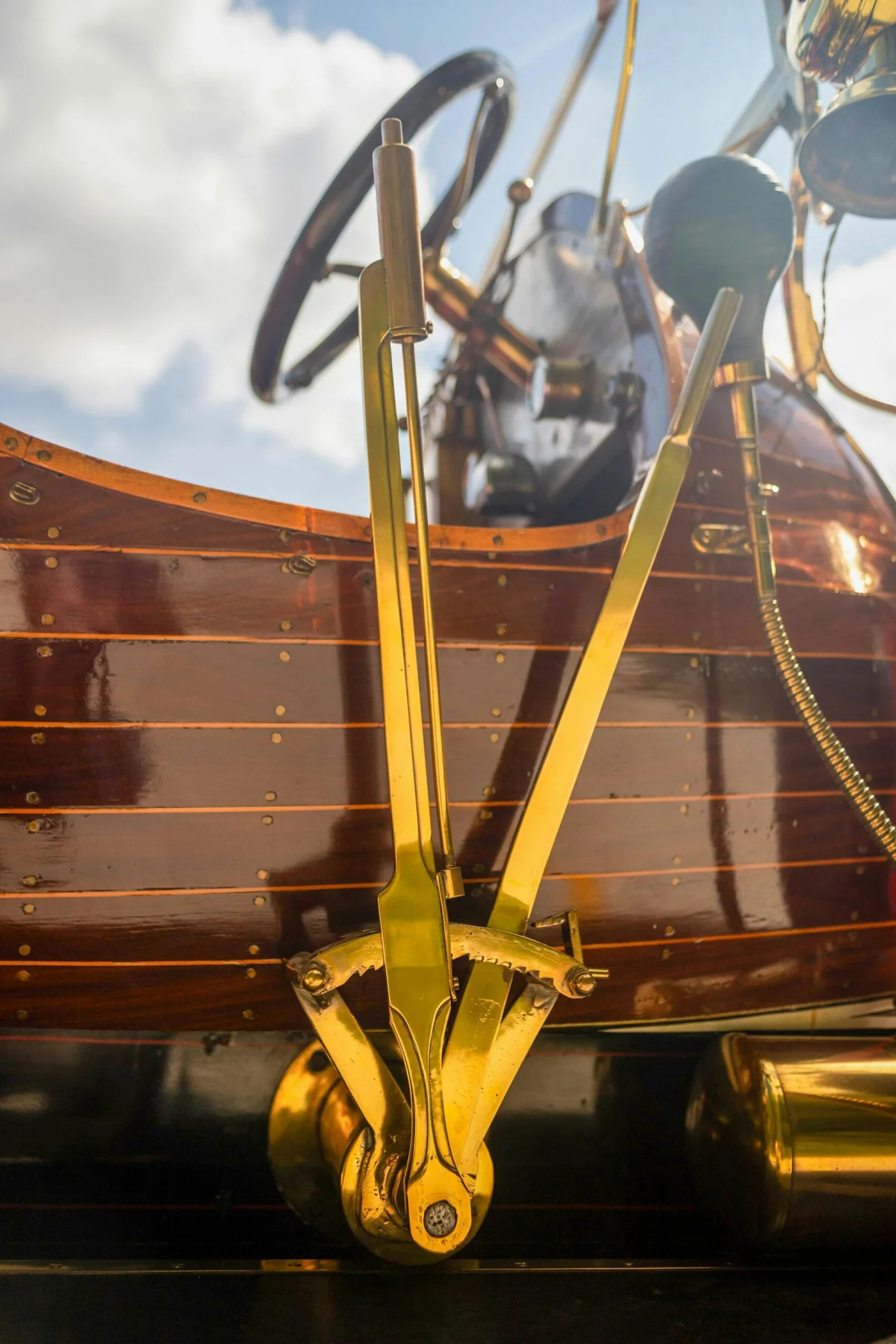
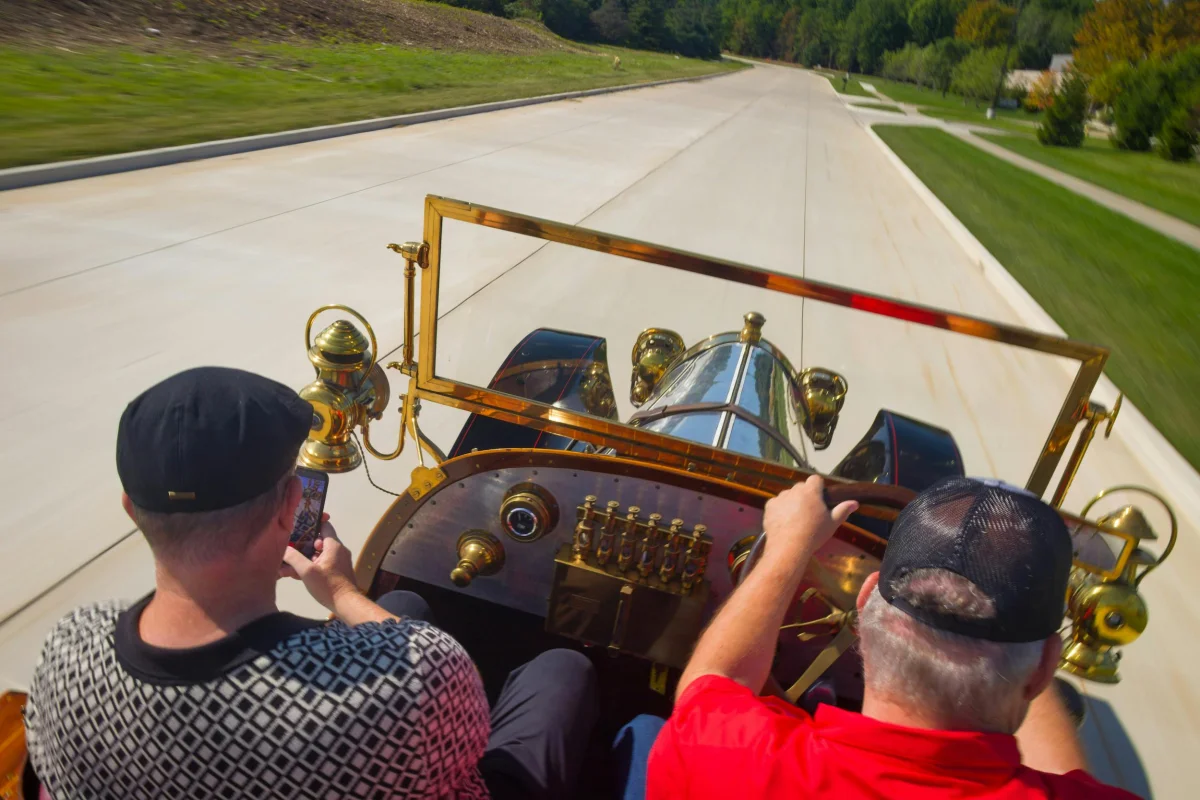
I rode beside Stumb, who took the wheel. Chitty is right-hand drive, with two long brass levers beside the driver: one selects the automatic transmission, the other works the handbrake. The oversized controls and lack of front doors make getting into the driver’s seat awkward, so the driver climbs in from the passenger side, over the running board and the wooden body’s curved cutaway.
The engine starts easily and settles into a quiet burble. There’s no theatrical clatter or backfire to match the car’s name. Stumb selects drive and takes us along the main road through the collection’s grounds. The long wheelbase makes the ride unexpectedly smooth, but it also gives the car the turning circle of a large ship, as Van Dyke once put it. Its steering doesn’t return to center after a turn, so Stumb has to wind the wheel back by hand.
The front seat is close-fitting but comfortable enough; the back is clearly meant for children. Whitehead’s account of the absent front brakes stays in my mind, and our speed remains below 25 mph. Looking down the roughly five-foot bonnet, I see the summer sky reflected in the metal and imagine, for a moment, that pulling back on the wheel might lift us off the road. We stay firmly on the ground.
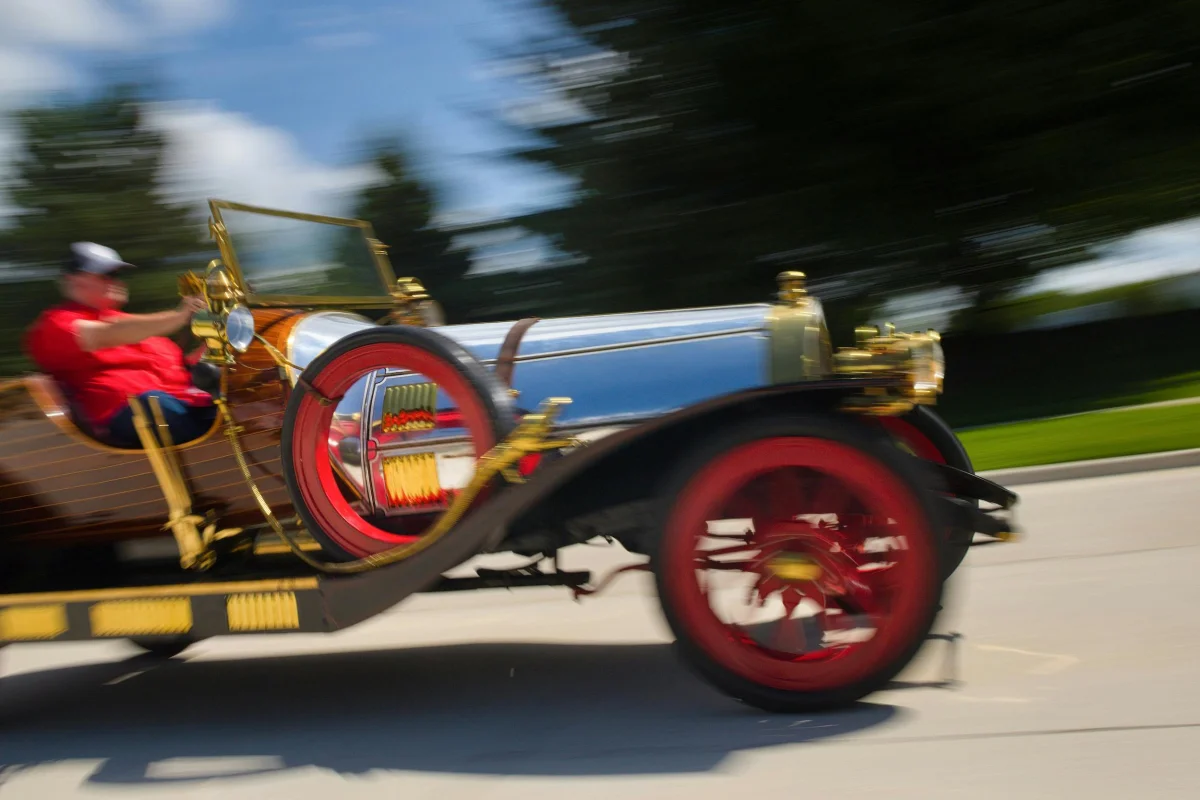
The view down the five-foot hood reflects the blue summer sky. My inner 7-year-old is pinching my 61-year-old self.
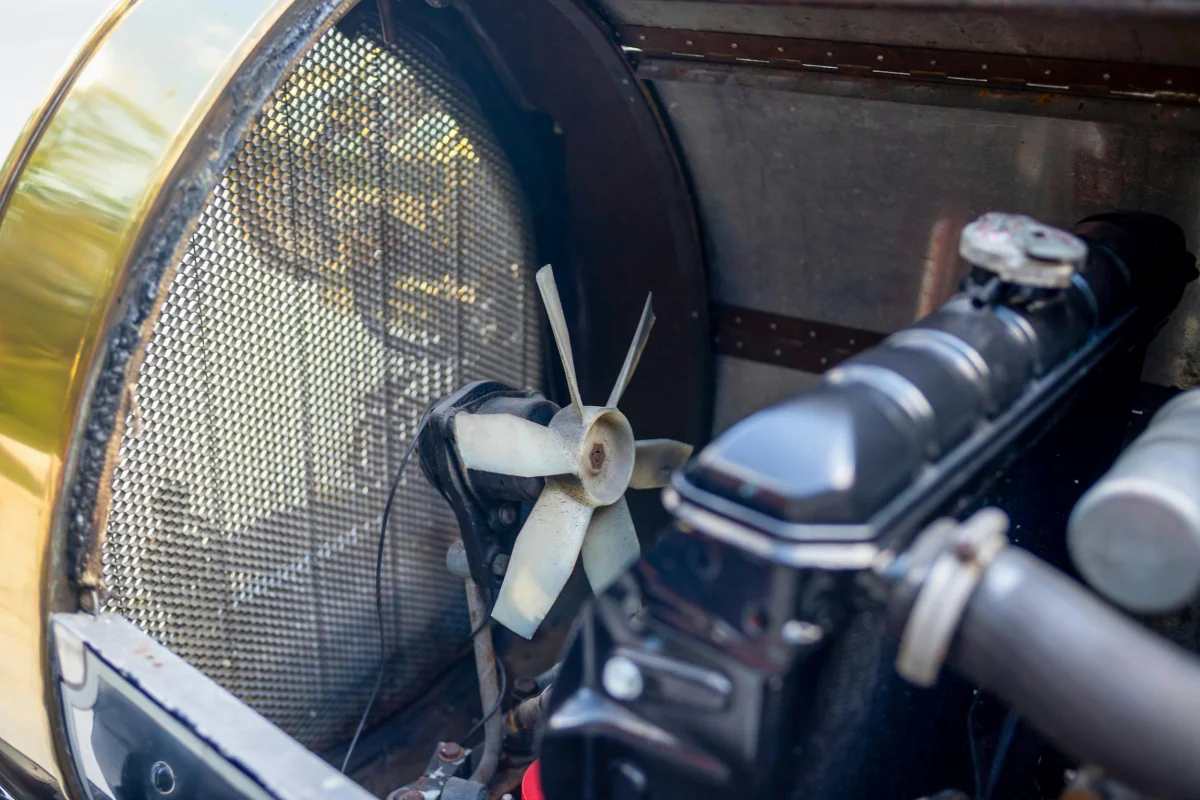
After the drive, Stumb releases the leather bonnet strap and opens it. The Ford V-6 looks comically small beneath the long hood. The handsome exhaust pipes end there; they aren’t connected to the engine. The front grille is decorative, not a radiator. Behind it, a small electric fan blows toward the engine’s actual radiator. Knowing how the effects were achieved doesn’t take away the car’s appeal. In some ways, it makes the craftsmanship more impressive: the illusion is built from ordinary components and carefully arranged surfaces.
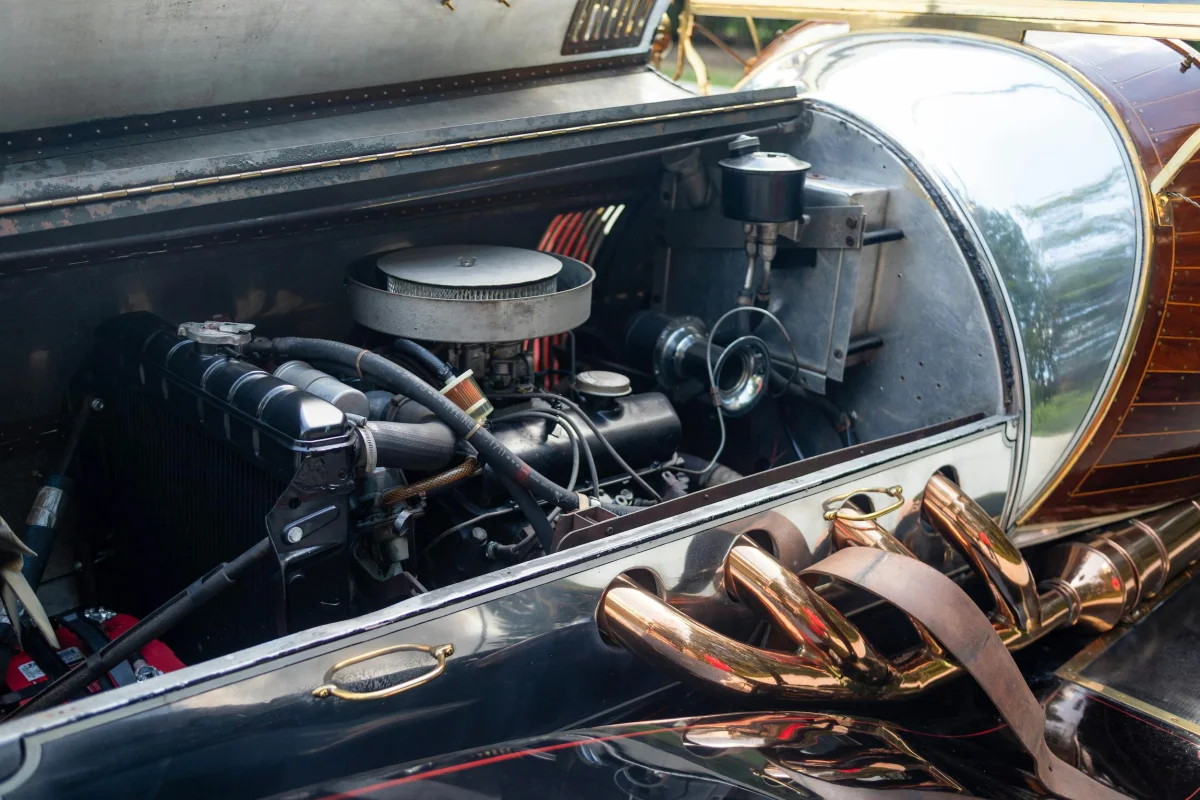
That’s what separates Chitty from a recognizable production car used in a film. A Mustang remains a Mustang, a Trans Am remains a Trans Am, and the DeLorean in Back to the Future still begins as a DeLorean. Chitty was conceived from the start as a movie character. Adam’s design, AMR’s engineering and the work of the small specialist firms created a car with no everyday counterpart. Its mechanical compromises and stagecraft are part of the story, while its unmistakable shape makes it feel singular.
Meeting Chitty Beta joined the fantasy to the real object: a 4,000-pound, Ford-powered car with hand-built structure, a wooden boat tail and no front brakes. The details don’t diminish the magic; they show how much thought it took to put that magic on screen. More than half a century after the film first reached audiences, Chitty still makes the case that a movie car can be more than a prop. It can become the reason someone falls in love with cars.
The post Chitty and Me appeared first on Hagerty Media.
===