JAECOO 7 Leads UK Sales as OMODA&JAECOO Registrations Double
The JAECOO 7 topped UK sales in September with 10,813 registrations, as its maker expanded rapidly and electrified models dominated its mix.
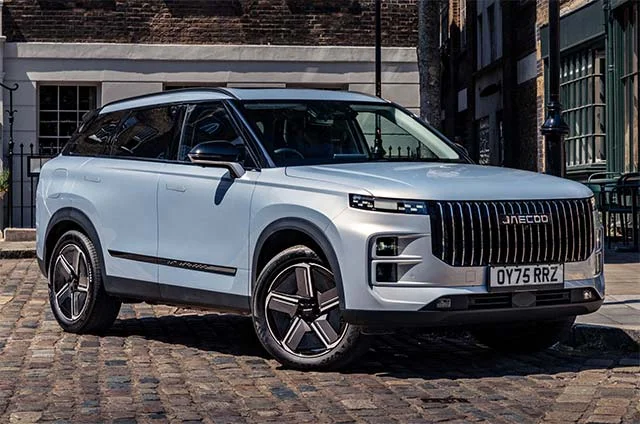
The JAECOO 7’s second monthly sales lead in the UK puts a sharp number on the pace of the brand’s rise: 10,813 registrations in September 2026. The SUV finished ahead of the Tesla Model 3, Ford Puma and Kia Sportage, repeating its market-leading result from March. For a nameplate introduced to British buyers in January 2025, that’s a fast move into the heart of the market.
The result also lifted parent company OMODA&JAECOO UK to its strongest month since entering Britain. The group recorded 22,296 registrations, equal to a 6.37% share of the new-car market, according to figures from the Society of Motor Manufacturers and Traders (SMMT). That was more than twice its 10,812 registrations in September 2025.
A rapid rise, with a strong September tailwind
September is a major registration month in Britain because new number plates traditionally bring a seasonal boost. That context matters when judging a monthly sales chart: the JAECOO 7’s lead is notable, but one month’s result doesn’t establish how it will perform across a full year.
The brand’s share nevertheless grew substantially year on year. JAECOO accounted for 4.30% of the market in September, compared with 2.07% a year earlier. OMODA’s share rose from 1.38% to 2.07%. Together, the two marques have now passed 100,000 cumulative UK sales, less than two years after OMODA arrived.
The wider shift is visible in the performance of other Chinese makers. They accounted for around 23% of UK new-car sales in September, based on SMMT data cited in the supplied reports. BYD held 5.75% of the market, JAECOO 4.3% and Chery 2.8%. These figures describe a more crowded competitive field, in which newer entrants are now taking meaningful volume from established brands.
Price, presentation and powertrain choice
The JAECOO 7’s appeal appears to rest on a familiar buyer calculation: a sizeable SUV, a premium-leaning cabin and plenty of standard equipment at a lower entry price. The source puts starting prices at roughly £30,000. That places the model well below the Range Rover Velar, with which its exterior has been compared. The jokey “Temu Range Rover” nickname captures the resemblance people see, but the more practical question for shoppers is how the JAECOO’s equipment and ownership experience stack up at its price.
The range includes plug-in hybrid technology as well as conventional petrol power. That gives buyers who aren’t ready to move fully to a battery-electric car another route to electrification. The figures provided don’t specify the JAECOO 7’s electric range, fuel consumption or charging performance, so those details need to be checked against the exact version before comparing running costs. A plug-in hybrid’s day-to-day value depends in part on regular charging and how much of a driver’s routine can be covered on electric power.
Electrified sales are central to the company’s mix
Electrified vehicles also had a strong month across the UK market. Battery-electric cars represented 28.3% of new-car sales in September, while plug-in hybrids reached a 17% share. Within OMODA&JAECOO’s own registrations, more than three-quarters were electrified: plug-in hybrids accounted for 55.7%, full hybrids 10.4% and battery-electric models 10%.
Petrol-only vehicles made up 23.9% of the group’s September sales, down from 37.5% a year earlier. That mix suggests the company is giving buyers several ways to reduce petrol use, rather than relying on a single type of electric vehicle. For prospective owners, the choice brings practical questions about charging access, typical journeys and the specific powertrain’s efficiency. The supplied figures describe sales mix, but don’t provide model-by-model running costs.
Retail reach and aftersales will shape the next phase
OMODA&JAECOO has been building the support network needed to serve a rapidly growing fleet. Its UK retailer count rose from 81 locations to 146 over the past year. The range expanded at the same time, from three model families and five powertrain options to six model families and 12 powertrain choices. It now includes the OMODA 5, 7 and 9, alongside the JAECOO 5, 7 and 8.
Support after purchase is another part of the ownership equation for a relatively new brand. In August, the company extended its seven-year/100,000-mile manufacturer warranty to cover additional components and applied that change to vehicles already sold in the UK. It also expanded its RAC arrangement for roadside and warranty support. These changes may help reassure buyers, though the available information doesn’t specify every newly covered component or service condition.
Reliability remains a more immediate question. The JAECOO 7 appeared among the UK’s least reliable cars in a What Car? reliability survey. The reported issues mainly concerned electronic systems rather than the powertrain, and some owners experienced long repair times. A survey result doesn’t determine how every vehicle will perform, but repair speed and parts availability matter more as sales grow and more customers depend on the retailer network.
September’s chart-topping total shows that the JAECOO 7 has found substantial demand, aided by its pricing, equipment and powertrain choice. The tougher measure will be whether the expanded dealer network can keep owners on the road and resolve faults promptly. For buyers comparing it with established SUVs, the sales lead is a reason to consider the model; reliability and aftersales performance will help determine whether that attention lasts.
JAECOO 7 UK September electric-car sales figures Tesla Model 3 JAECOO 7 UK sales report Electric Cars Report