BMW Electric Vehicle Deliveries Jump 37.5% in Europe as Global Sales Fall
BMW delivered 81,941 fully electric vehicles in Europe in the third quarter, while global deliveries fell 4.9% through September.
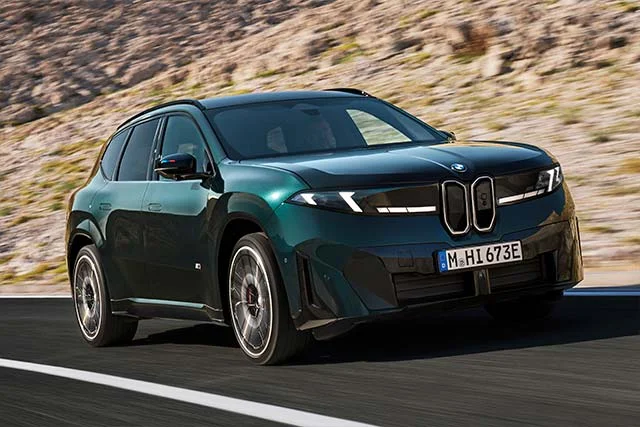
BMW Group’s electric vehicle momentum is increasingly concentrated in Europe: fully electric deliveries there rose 37.5% in the third quarter, and battery-electric models made up 34.7% of the group’s regional total. That performance came as worldwide deliveries weakened, leaving Europe and the United States as brighter spots in a mixed first nine months of 2026.
Europe leads BMW Group’s electric growth
From July through September, the group delivered 81,941 fully electric vehicles in Europe, including 110,257 worldwide. The global figure was up 7.2% year over year. Germany added to the regional strength, with deliveries of battery-electric models rising 38.5%.
The European mix is the more revealing measure for buyers and competitors: more than one in three BMW Group vehicles delivered in the region during the quarter was fully electric. That points to EVs becoming a substantial part of the business there, rather than a small addition to a sales mix still dominated by other powertrains.
BMW AG board member Jochen Goller, responsible for Customer, Brands and Sales, said the company had held its ground in Europe and the United States despite difficult market conditions. He cited strong orders for fully electric vehicles and customer interest in the new BMW iX3, BMW 3 Series and BMW X5. The figures supplied don’t break out orders by model, so they offer a signal of interest rather than a model-by-model sales comparison.
BMW expects its Neue Klasse vehicles and technologies to add momentum as the electric lineup expands. The sales results establish a useful benchmark for that next phase: the company will need to convert current interest into deliveries while sustaining its performance across a much larger range of products.
Regional gains offset a softer global tally
The group delivered more than 1.7 million vehicles worldwide between January and September, down 4.9% from the same period a year earlier. Europe grew 4.5% and the United States 3.4%, but those gains did not make up for declines elsewhere.
BMW-badged vehicles accounted for approximately 1.5 million deliveries in the first nine months, a 6.4% drop. Within that result, the brand was up 1.4% in Europe and 4.3% in the United States. Demand for BMW X models helped in the US, where the brand’s sales increased even as the wider market declined.
China was the sharpest challenge for the BMW brand: deliveries there fell 21.2% through September amid difficult conditions in the wider automotive market. BMW plans to introduce a China-specific version of the new iX3 in November 2026. That launch could help the brand address local demand, though the available figures don’t indicate how much of the decline it might recover.
For prospective buyers, regional sales data can help explain where a manufacturer is seeing traction, but it doesn’t establish vehicle pricing, availability or ownership costs. The figures here also don’t provide range, charging or reliability comparisons, so they can’t show how BMW’s models stack up against direct EV rivals on those measures.
MINI adds a second electric bright spot
MINI delivered 220,247 vehicles worldwide from January through September, a 6.8% increase year over year. Fully electric models represented 37.2% of the brand’s deliveries over that period, a higher share than the BMW Group reported for Europe in the third quarter. These figures cover different time periods and scopes, so they shouldn’t be read as a direct comparison of regional performance.
MINI’s results combine electric demand with interest in John Cooper Works models and the MINI Paul Smith Edition. The brand also expects its new Countryman Untamed Edition to contribute further momentum. That mix suggests MINI’s growth is coming from more than one corner of its range, with electrification already accounting for a sizable portion of deliveries.
The group’s other businesses had a weaker stretch. Rolls-Royce delivered 3,592 vehicles worldwide in the first nine months, down 12.4%. BMW Motorrad sold 149,452 motorcycles and scooters, a decrease of 6.1%. BMW M GmbH delivered 148,510 vehicles, down 6.1%; its sales were stable within China’s declining market.
What the numbers set up next
BMW’s third-quarter European EV increase stands out against its falling global total, but the detail matters: it is a regional result, while the group’s nine-month tally covers all vehicles and markets. MINI’s electric share supplies another positive indicator, though it comes from a different brand and reporting period.
The next measures to watch are whether the iX3 launch in China can improve BMW’s performance there, and whether Neue Klasse products can sustain electric growth as they join the lineup. For now, Europe is the clearest source of momentum in BMW’s reported EV deliveries, while the global decline shows how strongly results still vary by market and business.
The post BMW Group Electric Car Sales Surge 37.5% in Europe appeared first on Electric Cars Report.
===END===