U.S. EV Sales Rise 7.7% in Q3 2026, Led by Toyota, Rivian and Subaru
U.S. EV sales rose from Q2 but remained well below 2025. Toyota, Rivian and Subaru gained ground as Tesla kept more than half the market.
The U.S. electric vehicle market improved quarter to quarter in Q3 2026, but its recovery remains uneven. Automakers sold 266,630 EVs, a 7.7% rise from Q2, according to Kelley Blue Book estimates from Cox Automotive. That total was still 38.6% lower than in Q3 2025, when buyers accelerated purchases ahead of the expiration of federal incentives.
That comparison makes last year’s record quarter a difficult benchmark. The latest results point to some stabilization after the drop, but they don’t yet establish that demand is on a sustained upward path. Pricing, product availability and the cost of running an EV remain central to the next stage of the market.
EV share recovers, while electrified sales stay broader
Fully electric models represented 6.5% of U.S. new vehicle sales in Q3, up from 5.8% in Q2. It was the highest quarterly share since Q3 2025, when EVs exceeded 10% for the first time. Include conventional hybrids and plug-in vehicles, and nearly one in four new vehicles sold had some form of electrification.
The gap between those figures matters: interest in electrified vehicles extends well beyond fully electric models. For buyers weighing a switch, the broader mix offers alternatives with different charging needs and ownership costs.
Stephanie Valdez Streaty, Cox Automotive’s director of Industry Insights, said the market was beginning to find its footing. She cited improving results through 2026, competitive pricing and new products as factors that could support growth. Gasoline prices above $4 per gallon may also make home charging more attractive to drivers able to charge at home, though the source gives no estimate of potential savings.
Toyota, Lexus, Rivian and Subaru post gains
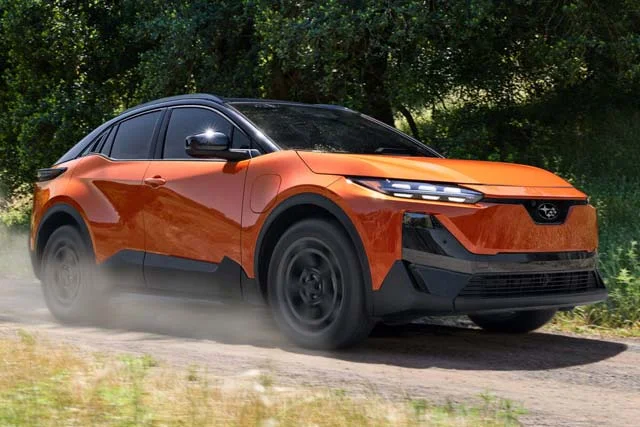
Several brands moved against the wider year-over-year decline. Toyota sold 12,904 EVs, up 328% from Q3 2025, while Lexus delivered 8,464, a 442.2% increase. Toyota’s results span multiple models: the bZ recorded 7,391 sales, up 145.1%; the electric C-HR had 3,467; and the bZ Woodland had 2,046.
Rivian delivered 19,239 vehicles, up 45.7%. Its commercial vans supplied a large share of that total: the EDV500 and EDV700 together recorded 8,469 sales, up 220.9%. The R2 added 3,456 sales, while the R1S and R1T were down 31.8% and 27.2%, respectively. The split shows how commercial volume and newer models can lift a brand even as established vehicles lose ground.
Subaru’s EV sales rose 31.5% to 4,566. The Trailseeker contributed 3,174 sales and the Uncharted 894; the Solterra recorded 498. Among other models, the Hyundai Ioniq 5 had 10,382 sales, the Kia EV9 had 5,394 and the Cadillac Optiq delivered 4,550.
Declines were steep at several established manufacturers. Ford’s Q3 EV sales fell 80.2% year over year, Chevrolet’s dropped 74.6%, Hyundai’s decreased 57.7% and Volkswagen’s fell 90.5%. The results underline how strongly a brand’s performance can depend on its model mix, pricing and availability.
Tesla remains the market’s center of gravity
Tesla sold 144,094 EVs in Q3, down 19.7% from a year earlier, yet accounted for about 54% of U.S. EV sales. The Model Y remained the dominant nameplate, with 99,037 sales, or 68.7% of Tesla’s quarterly volume. The Model 3 added 40,346, about 28% of the company’s total.
Together, the two models sold more than 139,000 vehicles. The Model Y alone represented 37.2% of the entire U.S. EV market, and the Model 3 another 15.1%. Tesla’s position therefore rests heavily on its pair of mass-market models. The Cybertruck recorded 4,323 sales, while the Model S had 215 and the Model X 173.
Nine-month totals show the scale of the downturn
Through the first nine months of 2026, U.S. EV sales reached 729,869, down 29.9% from 1,041,647 over the same period in 2025. Tesla led with 386,194, followed by Rivian at 41,009, Hyundai at 39,121, Chevrolet at 38,298 and Toyota at 34,759.
The year-to-date direction varies by manufacturer. Toyota more than doubled its EV sales, Rivian grew 26.8% and Subaru rose 46.7%. Ford was down 67.5%, Chevrolet 56% and Volkswagen 80.8%. As with the quarterly comparison, the unusually strong Q3 2025 shapes the year-over-year picture.
For buyers, the figures point to a wider selection of brands and models, alongside very different results within individual lineups. For automakers, Q3 offers evidence of a quarterly rebound, but the large year-to-date shortfall keeps the recovery in question. The next signal to watch is whether newer products and competitive prices can sustain demand after last year’s purchase surge has passed.
EV sales, Cox Automotive commentary, Toyota, Lexus, Rivian R2 and Tesla.
===