Volkswagen’s Four MEB+ Electric Cars Draw Nearly 150,000 Orders
Four small EVs share more than 80% of their technology, with production planned at two Spanish plants. Deliveries will test the demand.
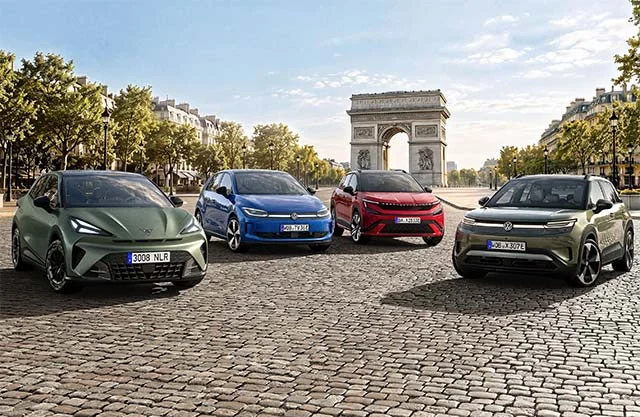
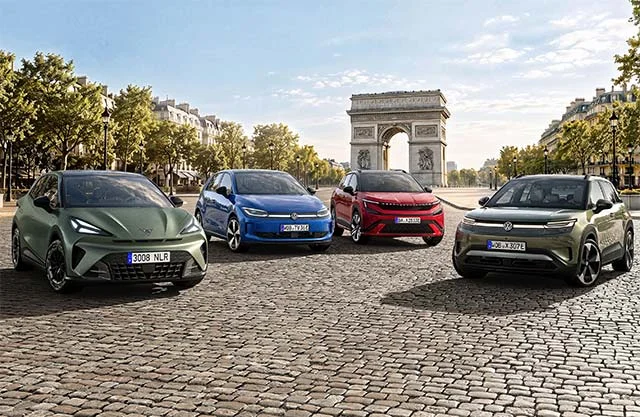
Nearly 150,000 customer orders have put Volkswagen Group’s four upcoming small electric cars on the radar before deliveries have begun. The figure, reported as the models appear together at the 2026 Paris Motor Show, gives the group an early demand signal for a part of the EV market where price and everyday usefulness will matter as much as brand appeal.
The family comprises the CUPRA Raval, Volkswagen ID. Polo, Skoda Epiq and Volkswagen ID. Cross. Two are hatchbacks and two are compact SUVs, giving the group four ways to serve buyers seeking a smaller electric vehicle. Volkswagen Group has also reported that EVs made up around 40% of its European orders through September.
One platform, four distinct formats
All four models are based on the group’s MEB+ platform and share front-wheel-drive architecture, electric powertrain components and battery technology. Volkswagen Group says more than 80% of the family’s components and technologies are common. That high level of sharing is intended to lower development and production costs across the range, while giving each marque room to shape its own design, driving character and features.
The split between body styles gives the lineup a practical breadth. The Raval and ID. Polo are hatchbacks; the Epiq and ID. Cross are compact SUVs. Buyers can therefore choose between two familiar formats without stepping outside the same underlying technical family. The source provides no battery capacities, driving-range figures, charging rates, prices or detailed equipment, so those buyer-critical comparisons remain open.
Shared engineering can make a wider range of vehicles economical to develop, but common components alone don’t establish how the cars will feel or work in daily use. Ride, cabin space, cargo capacity, charging performance and efficiency will need to be judged model by model. For shoppers, the key question is whether the common foundation translates into competitive pricing without making the four cars feel interchangeable.
Orders are an early signal, not deliveries
The nearly 150,000 orders point to substantial interest ahead of customer handovers. They don’t establish how many vehicles have been delivered or how many orders will ultimately become completed sales. The distinction matters: customer response before launch offers a useful read on attention, while delivery volumes will show how well the cars move from early interest into the market.
Thomas Schäfer, Volkswagen brand CEO and head of Brand Group Core, said the project shows how cooperation among brands can create economies of scale while retaining each model’s individual character. That’s the central bet behind the family: use common engineering to spread costs across four products, then differentiate them through styling, packaging and brand identity.
Smaller EVs have a clear role in a market where larger electric SUVs can be costly and cumbersome for some urban drivers. But the source gives no prices or direct rival comparisons, so it’s too early to say where these models will sit against competing small EVs. The order total suggests customers are interested in the proposition; it doesn’t yet show whether the finished cars will meet expectations for affordability, range or charging convenience.
Production and investment are centered in Spain
Volkswagen Group plans to build all four vehicles in Spain. Martorell is assigned the CUPRA Raval and Volkswagen ID. Polo, while the Skoda Epiq and Volkswagen ID. Cross are planned for the Pamplona plant. Concentrating production at two sites gives the company a coordinated manufacturing base for vehicles that share much of their technology.
The production plan sits within a wider €10 billion investment in Spain involving Volkswagen Group, SEAT & CUPRA, PowerCo and partners in the Future Fast Forward initiative. The programme includes PowerCo’s battery cell factory in Sagunto and a further €300 million investment by SEAT & CUPRA in a battery system assembly plant in Martorell. SEAT & CUPRA has also invested €3 billion in its transition from combustion-engine vehicles to electric mobility.
Those figures describe a broader effort to bring battery production, battery assembly and vehicle manufacturing together in Spain. For this car family, the practical aim is to support a production system built around shared components and two assigned assembly sites. The source doesn’t specify how much of each vehicle’s battery supply will come from the Sagunto facility.
The delivery phase will answer the buyer questions
The four vehicles have moved from heavily camouflaged prototypes and show cars presented at IAA Mobility 2025 to appearing together at the Paris show after their separate world premieres. Their next meaningful milestone is customer delivery. That’s when buyers can assess the real costs and compromises: purchase price, usable range, charging speed, cabin and cargo space, and how each body style fits into daily routines.
For Volkswagen Group, the early order figure supports the case for developing several small EVs on one technical base. For buyers, the choice will come down to the individual cars and the details still missing from the source. If the pricing and everyday performance match the group’s accessibility goals, this family could give European customers more small electric options across hatchback and compact-SUV formats.
The post Volkswagen Group’s Four Affordable Electric Cars Reach Major Milestone With 150,000 Orders appeared first on Electric Cars Report.