Every Subaru SUV Ranked by Length, From Crosstrek to Ascent
Subaru’s seven SUVs span compact hybrids, quick electric models and a three-row tow vehicle, with length, range and capability varying widely.
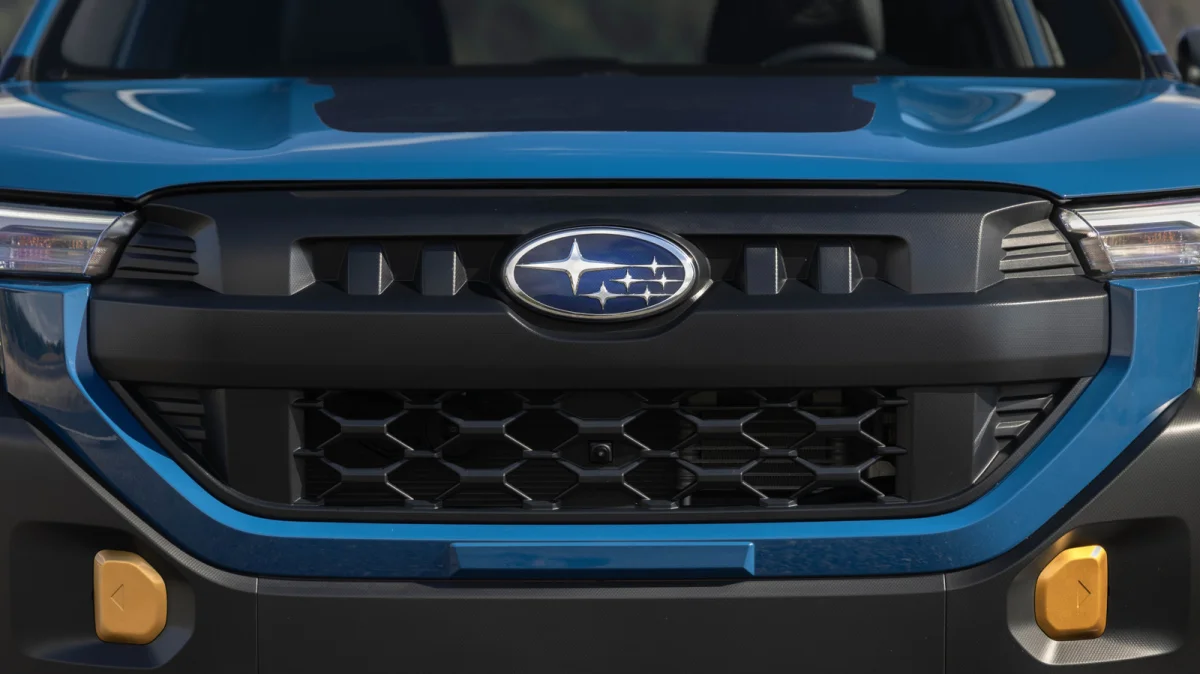
Subaru’s SUV range stretches from a compact hybrid with Wilderness trail gear to a three-row family vehicle rated to tow 5,000 pounds. In between, its electric models bring the sharpest acceleration figures, while the Forester and Outback retain the brand’s familiar mix of all-wheel drive and practical utility. Length offers a useful way to compare the seven models, but it doesn’t tell the whole story: ground clearance, passenger room, range and towing limits vary just as much.
The Crosstrek led Subaru’s U.S. sales in 2025, with nearly 200,000 sold. It’s also the shortest model here, though its standard symmetrical all-wheel drive and available Wilderness trim give it more trail credentials than its size might suggest. Four models use boxer-four gasoline engines or hybrid versions; the other three are electric and stem from Subaru’s collaboration with Toyota.
1. Subaru Crosstrek: 176.4 inches
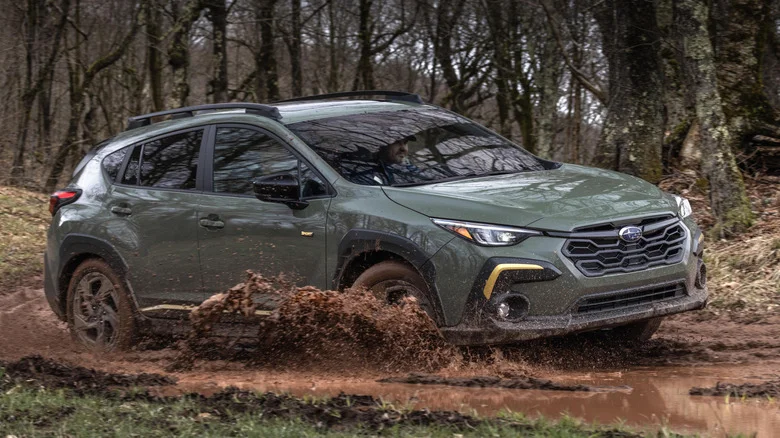
The Crosstrek’s raised ride height and chunky tires can make it look like a hatchback in hiking boots. Its dimensions support that compact impression: at 176.4 inches long, it’s easy to place in town and shorter than every other model in this lineup. Yet all versions have symmetrical all-wheel drive, and the Wilderness trim gives the little Subaru a stronger case for rough-road use.
The 2026 Crosstrek starts at $28,415. Most versions use a 2.5-liter boxer-four producing 180 horsepower and 178 lb-ft of torque. Sport and Limited buyers can choose a hybrid setup that raises combined output to 194 hp and 199 lb-ft. The extra power comes with better fuel economy, particularly relevant for drivers whose daily mileage matters more than trail clearance.
Ground clearance is 8.7 inches on most trims and 9.3 inches on the Wilderness, which also has improved approach and departure angles. Regular Crosstreks can tow up to 1,500 pounds; the Wilderness is rated for 3,500 pounds. The lineup weighs roughly 3,300 to 3,700 pounds, with the heavier figure applying to hybrids. It’s a notably broad capability spread for Subaru’s smallest SUV.
2. Subaru Uncharted: 177.8 inches
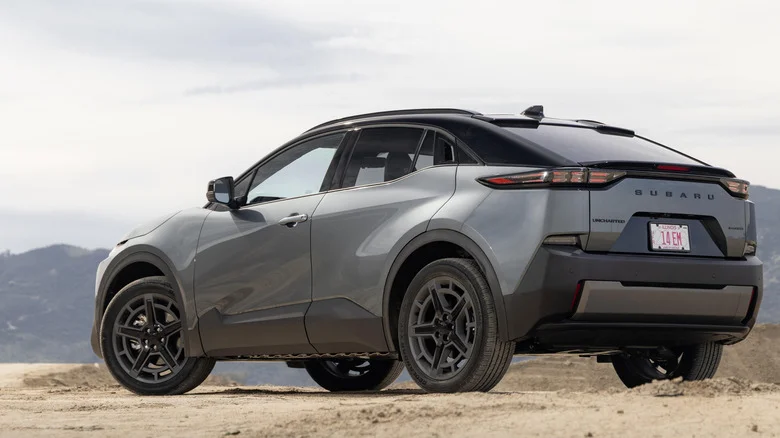
The Uncharted is the entry point to electric Subaru ownership. Developed with Toyota, it starts at $36,945 including destination and is only 1.4 inches longer than the Crosstrek. Its cargo area is a little larger, but ground clearance falls to 8.2 inches, reflecting a more road-focused setup.
The Premium FWD is the only single-motor version. Its front motor makes 221 hp and 199 lb-ft of torque, and a 0-to-60-mph run takes about 6.5 seconds, as Motor Trend reports. Sport and GT versions add a rear motor for all-wheel drive and lift output to 338 hp. Subaru testing put their 0-to-60 time at 4.7 seconds.
All trims share a battery pack, so the quicker dual-motor models give up some range. The Sport is rated at 287 miles and the GT at 273 miles. The Premium FWD is the only trim rated above 300 miles, at 308 miles. Buyers choosing between them face a clear trade: the front-drive car goes farther, while the Sport and GT bring extra power and driven wheels at both axles.
3. Subaru Forester: 183.3 inches
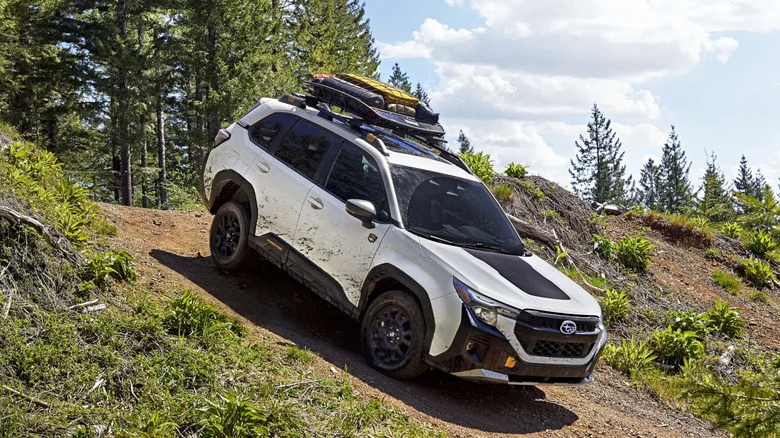
The Forester has been a purpose-built SUV since its early days on a platform shared with the Impreza. Its upright shape carries into the sixth generation, and its dimensions sit between the Crosstrek and the larger Solterra. Every Forester has symmetrical all-wheel drive and a Lineartronic continuously variable transmission.
Pricing runs from $31,445 for the base trim to $42,995 for the Touring Hybrid. The 2.5-liter boxer-four makes 180 hp in non-hybrid versions and 194 hp in hybrids. The hybrid’s efficiency advantage is most apparent in city driving, based on EPA fuel economy figures.
Most Foresters measure 183.3 inches long; the Wilderness is 182.9 inches. That trim stands out in capability, with 9.3 inches of ground clearance compared with 8.7 inches for the others, and a 3,500-pound towing limit versus 1,500 pounds for the rest. Its dimensions may be close to the standard model’s, but the Wilderness hardware changes how it can be used.
4. Subaru Solterra: 184.6 inches
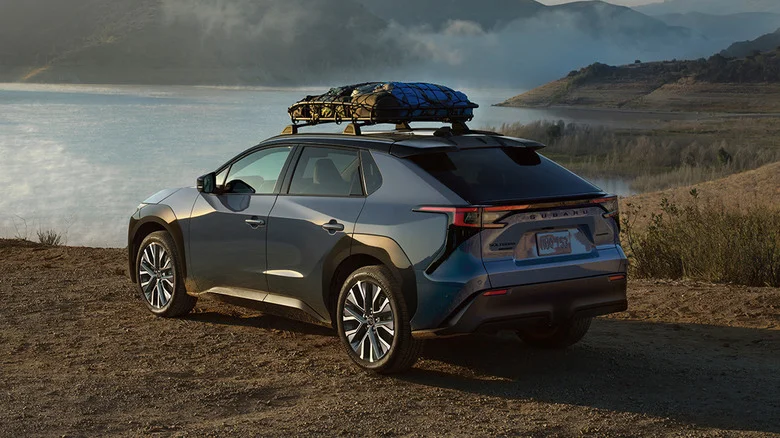
The Solterra is larger than the Uncharted and comes only with dual-motor all-wheel drive. Premium and Limited versions make 233 hp, while XT trims use a 338-hp setup. Subaru quotes a 4.9-second 0-to-60-mph time for the more powerful version; Car and Driver has recorded 4.3 seconds.
At 184.6 inches long, the Solterra offers more passenger room than the Uncharted, helped by a less sharply sloping roof. It has 8.3 inches of ground clearance and weighs as much as 4,510 pounds in its heaviest configuration. Cargo capacity is 23.8 cubic feet with all seats in use and 63.5 cubic feet with the rear bench folded.
The Solterra shares the Uncharted’s 74.7-kWh battery, but its larger body, extra weight and less aerodynamic shape limit its EPA-rated range to 288 miles. That makes the Uncharted Premium FWD a longer-range choice, while the Solterra’s case rests on its roomier cabin and standard all-wheel drive.
5. Subaru Trailseeker: 190.8 inches
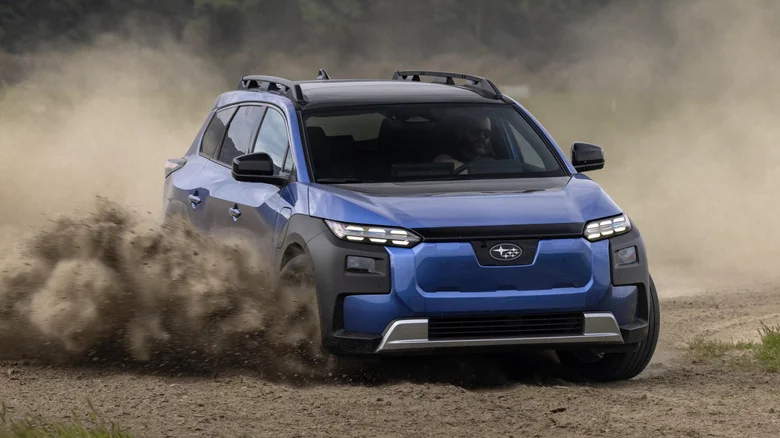
The Trailseeker is Subaru’s largest electric SUV and its newest. It shares its development roots with Toyota, but Subaru builds the Trailseeker itself; Toyota’s related model is the bZ Woodland. In some markets, the Trailseeker is called the E-Outback.
All four Trailseeker trims use dual motors, with 375 hp and 397 lb-ft of torque. Subaru claims a 4.4-second 0-to-60-mph time, making it the brand’s quickest-accelerating production vehicle. Its X-Mode all-wheel-drive controls are intended to help on rough surfaces, while 8.5 inches of ground clearance adds some clearance for uneven routes.
The 190.8-inch body brings 31.3 cubic feet of cargo space with every seat occupied. Its 74.7-kWh battery is rated for up to 281 miles. Prices start at $41,490 after destination charges, and the four trims are Premium, Limited, Touring and Touring Leather. The Trailseeker’s combination of cargo space, power and range puts it between the passenger-focused Solterra and Subaru’s larger gasoline SUVs.
6. Subaru Outback: 191.7 inches
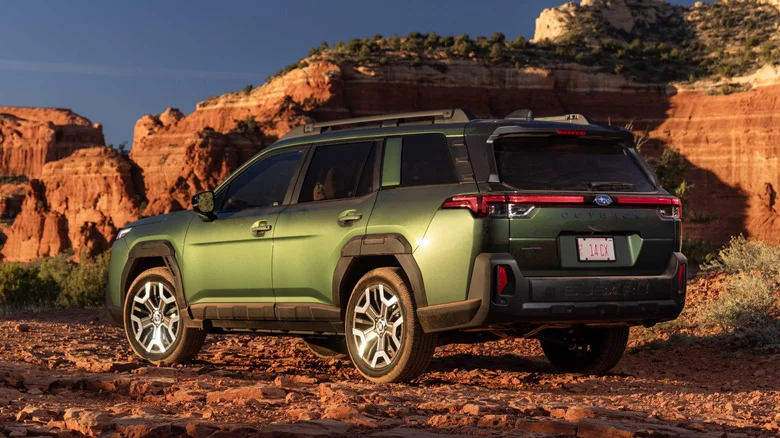
The Outback began as a more rugged version of the Legacy wagon and has been sold as a standalone model since the Legacy ended production in 2025. Its 191.7-inch length makes it Subaru’s second-largest SUV, though the shape still hints at its wagon origins. The latest version is squarer and closer in appearance to the Forester.
Standard ground clearance is 8.7 inches, rising to 9.5 inches on the Wilderness. The Premium, Limited and Touring use a naturally aspirated 2.5-liter boxer-four with 180 hp and 178 lb-ft. A Lineartronic CVT sends power to all four wheels through Subaru’s symmetrical all-wheel-drive system.
Wilderness, Limited XT and Touring XT trims get a turbocharged 2.4-liter boxer-four producing 260 hp and 277 lb-ft. The turbo brings stronger acceleration, with 0-to-60 mph in the six-second range, and raises towing capacity to 3,500 pounds. Naturally aspirated versions are rated to tow 2,700 pounds. That spread gives Outback shoppers a meaningful choice between the standard engine and the greater output and towing headroom of the turbo.
7. Subaru Ascent: 196.8 inches
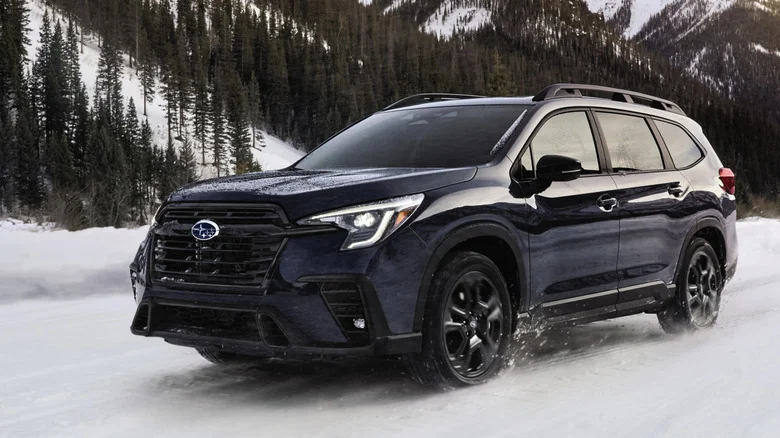
The Ascent is Subaru’s largest vehicle on sale at 196.8 inches long. Built in Lafayette, Indiana, it arrived in 2018 as the brand’s three-row SUV; its predecessor in the role was the Tribeca, which was built at the same facility. The Ascent was redesigned for 2023 and is also known as the Evoltis in some markets.
Its turbocharged 2.4-liter boxer-four makes 260 hp and 277 lb-ft, paired with a continuously variable transmission and symmetrical all-wheel drive. Curb weight ranges from 4,466 to 4,603 pounds. Trim choices are Premium, Limited, Limited Bronze, Touring and Onyx Edition. Premium and Limited versions offer either seven or eight seats; the other trims use second-row captain’s chairs.
Every Ascent is rated to tow 5,000 pounds, the highest capacity in this Subaru lineup. Ground clearance is 8.7 inches, and the cabin’s available eight-seat layout makes it the clearest choice here for buyers prioritizing passenger capacity and trailer duty. The Crosstrek is far easier to maneuver and the electric models are quicker, but the Ascent brings the most space and towing ability. That’s the key distinction across Subaru’s range: size alone doesn’t determine capability, so buyers should match the model to the passengers, cargo and terrain they expect to carry.