Used Hyundai Tucson Manual: Model Years, Engines and What to Check
Manual Tucsons span 2005 to 2013, with different engines and gearboxes by year. The 2011–2013 models use a 2.0-liter engine.
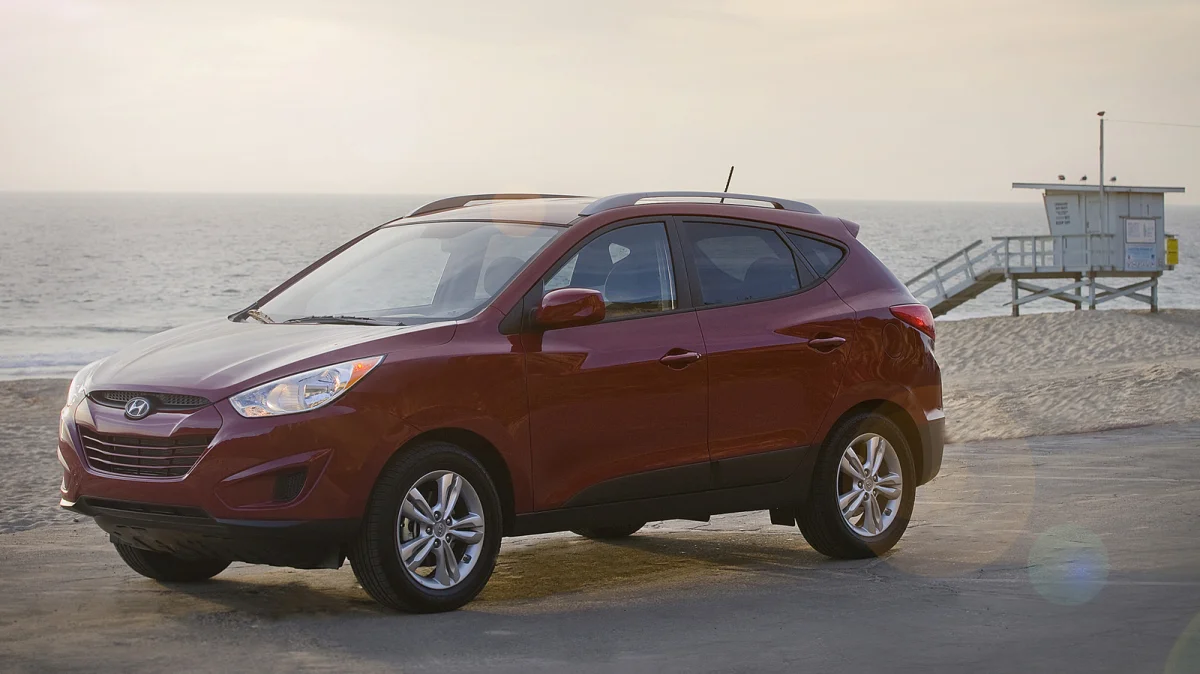
The Hyundai Tucson kept a manual transmission in its U.S. lineup through the 2013 model year, giving used buyers a rare compact crossover option with a stick shift. The trade-off is a small pool of cars for sale and a meaningful difference between the engines available across those years. If you're shopping, the model year matters as much as the transmission.
Manual Tucsons fall into two generations: the first-generation models from 2005 to 2009, and second-generation examples from 2010 to 2013. Hyundai paired the gearbox with different engines and trims over that span, so checking the specific configuration is essential. Listings are scarce: a search of Cars.com dealer inventory cited in the source found only a couple nationwide, both with fewer than 100,000 miles. That makes it difficult to establish a dependable asking-price range; condition, location and availability will shape what a buyer encounters.
2005–2009: A five-speed with the base engine
The Tucson arrived in the U.S. for 2005 with a 2.0-liter four-cylinder rated at 140 horsepower in the entry-level GL. That engine came with a five-speed manual, while a four-speed automatic was optional. The GLS and LX instead used a 2.7-liter V6 producing 173 horsepower and an automatic transmission.
Front-wheel drive was standard across the range, with all-wheel drive available. On the GL, however, Hyundai linked AWD to the manual transmission. That makes the early Tucson unusual among the configurations described here: a shopper looking for a manual and all-wheel drive could find both in this entry-level trim.
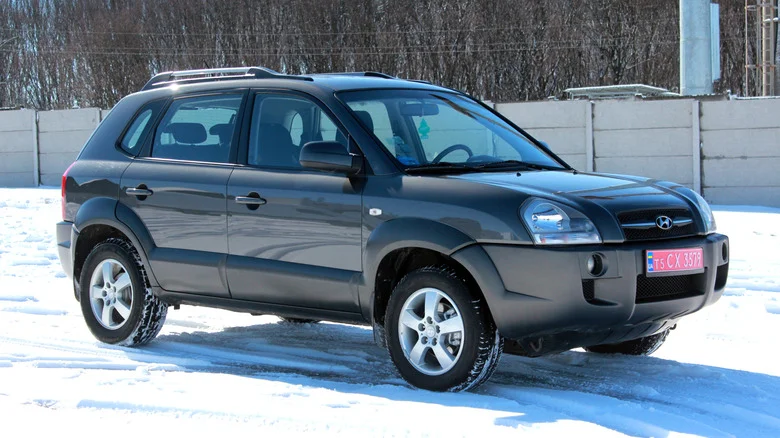
The basic engine and three-trim structure remained through 2009, though Hyundai changed trim names during the generation. For 2008 and 2009, AWD was no longer offered on the base GLS. In 2009, the Limited trim could be ordered with the 2.0-liter four-cylinder, but not with a manual gearbox. Buyers should verify the trim and drivetrain from the vehicle’s records or equipment, rather than assuming every four-cylinder Tucson has a stick.
Consumer Reports rated reliability for the 2006 Tucson as average; the source says it did not provide first-generation ratings for the other years. That single rating offers limited guidance for comparing individual used examples, so a vehicle’s service history and present condition remain central to a purchase decision.
2010–2013: Two engine paths, then the manual ends
The second-generation Tucson brought a sleeker body and a more upscale cabin for 2010. That year, Hyundai offered a 2.4-liter Theta II four-cylinder producing 170 to 176 horsepower, with the exact figure depending on emissions classification. The GLS came standard with a six-speed manual and offered a six-speed automatic; the Limited used the automatic. Both trims had front-wheel drive, and AWD was available with the automatic only.
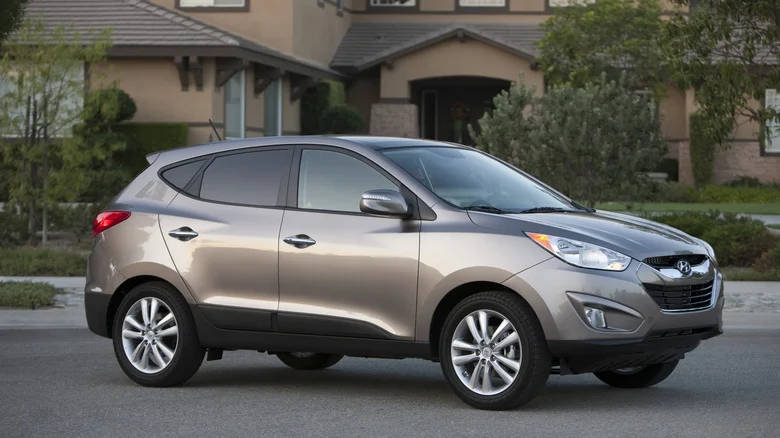
Hyundai added the GL trim for 2011, pairing it with a 165-horsepower, 2.0-liter Theta II four-cylinder. This front-wheel-drive model came with a five-speed manual or an available six-speed automatic. The manual remained part of the GL lineup through 2013, when the second-generation Tucson was still on sale. Hyundai dropped the GL and manual transmission for 2014.
The distinction between these years is practical: the 2010 manual pairs with the 2.4-liter engine, while 2011–2013 manual versions use the 2.0-liter. The source describes the 2.0-liter as the less troublesome of the two. It also notes that Hyundai’s bearing-related engine replacement campaigns and factory warranty extensions covered the Tucson’s 2.4-liter engine, including the 2010 manual version. Those programs did not cover the 2011–2013 Tucson’s 2.0-liter.
That coverage history needs to be read narrowly. The source also mentions recalls affecting turbocharged, direct-injected 2.0-liter engines in the 2013–2014 Santa Fe Sport and Sonata because of potential bearing failure linked to manufacturing debris. Those were different applications from the naturally aspirated Tucson engine discussed here, so the Santa Fe Sport and Sonata information should not be treated as evidence that the Tucson’s 2.0-liter shares the same issue.
Consumer Reports gave the 2011, 2012 and 2013 Tucsons average reliability ratings; it did not review the 2010 model year, according to the source. These ratings describe the model year as assessed by that publication and can’t settle the condition of a particular used car. For a buyer, maintenance records and a careful inspection help put the rating and engine history into context.
What to prioritize when shopping
For a manual Tucson, first confirm the model year, engine, trim and drivetrain. A 2005–2009 GL offers the 2.0-liter and five-speed combination, with AWD possible; a 2010 GLS pairs a six-speed manual with the 2.4-liter and is front-wheel drive; 2011–2013 GL models combine the 2.0-liter with a five-speed and front-wheel drive. The source does not give a reliable market price, and the few listings it found make a firm valuation difficult.
These details narrow the search more effectively than the transmission label alone. With manuals ending after 2013 and listings scarce, buyers may need patience to find the right configuration. The clearest dividing line is the engine: the 2010 manual has the 2.4-liter, while the 2011–2013 manuals have the 2.0-liter.