EU-UK EV Battery Rules Face 2027 Deadline as T&E Challenges Call for Delay
EU battery and cathode material capacity could cover UK-bound EV production in 2027, but carmaker demand will determine whether supply is used.
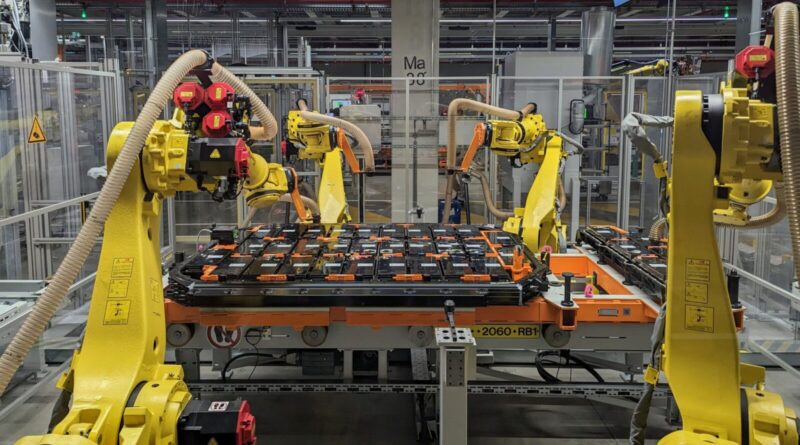

Lithium-ion battery factory in Brussels, Belgium. Image courtesy of Kyle Field | CleanTechnica.
The central question in the EU-UK electric vehicle trade is whether Europe can supply enough locally sourced batteries and materials before stricter origin requirements take effect on 1 January 2027. Transport & Environment (T&E) argues that the capacity is there, and says a further delay would weaken confidence in the rules and in investment across the region’s battery supply chain.
What changes in 2027
The EU-UK Trade and Cooperation Agreement allows electric vehicles and batteries to move between the two markets without tariffs when they satisfy its rules of origin. Products that fall short face a 10% tariff. From 1 January 2027, battery packs and cells must originate in the EU or UK and use originating cathode active materials, or keep non-originating content to a maximum of 30–35%.
The requirements have already been postponed by three years. The latest dispute follows a proposal from the European Automobile Manufacturers’ Association (ACEA) to delay them again. T&E’s analysis challenges the case for another extension by comparing projected European production with the battery and material needs of EVs exported from the EU to the UK.
That comparison matters because a tariff can affect the cost of supplying a vehicle across the Channel, while the sourcing rules influence where automakers buy key battery components. The agreement sets a clear date and threshold; the practical test is whether manufacturers can meet them at the volumes their export plans require.

Projected battery output exceeds UK export needs
T&E estimates that EU battery production in 2027 will comfortably exceed the amount needed for EU-built EVs exported to the UK. For nickel-rich NMC batteries, projected output is six times the volume required for those exports. For lithium-iron phosphate (LFP) batteries, the estimate is 2.4 times the required volume.
Those ratios point to substantial production capacity relative to this particular trade flow. They don’t mean every battery plant will supply UK-bound vehicles, or that every automaker’s sourcing arrangements are already settled. Capacity must be matched to orders, production schedules and the technical requirements of the vehicles being built. T&E’s broader point is that an aggregate shortage need not force another delay if manufacturers make use of the available regional supply.
The cathode active material picture is also part of the assessment. T&E says EU supply in 2027 will exceed the amount needed for EU-built EVs exported to the UK by more than a third for both NMC and LFP batteries. For NCA batteries, the analysis puts available supply at almost five times the export requirement.
These figures address a specific question: whether projected EU production could cover battery and cathode material needs tied to EU-to-UK EV trade. They don’t establish that every supplier, battery chemistry or individual vehicle programme will have identical access to materials. For automakers, the actionable issue is securing qualifying supply early enough to meet the agreement’s origin tests at scale.
Demand is the hinge
Available capacity alone won’t guarantee that production reaches the vehicles that need it. T&E says the volumes can be delivered, while stressing that supply depends on demand from carmakers. If manufacturers continue to rely on non-originating batteries or materials where qualifying alternatives are available, the existence of European capacity won’t by itself resolve the compliance challenge.
That makes production plans and purchasing decisions central to the deadline. Carmakers need to connect battery sourcing with their export mix and the agreement’s limits on non-originating content. Suppliers, in turn, need dependable orders if planned capacity is to translate into output. The figures in T&E’s analysis describe a potential supply cushion; whether companies use it depends on commercial decisions across the chain.
T&E also argues that extending the deadline again could damage confidence in agreed rules and in the investment case for European battery production. A fixed date gives manufacturers and suppliers a basis for planning. Repeated changes can make that planning harder, particularly when new capacity depends on expected demand from vehicle producers.
A credibility test for the supply chain
EU Trade Commissioner Maros Šefčovič said in 2023 that the Commission would introduce a “lock-in mechanism that makes it legally impossible” to grant further extensions before 2032. T&E cites that commitment in arguing that the permanent rules should apply from January 2027.
The dispute therefore turns on more than the tariff exposure of individual exports. It tests whether the EU and UK will keep the timetable they set, and whether European battery and cathode material output can be connected to automaker demand in time. T&E’s analysis presents a case for meeting the deadline: projected capacity exceeds the needs of the trade flow it examines, but carmakers still have to place the orders and organize sourcing that turn capacity into qualifying components.
For buyers, the direct effect will depend on how vehicle makers manage supply and any tariff exposure; the source provides no model-level price estimates. For the industry, the next indicator is whether carmakers commit to regional battery and material supply ahead of 2027. Capacity gives the region room to meet the rules. Demand will determine whether that room becomes production.
Source: Transport & Environment. By Emily Ritchey, Policy Manager, Supply Chains, Brussels (EU).