Battery Costs and Fuel Price Volatility Put Europe’s EV Debate in Focus
Battery prices have fallen to $105 per kWh while oil has climbed above $105 a barrel, sharpening the case for Europe’s electric car industry.
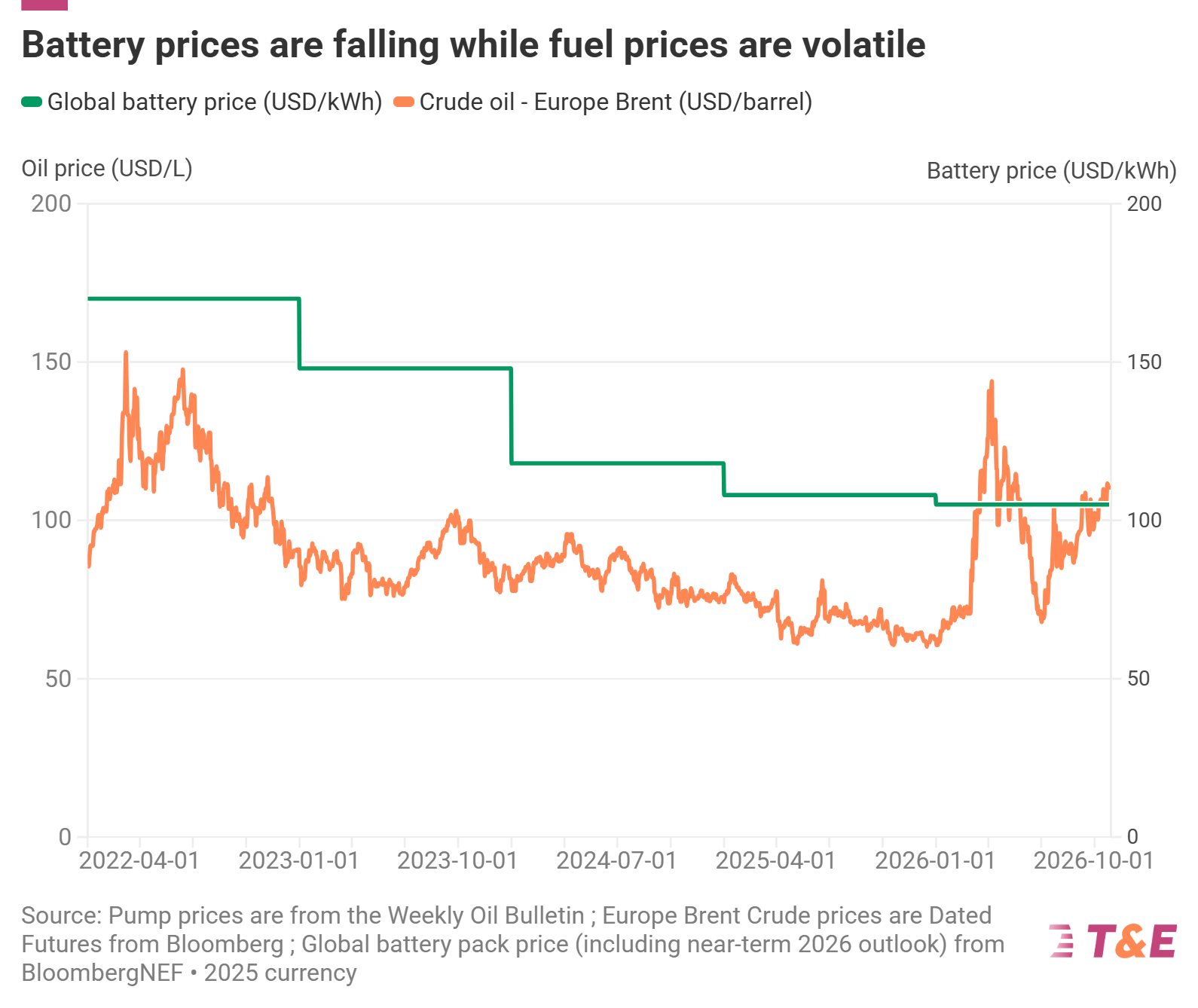
Europe’s clean car debate is turning on a comparison drivers can feel at the pump: battery prices have fallen sharply since 2022, while oil prices have surged again. The figures don’t settle every question about electric car costs or charging, but they sharpen the choice facing the automotive industry as the EU considers changes to its 2035 clean car targets.
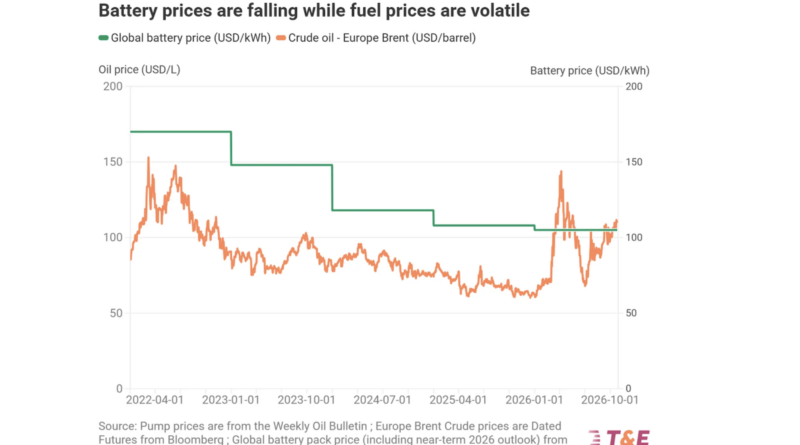
Average battery prices stood at $170 per kilowatt-hour in 2022, when oil reached $120 per barrel. By 2026, the global average battery price had fallen to $105 per kWh. Oil, meanwhile, repeatedly passed $105 per barrel between March and May, then climbed well beyond that level during a sharper surge over the following three weeks. The comparison is symbolic: a unit of battery capacity now costs less than a barrel of oil.
Those units don’t deliver the same thing: a battery is a component, while oil is a commodity used to make fuel. Still, the trend lines matter. Battery production benefits from learning curves and larger production volumes, which can help lower costs over time. Oil prices remain exposed to supply disruptions and geopolitical shocks. For drivers, that makes the cost of petrol and diesel harder to predict from one crisis to the next.

Lifetime fuel use changes the comparison
The case for looking beyond the initial vehicle purchase is striking. The source estimates that a car will use more than 100 barrels of petrol over its lifetime, requiring more than 200 barrels of crude oil. An electric car needs around 50 kWh of battery capacity to travel the same distance, and that battery can remain a reusable, recyclable asset after its first use.
That comparison doesn’t account for every ownership cost. It doesn’t state vehicle prices, charging costs, battery replacement rates or the cost of recycling. But it highlights a basic difference between the two powertrains: combustion cars continually require fuel, while an electric car stores energy in equipment that remains with the vehicle. A buyer weighing running costs will still need to consider local electricity and fuel prices, as well as access to charging.
Recent fuel costs have already shown how exposed drivers can be. The article estimates that high road fuel prices added €55 billion in costs for cars this year, or €220 per car annually. It says electric car drivers have largely avoided the higher energy prices and currently pay, on average, two to three times less for fuel than petrol and diesel drivers. The source doesn’t set out the calculation behind those estimates, so they should be read as its comparison rather than a universal cost forecast for every driver.

Changes to targets could affect the industry’s direction
The debate is also about what automakers will build and sell. The EU’s 2035 clean car targets were set as a signal that new cars sold after that year would no longer depend on imported fossil fuels. Now, the European Parliament and member states are formalising a deal that could ease those targets. Proposals discussed in the article would let carmakers meet requirements without selling any electric cars, including through a greater role for biofuel cars.
That would weaken the commercial push toward battery electric models and batteries made in Europe, the article argues. For manufacturers, a durable direction matters: new vehicle platforms, factories and supply chains take time to plan. If the expected demand for electric cars becomes less certain, companies may have less reason to commit to those investments. The competing concern, reflected in the proposals, is whether the transition should leave room for other technologies such as biofuels.
The source describes biofuel cars as an economic, industrial and technical dead end. That is a strong judgment, not a cost comparison backed by figures in the article. What it does establish is the central disagreement: whether keeping combustion technology in the mix offers useful flexibility, or delays the shift toward electric cars while leaving drivers exposed to volatile oil prices.
Sales momentum is part of the calculation
The argument for maintaining the electric car transition comes as sales are rising in two of Europe’s largest markets. France and Germany have each seen electric car sales double in recent months compared with the same period a year earlier, according to the article. It gives no sales totals or further detail, but the reported growth makes the timing of any change significant for automakers and buyers.
Policy signals shape more than the cars arriving in showrooms. They can influence investment decisions across vehicle production and battery supply, while giving shoppers a clearer sense of what manufacturers plan to offer. A reversal or dilution of targets could change that outlook just as demand appears to be picking up in France and Germany. The practical question for drivers is whether this momentum will bring more choice and help reduce dependence on fuel prices that can jump during an international crisis.
The article’s author, Lucien Mathieu of Transport & Environment, calls for a reset of the electric car debate. The case rests on three linked points: battery prices have fallen, petrol and diesel costs remain vulnerable to oil shocks, and electric car sales are growing in France and Germany. This autumn’s decisions will help determine whether Europe’s car industry gets a consistent signal to focus on electric models, or a looser one that leaves its next steps less certain.