Ralf Schumacher Criticises Isack Hadjar’s Radio Frustration After Austin Sixth
Hadjar finished sixth after start and pit stop problems in Austin. Ralf Schumacher says the Red Bull driver must change how he addresses the team.

Isack Hadjar’s sixth place in Austin left two stories in view: a Red Bull car struggling with recurring starts and a young driver whose frustration spilled over on the radio. Former Formula 1 driver Ralf Schumacher focused on the second, arguing that Hadjar needs to change how he speaks to the team as he takes on more responsibility.

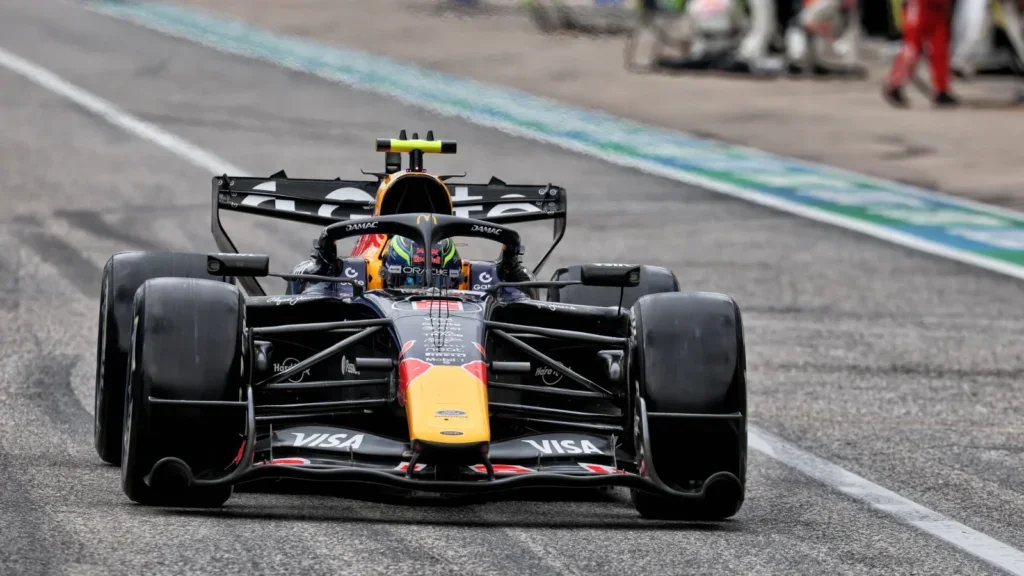
Hadjar began the United States Grand Prix from the second row, putting a strong finish within reach. The race soon became a recovery effort. Red Bull’s starts remained a weakness for Hadjar and teammate Max Verstappen, while a mapping problem during Hadjar’s pit stop cost him more time. He crossed the line in sixth.
The start issue carries weight beyond one race. Hadjar said the losses were “out of [his] control” and called the clutch “fragile,” arguing that it needs a redesign. Those comments point to a problem he sees as rooted in the car’s hardware, rather than something he can resolve through his driving alone. The source gives no further technical detail about the clutch or the mapping fault, so the precise causes and remedies remain unclear.
That distinction matters when judging his reaction. A driver can be right to identify a recurring problem and still face questions about how he communicates it. Hadjar vented during the race and told media afterward that he was “pissed off” and wanted the car fixed. Schumacher’s criticism was directed at that manner of addressing the situation, not a denial that the car had cost Hadjar time.
Schumacher calls for a change in approach
Speaking on the Backstage Boxengasse podcast, Schumacher said Hadjar’s radio conduct was not behaviour he thought should be displayed in that way. He stopped short of calling it a lack of decency, but said the Frenchman needed to leave that approach behind.
Schumacher also pointed to the absence of Helmut Marko, who had served as an adviser at Red Bull and worked closely with the team’s junior drivers. Marko had played a part in the development of drivers including Sebastian Vettel and Verstappen. Hadjar’s 2026 season is his first at Red Bull and his first without Marko at the team; Schumacher suggested Marko would have drawn a firm line over the outburst.
His argument is about the expectations that come with Hadjar’s position. At 22 and in only his second Formula 1 season, Hadjar is still early in his career. But a Red Bull seat brings attention to a driver’s words as well as his results. Schumacher said Hadjar now carries too much responsibility for himself, the team and its brand to keep expressing frustration in the same way.
That leaves Red Bull with two separate matters to manage. The team has the practical task of addressing the start problems and the pit stop mapping issue; Hadjar has to make his concerns clear without letting anger define his relationship with the people working on the car. The source does not describe any team response or a planned technical fix, so neither the remedy nor the timing is known.
Sixth place gives a clear result to assess, but not a full account of what Hadjar might have achieved without those setbacks. His criticism of the clutch raises a concrete question for Red Bull: whether the start problem can be fixed in the car. Schumacher’s comments raise a different one for Hadjar: how he can press for answers while keeping his radio exchanges productive. Both will matter the next time the team’s start performance is tested.
READ MORE: In the Tall Grass: F1’s new answer to track limits