Toyota Snowhunter Concepts Put Tracks on Five SUVs and Trucks
Toyota’s five Snowhunter concepts add snow tracks and winter gear to its truck-based lineup, previewing a cold-weather take on the Trailhunter idea.
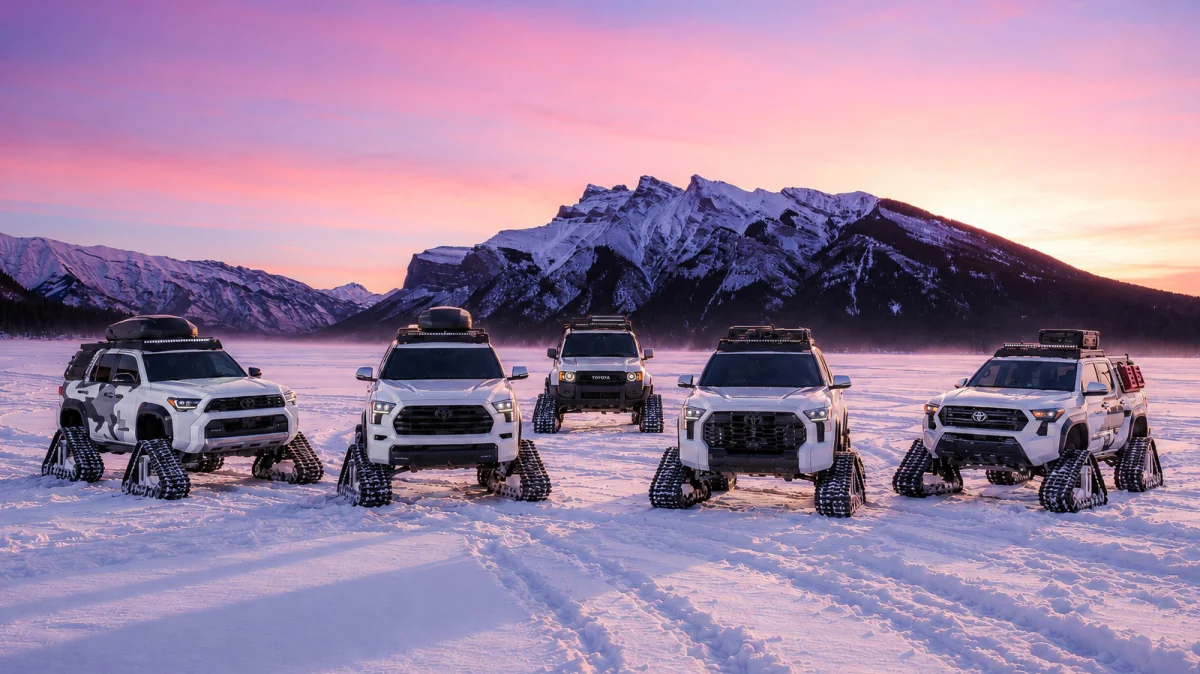
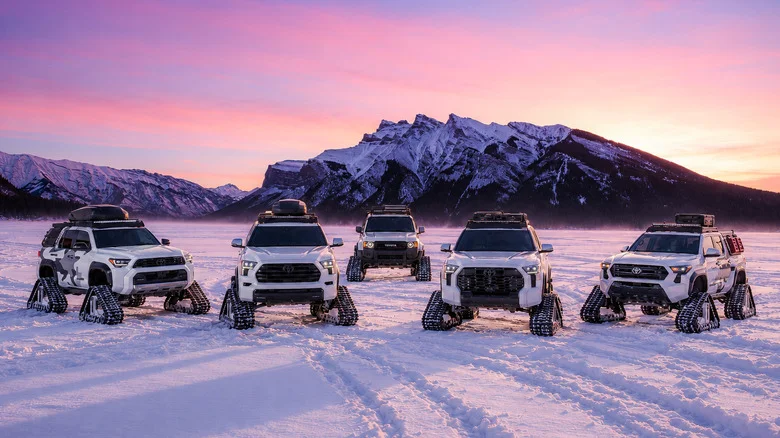
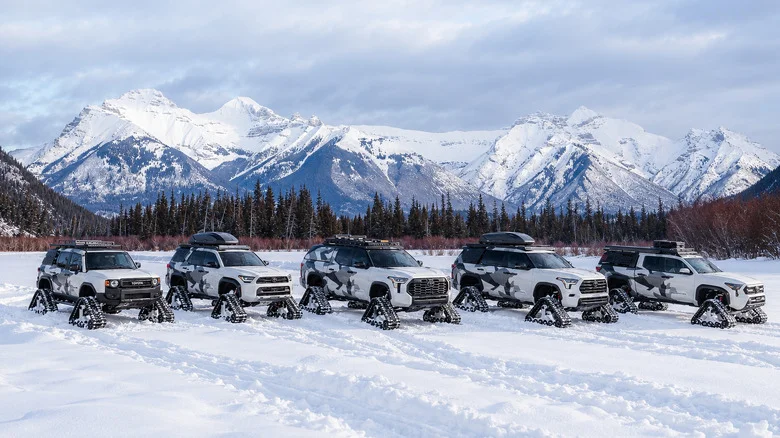
Toyota has turned five of its truck-based vehicles into Snowhunter concepts, swapping conventional wheels for snow tracks and adding equipment aimed at winter exploration. The Land Cruiser, 4Runner, Sequoia, Tacoma and Tundra all get the treatment. The builds are concepts, so there’s no indication they’ll be sold as shown; their clearest value is as a showcase for how Toyota could adapt its off-road accessories to snow country.
The reveal is tied to this year’s SEMA Show. Toyota has previously used the event to present unusual builds, including a hydrogen-powered overland Tacoma concept. The Snowhunter project takes a different route: it applies a shared winter theme across the lineup, then varies the gear to suit each vehicle’s shape and likely use.
Tracks are the headline change. They replace the usual tire-and-wheel setup with a broader contact surface designed for travel over snow. That visual shift makes the vehicles resemble compact tracked machines, but the article gives no performance figures, operating limits or details about how the track systems affect speed, handling or range. Those unanswered points matter to anyone imagining these concepts as practical winter transportation. For now, the builds show a direction and a look, rather than a tested package with published specifications.
Shared kit, different jobs
Across the five vehicles, Toyota has fitted Rigid lighting, TRD rear billet control arms, in-house lift components and Predator steps. The steps are intended to make climbing into the raised vehicles easier, a useful detail when a lift and bulky winter clothing make entry more awkward. Lighting and added ground clearance fit the concepts’ backcountry theme, while the control arms point to suspension hardware as part of the build rather than a purely cosmetic makeover.
The storage solutions split according to body style. The SUVs receive Prinsu roof racks with accessory panels and Thule Pulse 2 cargo boxes. Those additions provide a place for gear that might otherwise occupy passenger or cargo space, though the source gives no capacity figures. The pickups use bed-mounted arrangements instead: the Tundra gets Toyota’s TrailLift Pro bed system, while the Tacoma wears a full-length bed rack with MOLLE panels. That distinction makes practical sense for buyers comparing the enclosed storage of an SUV with the open, configurable load area of a truck.
The individual builds also reflect different priorities. The family-focused Sequoia adds a front TRD skid plate, running boards and the roof cargo box. The Land Cruiser gets rock rails, skid plates and a ski rack, equipment that fits its more rugged brief and makes the winter theme easy to read. The Land Cruiser’s return as a rugged off-roader gives that combination a natural fit: protection underneath and a way to carry skis above.
The source doesn’t detail unique equipment for the 4Runner or Tacoma beyond the shared additions and the Tacoma’s bed rack. That leaves room for the concepts to function as a family portrait of Toyota’s truck-based range, rather than five fully described engineering packages. Their white snow-camouflage finishes reinforce that role. The graphics and tracks make the lineup cohesive at a glance, while the accessory mix gives each model a slightly different use case.
A winter counterpart to Trailhunter
“Snowhunter” also echoes Trailhunter, Toyota’s off-road trim name for trucks sold to customers. The connection suggests a familiar pattern: a concept can gather accessories and styling cues around a specific kind of outdoor use, even when the complete show build isn’t intended for buyers. Toyota’s Snowhunter lineup extends that idea from trail-focused equipment to snow-focused gear, with racks, protection, lighting and raised hardware supporting the theme.
That resemblance shouldn’t be read as confirmation of a Snowhunter trim or a future production package. The article says the vehicles are concepts and offers no retail timing, prices or specifications. The track systems, in particular, are unlikely to transfer directly to ordinary road use; the source notes that they aren’t permitted on roads in most jurisdictions. A production version would therefore need a different setup for drivers who want a winter-oriented truck or SUV they can use routinely.
There’s still a plausible buyer interest behind the display. Some owners need an off-road-capable vehicle less for recreation than for getting through difficult winter conditions when regular routes become challenging. That use case favors dependable, manageable equipment and everyday usability as much as dramatic-looking hardware. A toned-down Snowhunter package could make the concept’s appeal clearer if Toyota ever offered one, but the source doesn’t say that such a package is planned.
For now, the five builds are best read as a parts-and-purpose exercise: Toyota has shown how its SUVs and pickups might be outfitted for winter exploration, while keeping the details distinct by vehicle. The next meaningful sign would be a road-usable package with confirmed equipment and specifications. Until then, Snowhunter is a striking concept family, and the tracks are its most memorable feature.
Source: Car Types, Trucks, Toyota Trucks. By Chris Tsui, published Oct. 27, 2026, at 12:25 p.m. EST. Google Discover.