Toyota Crown Signia GT-S Concept Turns a Practical Hybrid Into a Low-Slung Tourer
Toyota’s Crown Signia GT-S concept adds a lowered stance, larger brakes and aggressive styling to the hybrid crossover. It’s a show car, with no production plans stated.
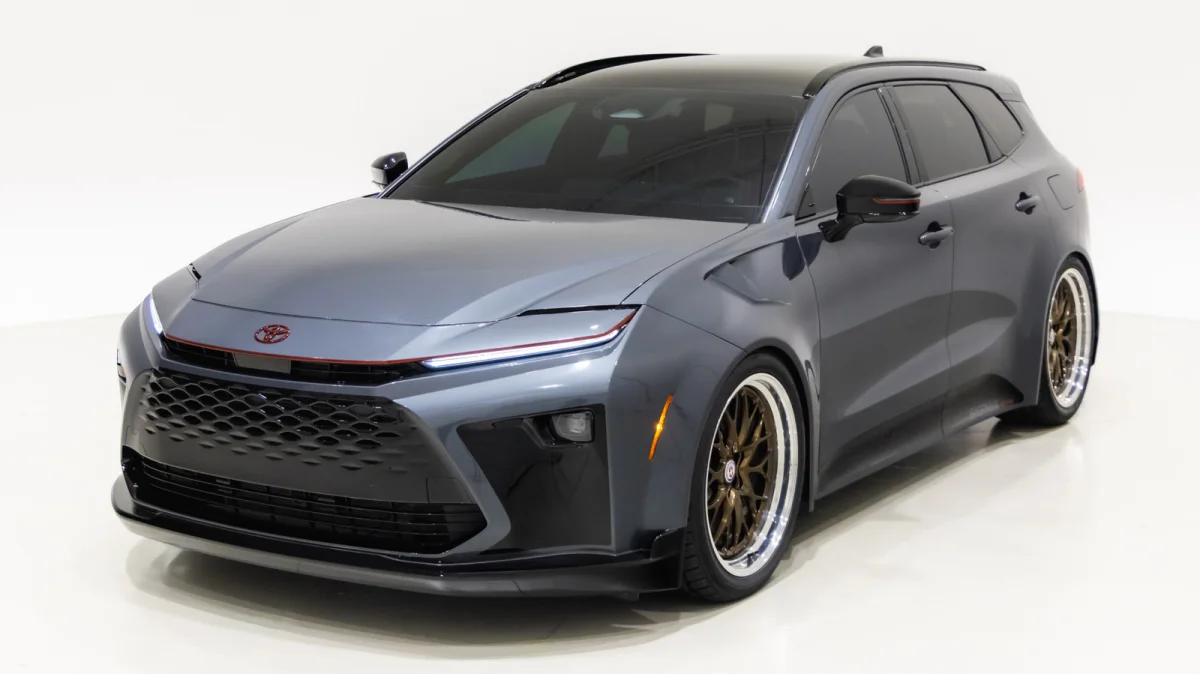
The Toyota Crown Signia GT-S Performance Concept makes its case through attitude, not a promise of extra power. Toyota has taken its roomy hybrid crossover and given it a low stance, substantial wheels and a more focused look. The result is an intriguing SEMA show car because it pushes the Signia toward grand touring without disguising the practical shape that makes it useful.
The standard Crown Signia occupies a curious spot in Toyota’s range. It offers the efficiency and everyday usability associated with a hybrid crossover, while its cabin and road manners aim for a more polished feel. That combination can make it harder to place than a RAV4 or a Lexus NX, and opinions among reviewers have been divided. One comparison with the NX is discussed here; another look at the Signia’s identity is here.
For this concept, Toyota Motorsports Garage leans into that ambiguity. Toyota describes the car as a grand touring machine combining everyday space and comfort with a sportier look and road feel. The concept will appear at SEMA in Las Vegas next month, alongside other Toyota show builds, including the Snowhunter trucks. There’s no stated production plan, so buyers shouldn’t read the concept as a near-term trim announcement.
A lower stance changes the Signia’s character
The most significant change is its ride height. One-off MCS coilovers lower the GT-S nearly five inches compared with a standard Crown Signia. That’s a dramatic adjustment for a vehicle Toyota describes as a crossover, and it shifts the visual balance toward a wagon: long roof, five doors and less space between the body and the road.
The stock Signia already sits between familiar categories, with a height that falls roughly between a Camry and a RAV4. Lowering it makes that in-between quality feel deliberate. The concept keeps the usefulness of a five-door body while borrowing the planted appearance associated with sportier road cars. That doesn’t establish how comfortable it would be over rough pavement, how much ground clearance remains, or whether the setup suits everyday use; Toyota hasn’t supplied those details.
Bodywork and wheels do most of the talking
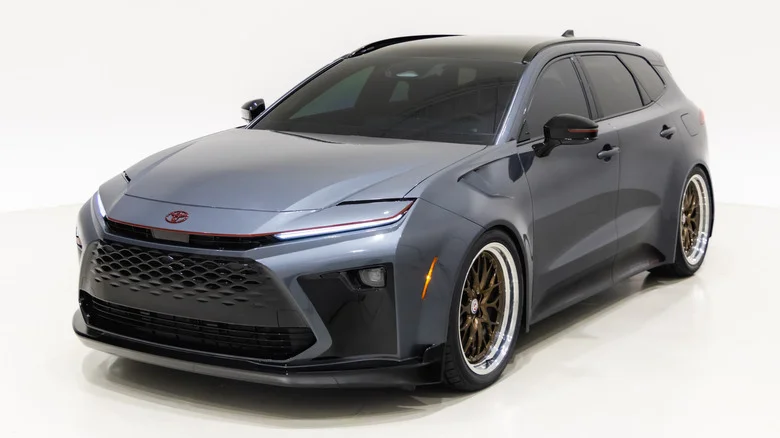
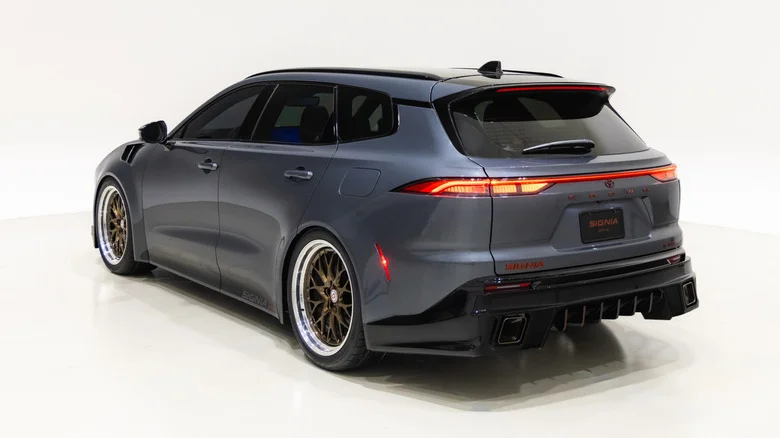
The exterior changes give the lowered chassis a more purposeful frame. The fenders are widened, the front hammerhead styling element and badges receive red accents, and a front lip and rear diffuser add visual weight close to the ground. Toyota also fitted custom dark gray metallic paint and a bespoke exhaust with trapezoidal tips. Vents above the front fenders complete the performance-car look, though their function hasn’t been described.
The 21-inch HRE wheels are more than a styling detail: they sit over brake calipers taken from the 366-horsepower Lexus RX 500h F Sport. Toyota pairs them with 295-section Toyo Proxes ST III tires. That combination signals a focus on grip and braking hardware, but it doesn’t tell us how the car performs. No power increase, acceleration figure, stopping distance or revised suspension tuning data is provided. The concept’s visual message is clear; its measured performance remains unknown.
Sporty details, with the cabin still in view
The interior changes are selective. New front seats appear to have deeper bolstering while retaining a comfort-oriented shape, a useful pairing for a car pitched as a tourer. A red shifter marked “GTS” is less restrained. It’s an intentionally conspicuous touch in a vehicle whose appeal partly comes from a quieter, more upscale character.

The concept’s parts list suggests a familiar enthusiast recipe: lower the body, add tire, improve the brakes and make the design more assertive. That recipe can sharpen a vehicle’s presence, but it also raises practical questions for a family-sized hybrid. A near-five-inch drop could affect clearance and ride comfort, while wide tires may bring different road noise and replacement costs. Those are considerations for any lowered road car; Toyota hasn’t shared enough information to judge their effect on this particular build.
A show car with a useful signal
The GT-S remains a concept, and Toyota hasn’t announced a showroom version or a timeline for one. It also hasn’t said the Signia receives more power. The comparison with Toyota’s RAV4 GR Sport points toward the sort of sportier treatment that could make sense on a production crossover, but it doesn’t confirm that Toyota is developing one for the Signia.
Still, the build makes a persuasive case for the model’s underlying shape. A lower roofline, long body and roomy cabin give the Crown Signia a natural touring-car quality that an ordinary crossover setup can leave understated. The GT-S exaggerates that character with hardware and styling, while leaving the daily-use format intact. For now, it’s a striking one-off; the details to watch are whether Toyota develops a production sport trim and whether it adds any mechanical changes beyond appearance and chassis parts.