Volkswagen’s Porsche Writedown Deepens Quarterly Loss as Hyundai and Toyota Sales Weaken
Volkswagen lost $6.6 billion in the third quarter as Porsche’s falling value weighed on results; Hyundai and Toyota also reported pressure.
Volkswagen’s third-quarter loss shows how quickly pressure across major vehicle markets can overwhelm an automaker’s operating results. The group reported a $6.6 billion operating loss for the three months, its largest quarterly deficit since late 2015. About $8.9 billion in one-off items contributed, most tied to a writedown of Volkswagen’s stake in Porsche.
The Porsche hit sits alongside weaker market conditions and a costly restructuring effort. Volkswagen is contending with fierce competition in China, annual tariff costs running into billions of euros, and heavy spending on the transition to electric vehicles in Europe. Chinese brands are also gaining ground there. The company’s figures offer a stark contrast with Carvana’s growth, while Hyundai and Toyota are facing their own signs of strain.
Volkswagen’s margin leaves little room for error
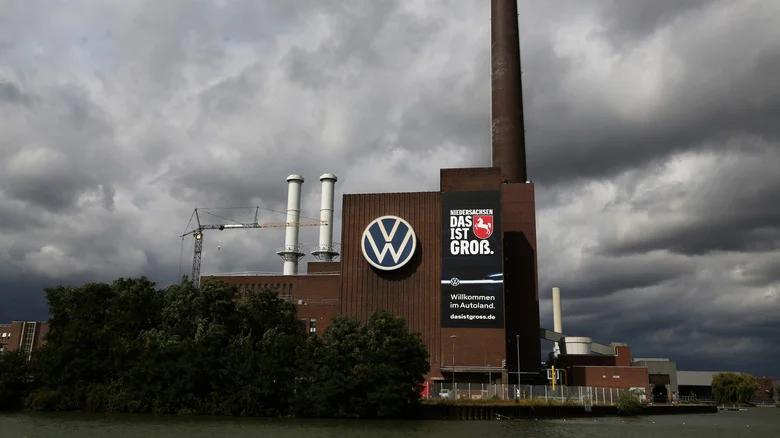
In September, Volkswagen flagged around $11.1 billion in one-off costs and cut its 2026 operating margin forecast to no more than 1%. The company’s margin was close to 8% in 2022. For the first nine months of this year, its operating return on sales was 3.8% before one-off items, according to finance chief Antlitz. He said that level would not be enough over the long term.
Volkswagen is aiming for an operating margin of 8% to 10% by 2030 under its restructuring programme. CEO Oliver Blume plans to remove 100,000 jobs across the group, which includes Audi and Porsche. Up to four plants in Germany could close under the plan, which has drawn opposition from unions and could lead to strikes early next year.
The loss recalls the final quarter of 2015, when Volkswagen was dealing with the fallout from Dieselgate. This time, the strain combines a less valuable Porsche holding with challenges to the group’s business model: competition in China, costs tied to international trade, and the expense of developing electric vehicles. The group’s [restructuring plans](https://www.jalopnik.com/2254854/volkswagen-spend-18-6-billion-cutting-jobs/) will have to lift margins while the company manages those demands. Its [Porsche stake](https://www.jalopnik.com/2265574/what-the-hell-happened-to-porsches-profits/) has become a major source of financial volatility.
Hyundai lowers its sales and profit targets
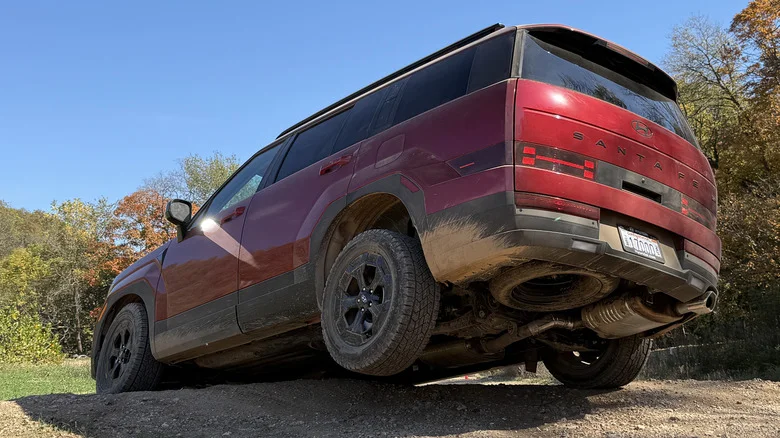
Hyundai has trimmed its full-year outlook as weaker demand and production disruptions weigh on results. The automaker now expects to sell 4.0 million vehicles in 2026, down from its previous target of 4.16 million. It also cut its operating margin target to 5.5%–6.5%, from 6.3%–7.3%, and reduced planned spending to 16 trillion won from 17.8 trillion won.
Net profit fell 24% year over year to 1.932 trillion won, or $1.44 billion, for July through September. That was below the 2.406 trillion won consensus estimate compiled by FactSet. Revenue declined 3.4% to 45.110 trillion won, even as operating profit rose 5.5% to 2.677 trillion won. Executives pointed to sluggish global demand, production interruptions and a foreign-exchange loss on overseas assets.
Sales were down in nearly all major markets, with India and the United States the exceptions. Hyundai’s hybrid models and SUVs continued to find demand in the U.S. Global wholesale sales fell 11% in the quarter, while retail sales slipped 10%. In the U.S., wholesale sales dropped 9.9%, but retail sales increased 3.5%.
Raw-material costs and growing competition from Chinese automakers add to the pressure, both in South Korea and overseas. Labor disputes also disrupted production and shipments earlier in the year before an agreement was reached in August. Hyundai’s U.S. retail growth is a useful bright spot, but its lower sales and margin targets show that it hasn’t escaped the broad slowdown. The company had been [gaining ground against Ford](https://www.jalopnik.com/2269035/hyundai-on-track-to-outsell-ford-first-time-ever/), making the outlook cut a notable change in tone.
Toyota’s third consecutive monthly decline
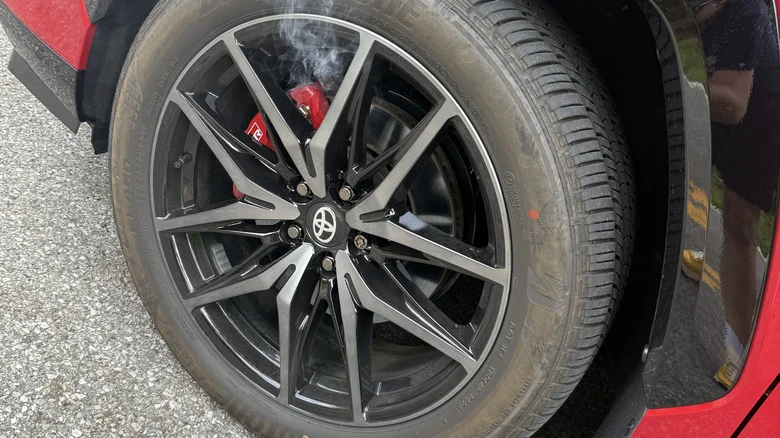
Toyota and Lexus recorded their third straight month of lower global sales and production in September. Worldwide sales fell 2.2% year over year to 860,107 vehicles, while production declined 3.2% to 889,079. A sharp pullback in China and the Middle East contributed to the drop.
China was the clearest weak spot: sales fell 19.7%, marking an eighth consecutive monthly decline, while production there dropped 18.6%. Toyota also made 2.9% fewer vehicles in the U.S. Output in Japan moved the other way, rising 5.8%. Regional sales were mixed, too. The Middle East was down 29.8%, while Japan edged up 1.8% and U.S. sales grew 8.4%.
For the world’s largest automaker, the figures underline how uneven demand has become across regions. China’s decline is particularly persistent, while stronger U.S. sales offer some balance. Toyota’s [Tundra sales in Japan](https://www.jalopnik.com/2148199/toyota-selling-the-tundra-in-japan-despite-small-sales-expectations/) show how its lineup can travel beyond its core markets, but September’s results point to a broader challenge in maintaining momentum across them.
Carvana grows while automakers struggle
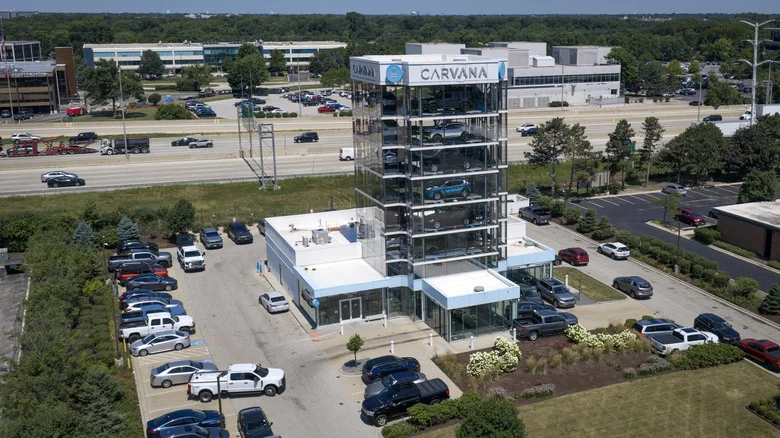
Carvana delivered a sharply different set of results. The used- and new-vehicle retailer’s third-quarter income rose 84% to $483 million. Revenue topped $8 billion, up 42%, and sales reached 217,385 vehicles. That was the first time quarterly sales had exceeded 200,000.
Carvana says it wants to sell 3 million retail vehicles a year between 2030 and 2035. Its current pace points to roughly 870,000 a year, according to CEO Garcia and CFO Mark Jenkins. They put that at 2% of the used-vehicle market and 1.5% of the overall market, leaving room for expansion. The company has also acquired seven Chrysler, Dodge, Jeep and Ram dealerships since February 2025, which it says will support growth in new-vehicle sales.
Its ADESA wholesale auction and reconditioning operation is expanding as well. Carvana added retail production capabilities at two locations in the quarter, bringing the total to 21, and says three more sites under development should begin production in 2027. The company’s [dealership purchases](https://www.jalopnik.com/2196570/carvana-bought-several-stellantis-new-car-dealerships/) and ADESA buildout give it multiple ways to extend its reach. The gap between Carvana’s results and those of the manufacturers is striking, though its planned scale remains a longer-term goal.
Fuel costs remain high

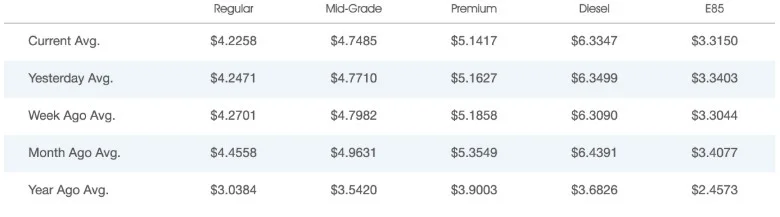
Drivers saw only a small reduction in pump prices. AAA put the national average at $4.23 a gallon, down 2 cents overnight. Diesel also fell 2 cents, to $6.33. At publication, WTI crude futures were at $101 and Brent crude at $110. With oil still expensive, the slight daily dips offer little reason to expect a quick, sustained drop in fuel costs.
The quarter’s clearest takeaway is that pressure is not limited to one company or region. Volkswagen faces an unusually large accounting hit and a difficult restructuring; Hyundai has lowered its targets; and Toyota’s sales and production have declined for three months. Carvana’s growth stands apart, while consumers still face elevated fuel prices. For buyers and industry watchers, the next signals to follow are whether automakers can stabilize demand and improve margins without slowing their transition to electric vehicles.