Maruti Suzuki e Vitara Drives EV Exports Past 50,000 Units
The e Vitara has taken Maruti Suzuki’s EV exports to nearly 50 countries, with Hansalpur serving as its sole production base.
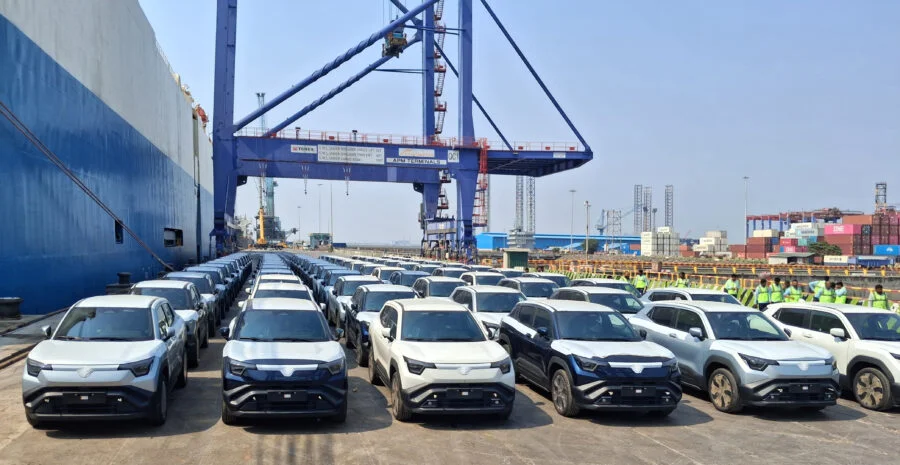
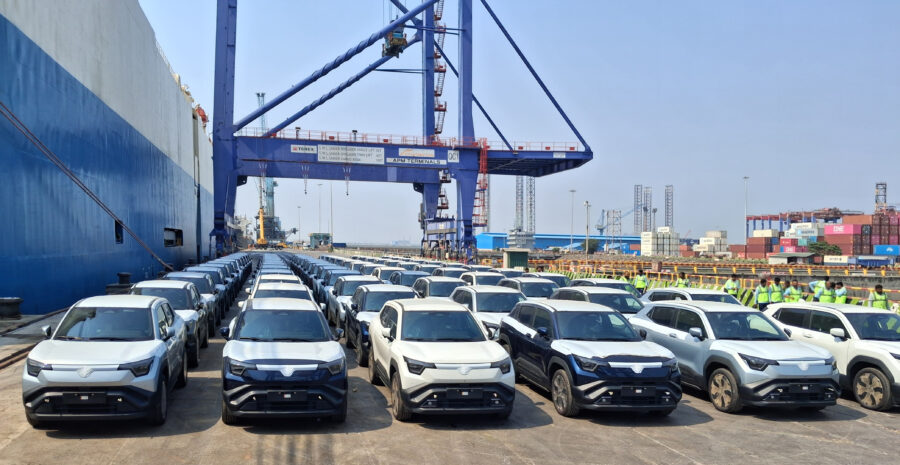
Maruti Suzuki has exported more than 50,000 electric vehicles since August 2025, with the Suzuki e Vitara accounting for the company’s reported export push. The scale is notable: between April and September 2026, Maruti Suzuki vehicles made up nearly 93% of India’s electric passenger vehicle exports, and the company says its EVs have reached nearly 50 countries.
Europe is the largest destination region. The figures show how quickly the e Vitara has become part of Maruti Suzuki’s overseas business, though they don’t break down deliveries by country or market. That leaves open how demand is distributed across the nearly 50 destinations, and how much of the reported volume comes from individual markets.
The e Vitara is the export anchor
The Suzuki e Vitara is the brand’s first global battery-electric vehicle and the only model identified in the company’s account of this milestone. Maruti Suzuki builds it exclusively at the Hansalpur plant in Gujarat. Production for export markets began in August 2025, giving the company a single production base for the model’s international supply.
More than 50,000 exports in the period since production began point to a rapid ramp-up. But the total alone doesn’t show the pace of shipments over time, the model’s sales to customers, or how many units have gone to each region. Those distinctions matter: export volume measures vehicles shipped overseas, while local registrations and sales would offer a clearer view of the e Vitara’s reception among buyers.
Maruti Suzuki held the leading position in India’s electric vehicle exports in FY2025-26 and retained it during April to September of FY2026-27, the first half of that financial year. Its nearly 93% share applies specifically to the country’s electric passenger vehicle exports from April through September 2026. It shouldn’t be read as a share of all passenger vehicles exported by India, or as a measure of the e Vitara’s position in overseas retail markets.
Hansalpur’s capacity serves a wider export business
Hansalpur recently raised its annual production capacity to one million vehicles, making it the first Suzuki plant worldwide to reach that output at a single location. The figure covers the facility’s stated annual capacity; it doesn’t indicate how many vehicles the plant currently produces or what portion of its output is electric.
Maruti Suzuki reports an investment of Rs 25,288.7 crore in the Gujarat site. The plant also handled nearly half of the company’s total overseas shipments in FY2025-26. That makes Hansalpur relevant beyond the e Vitara: it is part of a broader export operation, with the electric model adding a new product line to a site already handling a large share of the company’s international shipments.
A single production base gives the e Vitara programme a clear manufacturing anchor, while the plant’s expanded capacity provides room for higher output across its operations. The published figures don’t say how capacity is allocated among models, how export schedules vary by destination, or whether future production will be adjusted as demand develops. Those details will help show how the facility balances electric and other vehicle shipments.
EV exports sit within a broad overseas network
Maruti Suzuki exports 16 models to nearly 120 countries. The company says it has been India’s largest passenger vehicle exporter for five consecutive years and accounted for more than half of the country’s passenger vehicle exports between April and September 2026. These figures place its EV performance within a much larger export business, rather than suggesting that the e Vitara alone accounts for the company’s overseas scale.
The comparison between the two export measures is useful. Nearly 93% refers to India’s electric passenger vehicle exports, while the figure above 50% covers passenger vehicle exports as a whole for the same six-month period. Together, they show that Maruti Suzuki has a particularly strong position in the electric export category, while also holding a substantial share of the wider passenger vehicle trade.
Managing Director and CEO Hisashi Takeuchi attributed the milestone to India’s manufacturing capability and its ability to compete in overseas markets. He also connected the e Vitara programme with the Make in India initiative. His comments frame the export total as a manufacturing achievement as well as a model milestone, although the figures provided don’t detail the vehicle’s component sourcing or the share of its value produced locally.
| Export detail | Company-reported figure |
|---|---|
| Cumulative EV exports | More than 50,000 |
| EV export start | August 2025 |
| Share of India’s electric passenger vehicle exports, April-September 2026 | Nearly 93% |
| EV export destinations | Nearly 50 countries |
| Total models exported | 16 |
| Total export markets | Nearly 120 countries |
| Hansalpur annual production capacity | 1 million vehicles |
| Investment in Hansalpur | Rs 25,288.7 crore |
| Share of overall exports handled by Hansalpur in FY2025-26 | Nearly 50% |
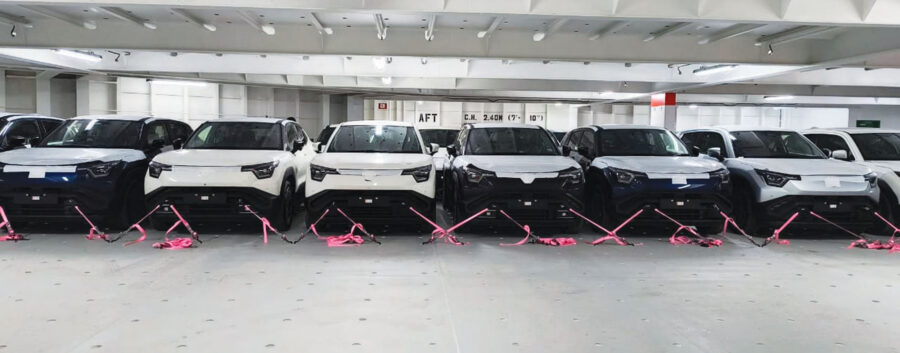
The next useful measure will be how shipments develop across the e Vitara’s destination markets. For now, the combination of more than 50,000 exports, a near-93% share of India’s electric passenger vehicle exports in the stated period, and a single Gujarat production base makes the model a significant part of Maruti Suzuki’s overseas growth.
The milestone establishes the e Vitara’s early export scale; market-by-market sales and production figures will show whether that momentum can be sustained.