Allstate Auto Lab Adds Hands-On Training on Modern Vehicle Repairs
Allstate’s Dallas training center gives claims specialists access to damaged vehicles, diagnostic tools and repair demonstrations across powertrains.
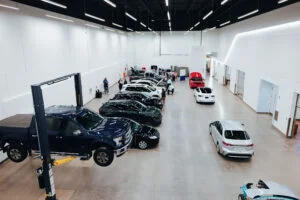
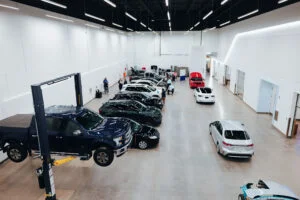
Allstate is expanding practical vehicle repair training for its claims specialists with a dedicated demonstration area at its new Auto Lab in Dallas. Employees can examine damaged vehicles, use diagnostic equipment and watch repair techniques in person, including demonstrations in a negative-pressure space.
The lab is part of Allstate’s Claims University, a 33,000-square-foot training center that opened in August. The facility also has a Property Lab for training on house claims. The Auto Lab is intended to give employees a closer view of the damage and repair issues they may need to assess in their work.
Training built around real vehicles and damage
Adjusters will work with 22 vehicles and four motorcycles, including electric, hybrid and gas-powered models. Allstate says the selection draws on insights from more than 3.5 million auto claims and reflects scenarios customers commonly encounter. That mix gives trainees a way to compare how vehicle design and powertrain affect inspection and repair considerations.
Training covers several kinds of damage: front-corner, rear-end and side-impact collisions, multi-vehicle crashes, floods, hail and vandalism. Employees will also examine hidden structural and undercarriage damage, along with issues involving cameras, sensors and advanced driver assistance systems (ADAS).
The range matters because an exterior inspection may not reveal the full extent of damage. A vehicle can have structural or underbody issues that require a different view, while a fault affecting a camera or sensor may call for diagnostic checks. Seeing these cases on actual vehicles gives adjusters a practical way to connect visible damage with the systems and components that may also need attention.
“Today’s vehicles are far more complex than they were even a few years ago, and claims adjusters need a deeper understanding of how damage affects the entire vehicle,” said Mike Fiato, Allstate executive vice president and chief claims officer. He said the lab is intended to help employees build expertise and support customers as they recover from damage.
Lifts, diagnostics and repair demonstrations
A two-post lift will let trainees inspect vehicles from underneath. From that position, they can look at structural components, exhaust systems and undercarriage areas that may be difficult or impossible to assess from outside the vehicle. The closer inspection is designed to help employees understand how damage can extend beyond what is apparent at first glance.
The lab also includes diagnostic technology for checking cameras, sensors and ADAS components. Allstate says electric and hybrid vehicles, as well as vehicles equipped with these systems, can call for different damage assessment and repair considerations than gas-powered models. Damage to a camera, sensor or blind-spot monitoring system may not be obvious from the exterior, yet can affect repair needs and safety.
Including electric and hybrid vehicles in the training gives adjusters a chance to work with those technologies directly. Allstate says the lab uses diagnostic tools similar to those found at many repair facilities, helping employees become more familiar with the equipment involved in evaluating these vehicles.
A separate demonstration area allows employees to watch repair techniques. Advanced measuring equipment will show structural movement and alignment issues that can affect repair needs. The negative-pressure setup is intended to support repair demonstrations while employees observe the work.
That combination of inspection and observation is the lab’s central feature. A classroom can explain why a component needs assessment or how a repair is carried out; a physical vehicle can show where the damage sits, how it relates to surrounding parts and what tools are used to evaluate it. For adjusters, that experience may make it easier to discuss repair considerations with repair facilities and explain assessments to customers.
Why the added detail matters
Allstate says the lab is meant to help employees make more informed damage assessments and provide clearer guidance to customers. Its focus on concealed damage and vehicle electronics reflects a practical challenge in evaluating newer cars: the affected area may include components that aren’t visible during a walkaround, and identifying them can require diagnostic equipment or access beneath the vehicle.
For drivers, the quality of that assessment can shape the conversation about what repairs a damaged vehicle needs. The training doesn’t change the repair process itself, but it gives claims specialists a setting to study the vehicles, tools and repair methods involved before applying that knowledge in their work.
The lab’s value will depend on how well its vehicle mix and training scenarios keep pace with changing vehicle designs and repair practices. Allstate says the facility is intended to keep training aligned with emerging technologies. Its combination of damaged vehicles, lifts, diagnostics and live repair demonstrations gives that effort a concrete foundation.
Allstate’s description of the Auto Lab and coverage of the Claims University opening provide further details.
Photo courtesy of Allstate