Death Proof Chevy Nova: Inside Buddy Joe Hooker’s 1970 Stunt Car
Buddy Joe Hooker’s Death Proof Nova pairs a 383 V-8 with a stripped, reinforced stunt setup—and carries a family story beyond the film.
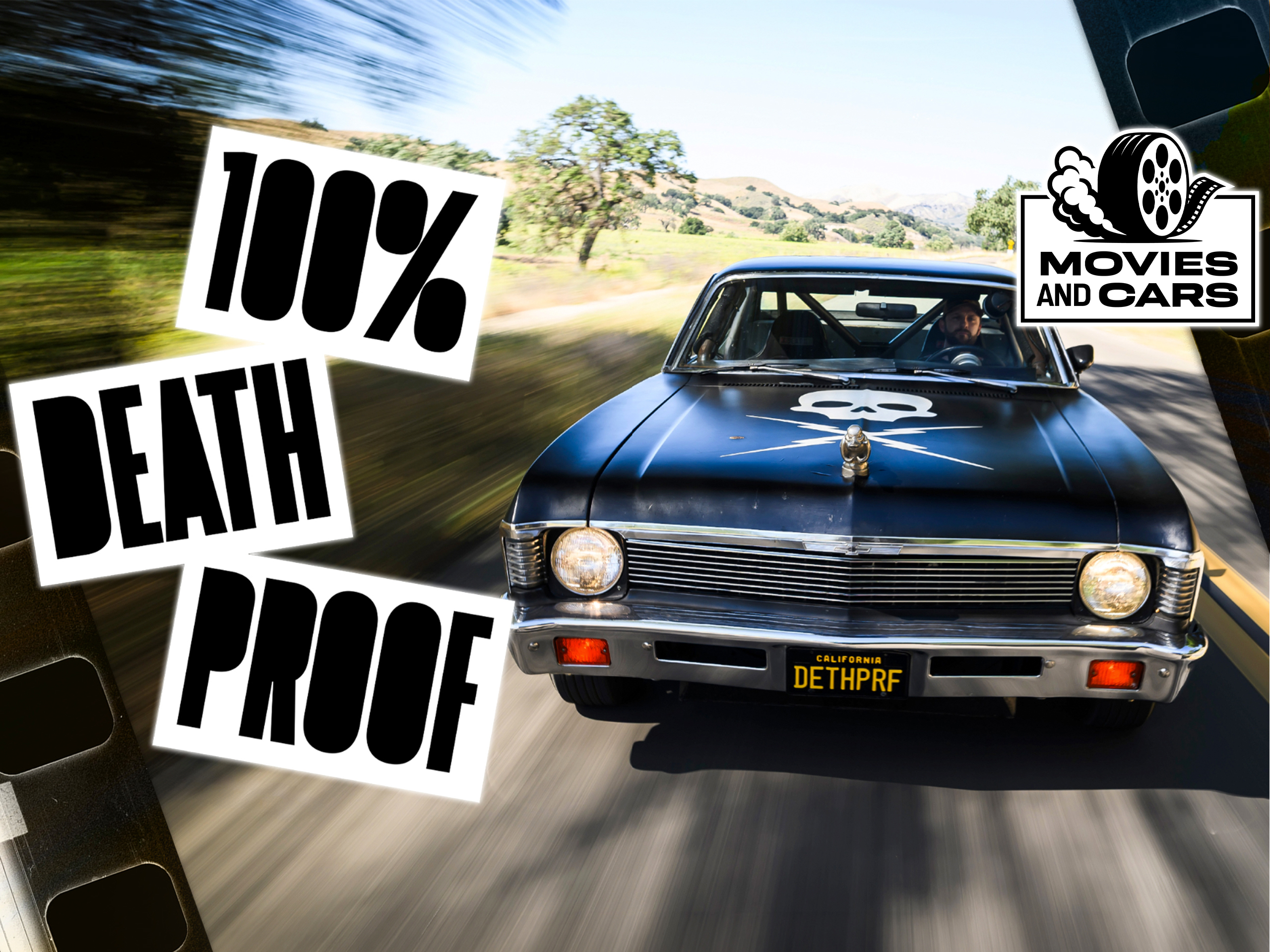
The black 1970 Chevrolet Nova known as The Jesus is a working piece of film history, with its steel cage, stripped cabin and 383-cubic-inch small-block V-8 still on display. It’s also the car stunt driver Buddy Joe Hooker chose to keep after Death Proof wrapped. That combination gives the battered coupe a rare second life: it’s both the menacing prop audiences remember and a family car that Hooker’s sons grew up around.
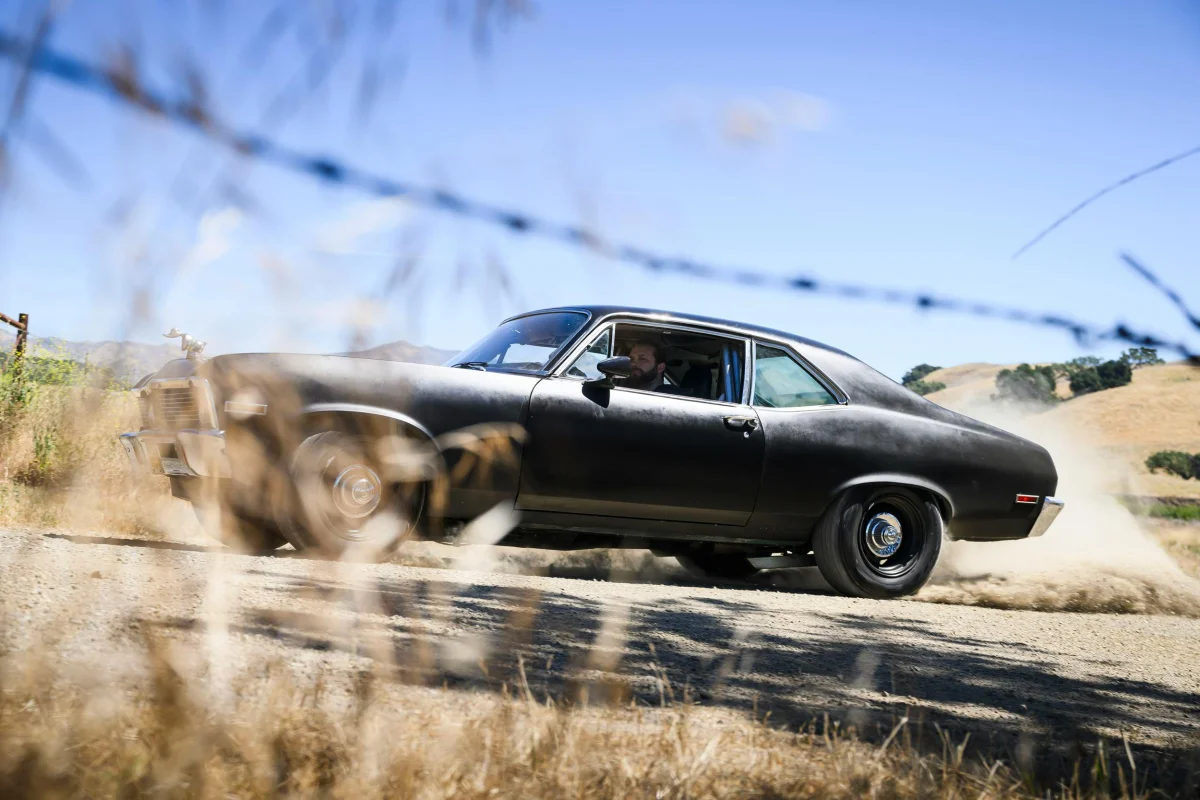
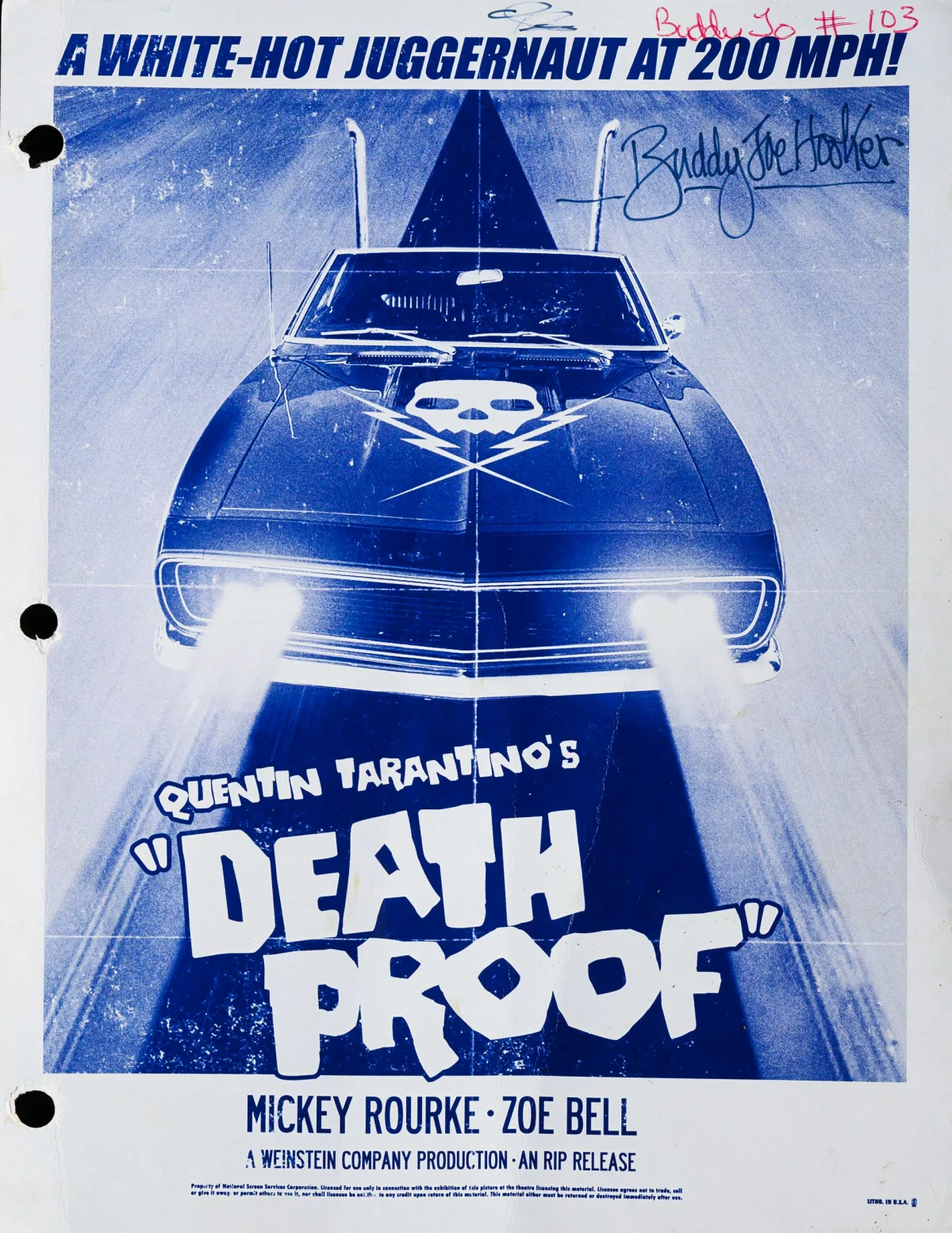
Hooker arrived at a photo shoot in California with the Nova in a rented trailer, accompanied by his wife, Gayle, and son Kanan. The car’s matte-black finish, skull-and-lightning hood graphic and exposed cage make its connection to Quentin Tarantino’s 2007 film unmistakable. Its rough edges are functional reminders of a production that insisted on practical driving and physical stunts.
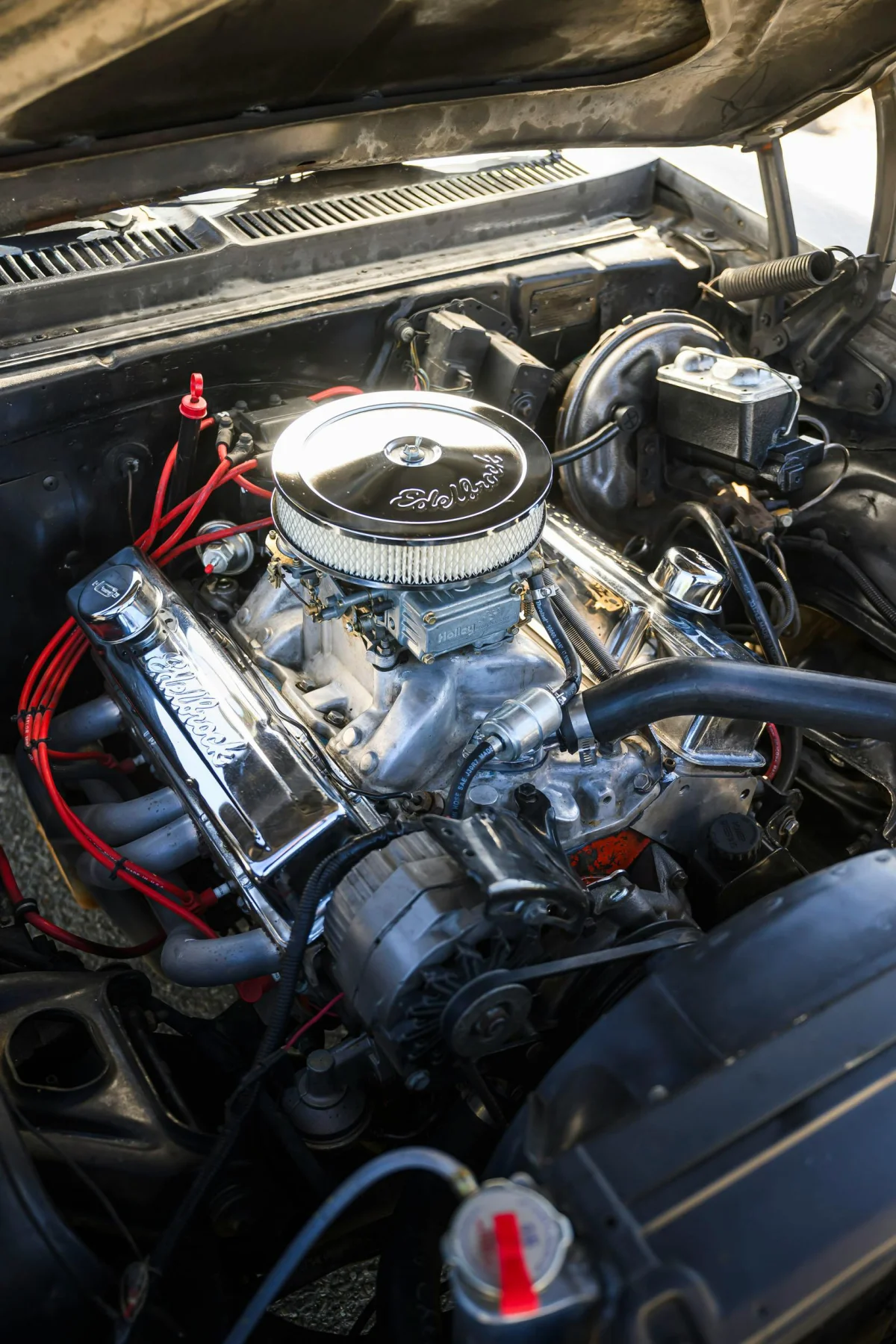
The Nova was one of three cars prepared for the film. One served for close-ups; the other two took on stunt work. The Jesus became Hooker’s favorite, and the stunt driver says it behaved better than its companions. It had a 350 V-8 stroked to 383 cubic inches, long-tube headers and a four-barrel carburetor. “It had good power and it handled better than the others,” he recalls.
That fondness had practical consequences during filming. Hooker says he’d move The Jesus away before major action sequences, in part because he wanted to preserve it. Another Nova, nicknamed The Cleetus, was assigned to a cannon roll and destroyed. Once the shoot ended, Hooker asked Tarantino whether he could keep his preferred car. The director sold it to him for about $500.
Death Proof follows Stuntman Mike, played by Kurt Russell, a stunt driver who uses cars to pursue and kill women. The Nova is his chosen car in the film’s first half. Tarantino made the picture as an homage to the rough-edged car and action films of the 1960s and ’70s. He wanted the driving to happen with real cars and practical effects, and recruited stunt veterans to carry out the work.
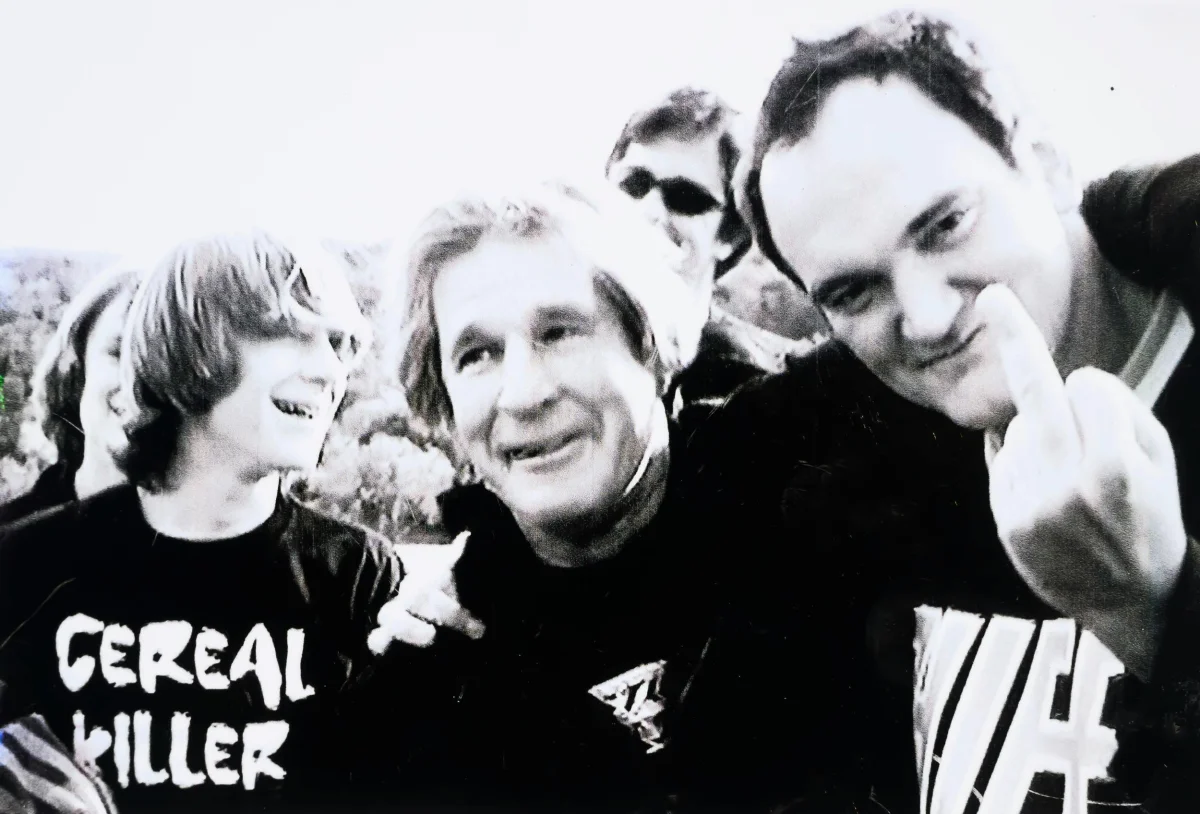
Hooker was selected as the principal stunt driver and Russell’s double. His career had already taken in films including Close Encounters of the Third Kind, To Live and Die in L.A., Scarface, Harold and Maude, Terminator 2: Judgment Day, Days of Thunder and the 2000 remake of Gone in 60 Seconds. He entered the business young, following his father, who ran a ranch that supplied horses for Westerns. Hooker began doing horse stunts at 13.
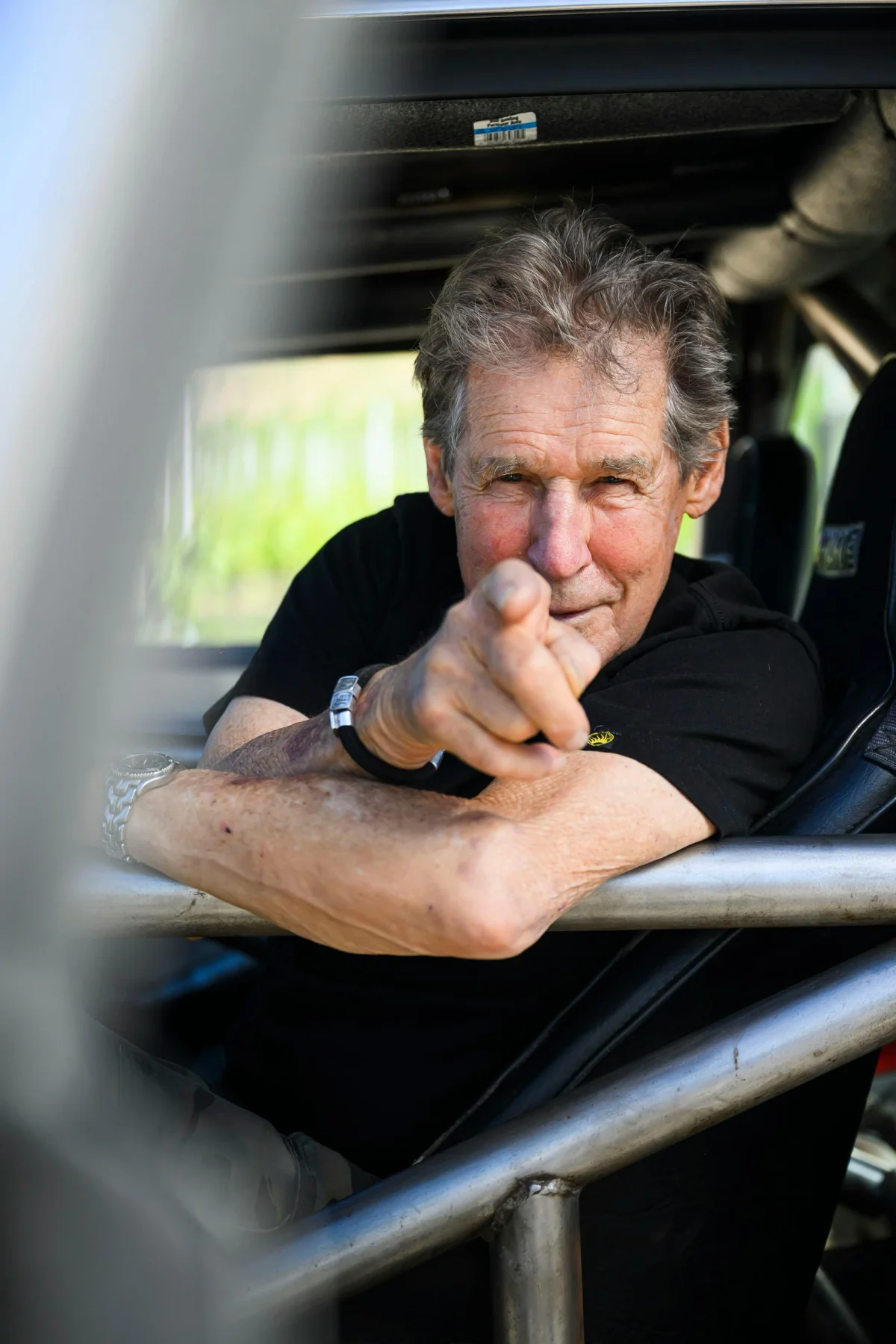
His screen work involved stunts with little margin for error: jumping a motorcycle over a helicopter’s spinning blades for Daredevils, rolling a truck 17 times down a sand embankment for Clay Pigeon, and sending a car about 120 feet over Burt Reynolds’ head and into the Arkansas River in White Lightning. That background matters when considering the apparent chaos of Death Proof. The spectacular action depended on planning and coordination, not a willingness to ignore the risks.
For the cannon roll, a metal tube was fixed under the car near the passenger-side rear wheel. Inside it sat a piece of telephone pole and black powder. At the right moment, Hooker activated the device, sending the pole down toward the ground and launching the car into a series of rolls. The control was a small detonator he taped to his thumb so he could keep both hands on the steering wheel.
In the film, the maneuver turns a collision into a violent, rolling crash. Hooker says he sent The Cleetus about 160 yards before it slid across its roof and came to rest near the camera. He landed the stunt on the first take. With the car wrecked and The Jesus left intact, Hooker’s preferred Nova made it through production.
The movie’s stunt setup was deliberately visible. Many stunt cars conceal their cage bars, mounts and reinforcement so the vehicle looks closer to an everyday car. Here, the steel structure is part of the visual identity. The Nova’s cabin was stripped of its dashboard and rear seat; a drilled steel panel replaced the headliner to add roof reinforcement for the long upside-down slide. A five-point harness secures both front occupants.
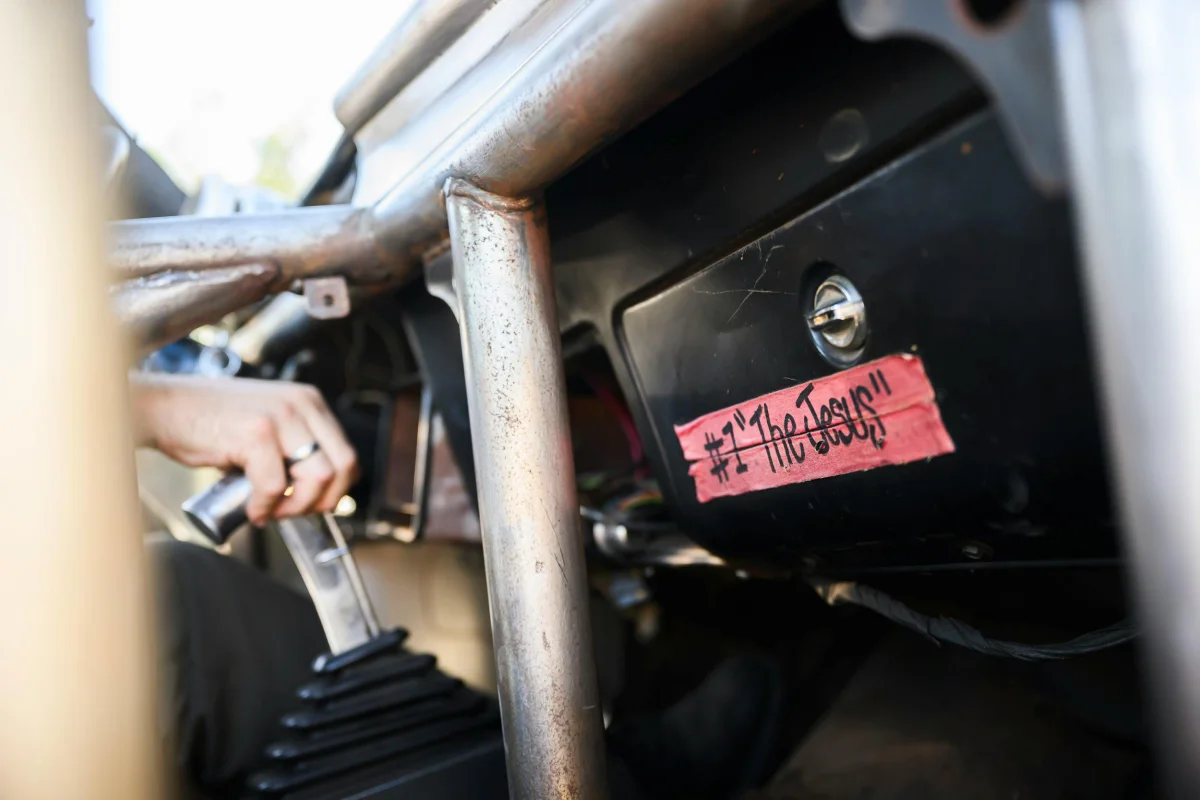
The Hooker family later made changes for ordinary use. Buddy Joe’s twin sons, Kanan and Houston, worked on the Nova and drove it to school. They refreshed engine parts after years of hard use and added steel inner door panels, which had been left open during filming to save weight and limit the chance of loose material becoming a projectile. They removed the Plexiglas divider between driver and passenger and replaced the tractor-style seat used for Rose McGowan’s character with a conventional seat.
The brake setup also changed. During filming, the main pedal operated the front brakes, while a second pedal near the dead pedal controlled the rear brakes. That arrangement let the stunt driver initiate spins and 180-degree turns. Kanan says the family kept the separate rear-brake pedal for a while to play with it, then took it out because it wasn’t useful for normal driving. They returned the brakes to a standard arrangement and fitted a larger booster from a Chevrolet C/K-series truck.
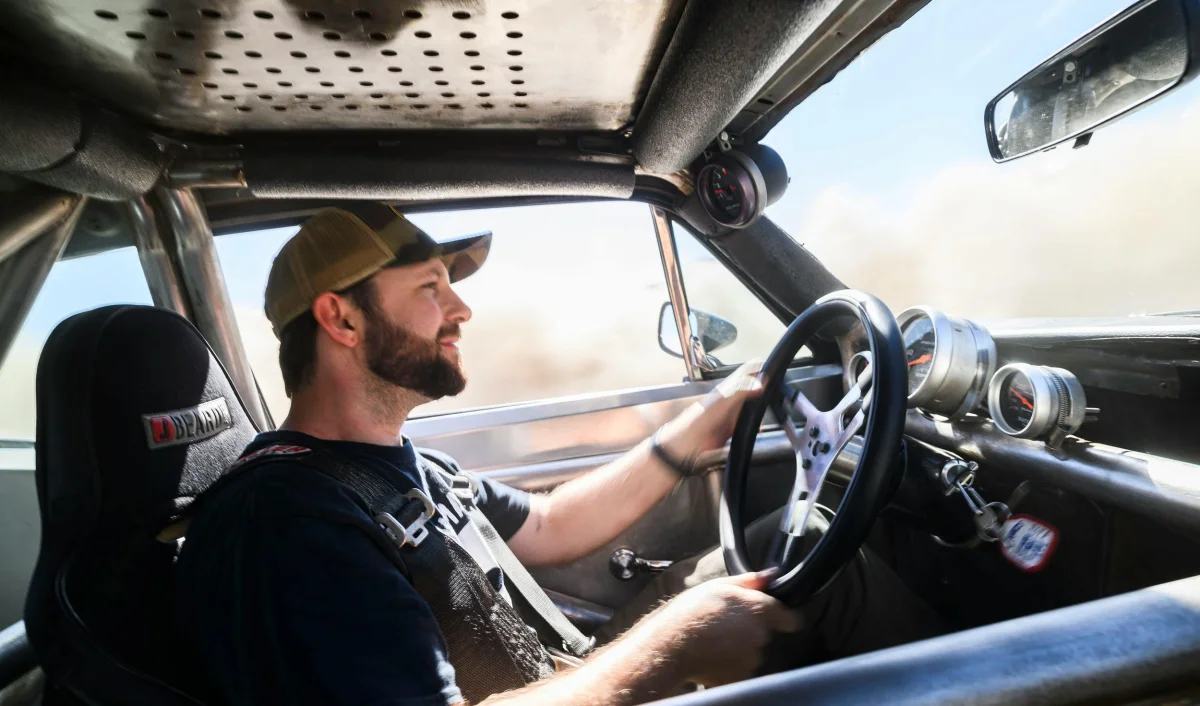
Kanan, now 33, no longer works in stunts. He works for onX Offroad, a Montana-based off-road mapping technology company, and returned to California for the shoot. Getting the Nova ready brought back memories of growing up around his father’s work. “Reuniting with this car is kind of like going back to my childhood, honestly,” he says. Preparing it for the drive also reminded him how much he used to enjoy working on cars.
His parents had watched Kanan and Houston develop their driving skills through karting and time spent with professional stunt drivers. Gayle says the boys inherited their father’s awareness of space, movement and timing. Buddy Joe was also confident in the Nova’s protective structure: he knew the car had been built to withstand impacts and protect its driver. That confidence came with an understanding that preparation and skill matter, especially in a machine with substantial power and no airbags.
The Nova became a family keepsake as well as a recognizable part of Death Proof.
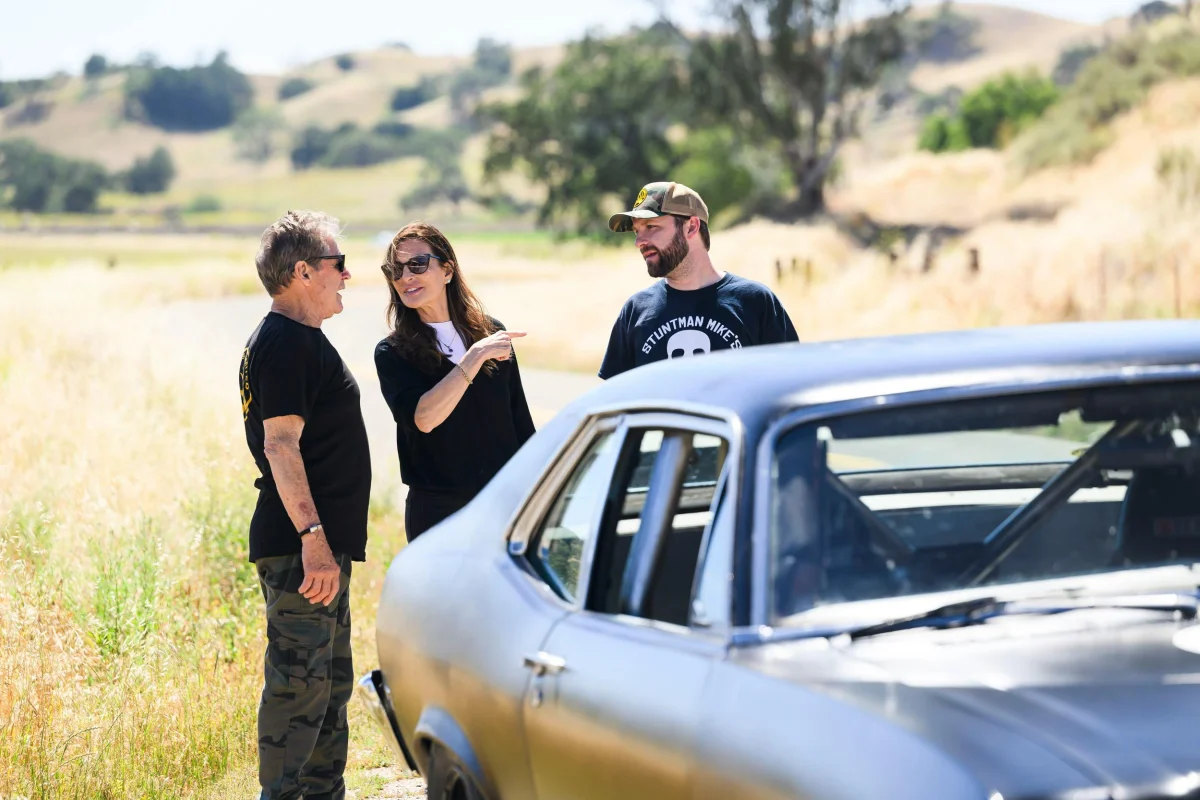
The shoot’s location added another layer to the reunion. The Nova’s scenes were filmed in Austin, Texas, while the second half of Death Proof was shot near Buellton in California’s Santa Ynez Valley. The family brought the car there for the photo session, near the roads used for the film’s climactic chase between a 1969 Dodge Charger and a 1970 Dodge Challenger.
Getting into the Nova makes clear that it was built around the demands of a stunt sequence. A horizontal bar crosses the door opening, and another runs beneath the roof. Foam wrapped around the upper bar offers a little padding, but there’s no mistaking the steel cage. The fixed bucket seat and harness hold the driver firmly in place. Entry takes care; there’s a delicate turn-signal stalk that’s easy to hit while climbing over the cage.
The cabin has little in common with a restored road car. There’s no factory dashboard or rear seat, and the bare interior makes each rattle and engine vibration easy to hear. A quick-release steering wheel mounts to a hub, with three gauges above it: a speedometer in the middle, oil pressure and water temperature to either side. The tachometer sits on a bracket near the windshield, while wiring remains exposed beneath the steering column.
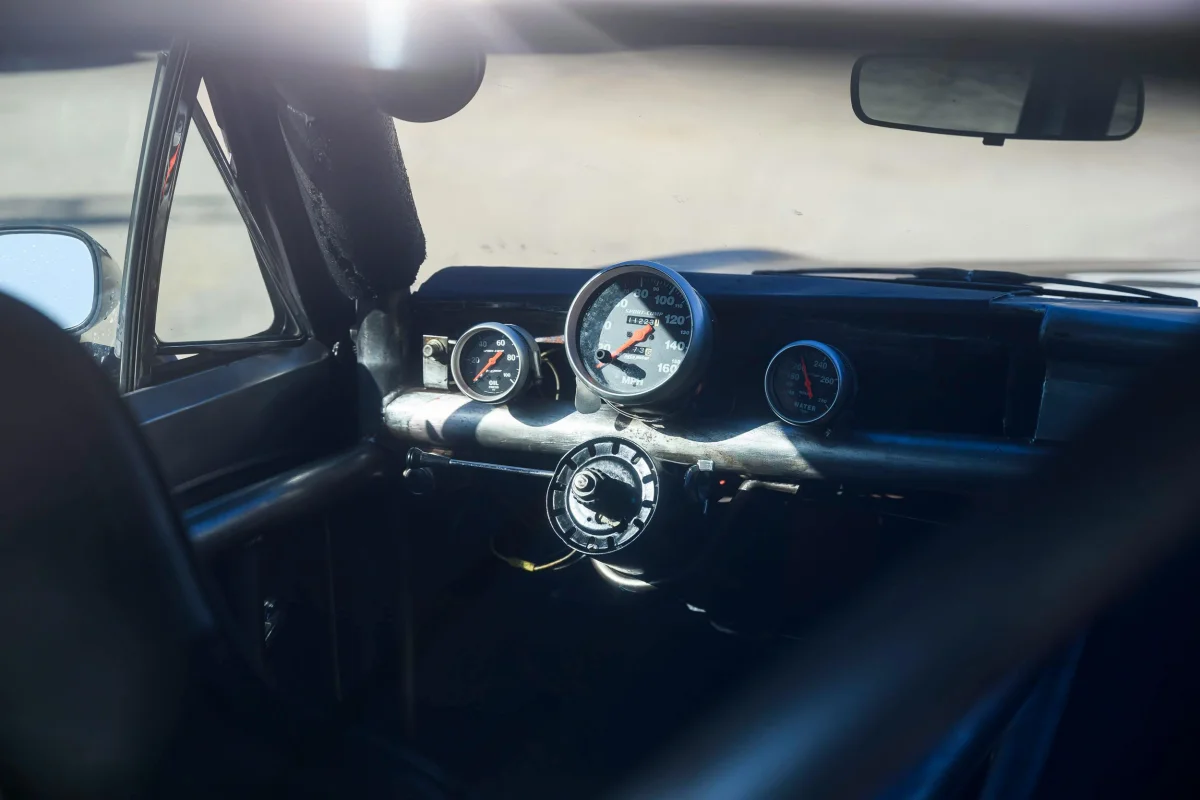
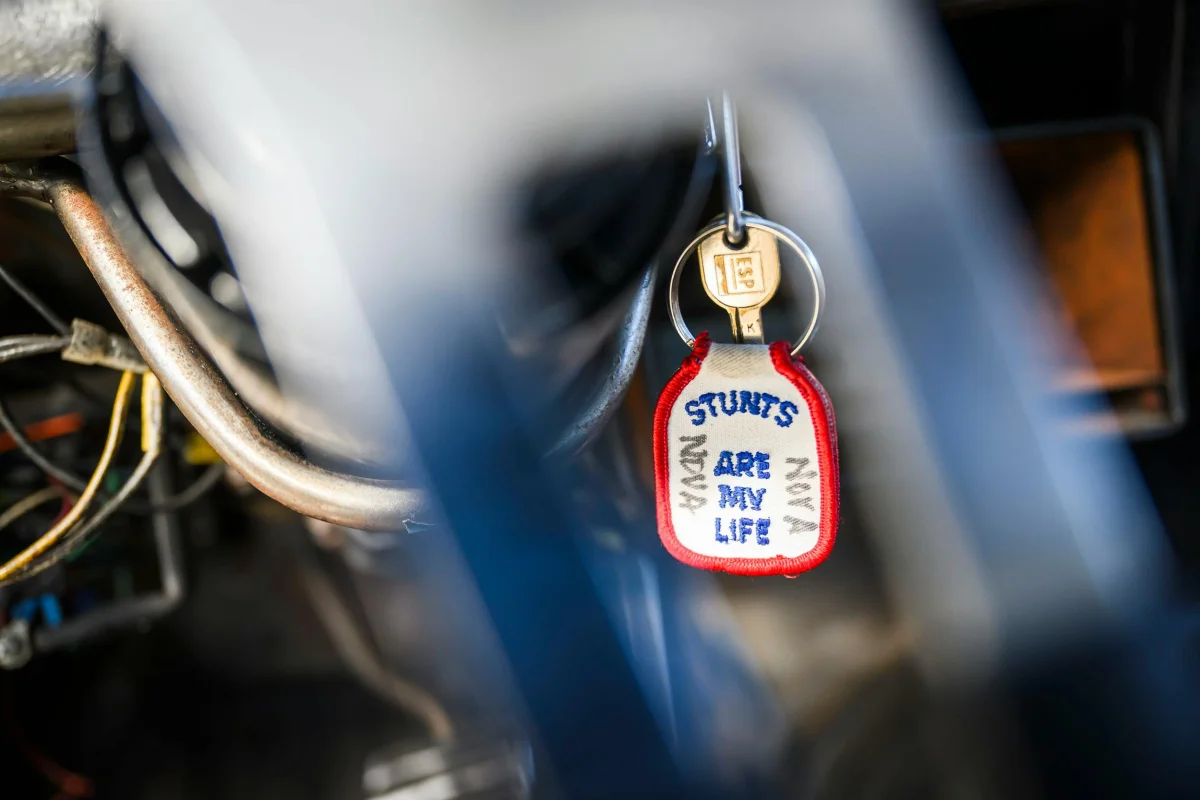
With the wheel secured, the key brings the 383 to life. It settles into a steady idle, but the cabin’s metallic clatter remains part of the experience. The production wanted the car to sound as real as it looked: engine note, cockpit noise and the click of the automatic gear selector all contribute to its presence on screen.
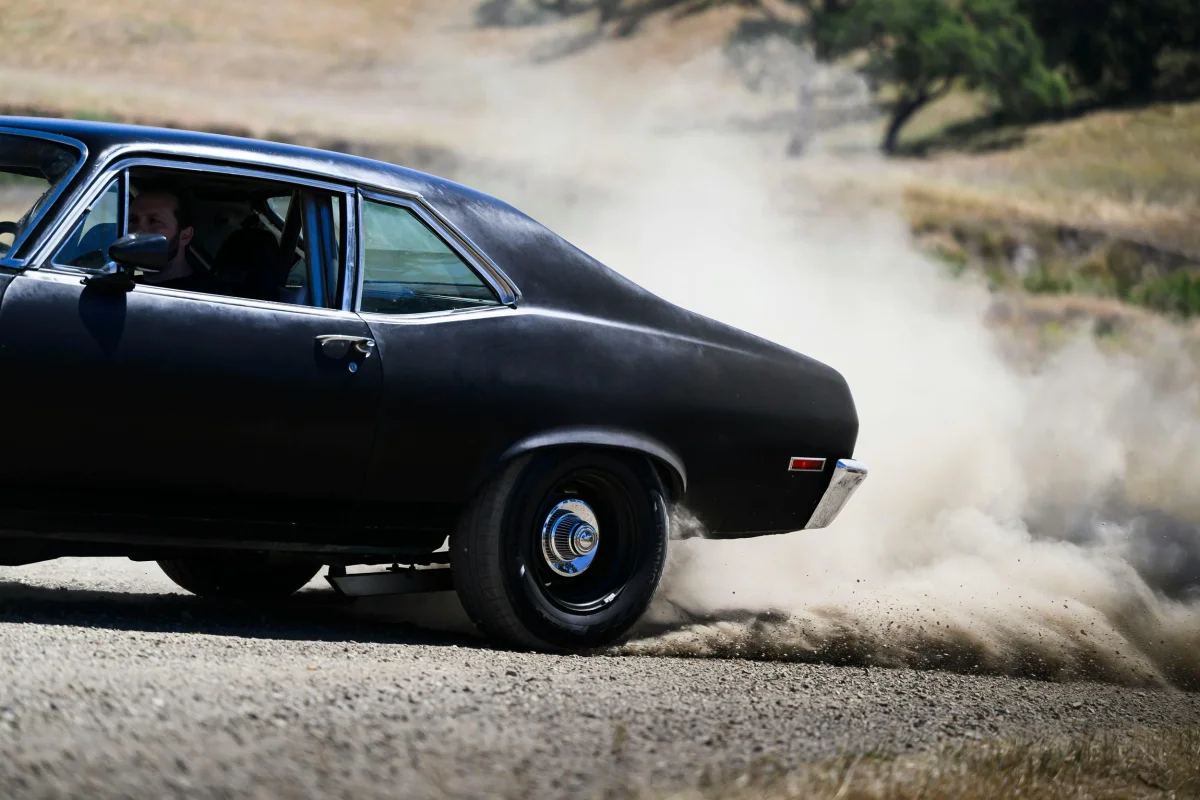
The transmission is a GM four-speed automatic with overdrive, controlled by a metal B&M handle. Hooker preferred automatics for stunt driving because they leave a driver freer to focus on the car’s movement. On the road, the Nova moves away calmly. Open the throttle, though, and it spins its rear tires through first and second gear without much effort.
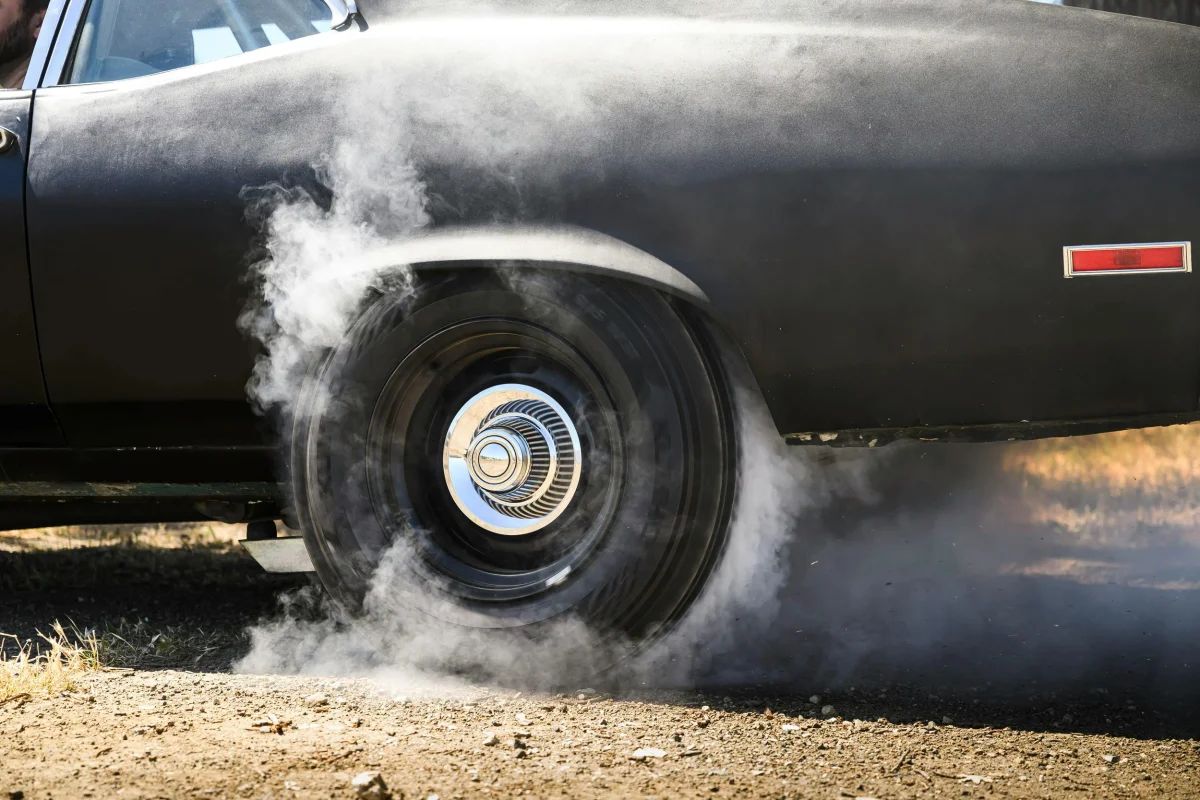
The steering needs some patience. There’s a vague patch around center, followed by light assistance as the truck-spec power steering takes effect. At speed, the Nova tracks straight and responds easily to small adjustments. Its brakes call for a firmer push before the drums bite, so the driver needs to leave room to slow down.
Under the hood, the small-block Chevrolet delivers familiar V-8 strength; the more distinctive part of the recipe is how little car it has to move. A stock Nova weighed a little over 3,000 pounds. The film car’s stripped interior and 10-gallon fuel cell bring its weight closer to 2,800 pounds. That low mass helps explain the quick response and tire-spinning character, while the reduced weight over the rear axle contributes to its behavior in corners.
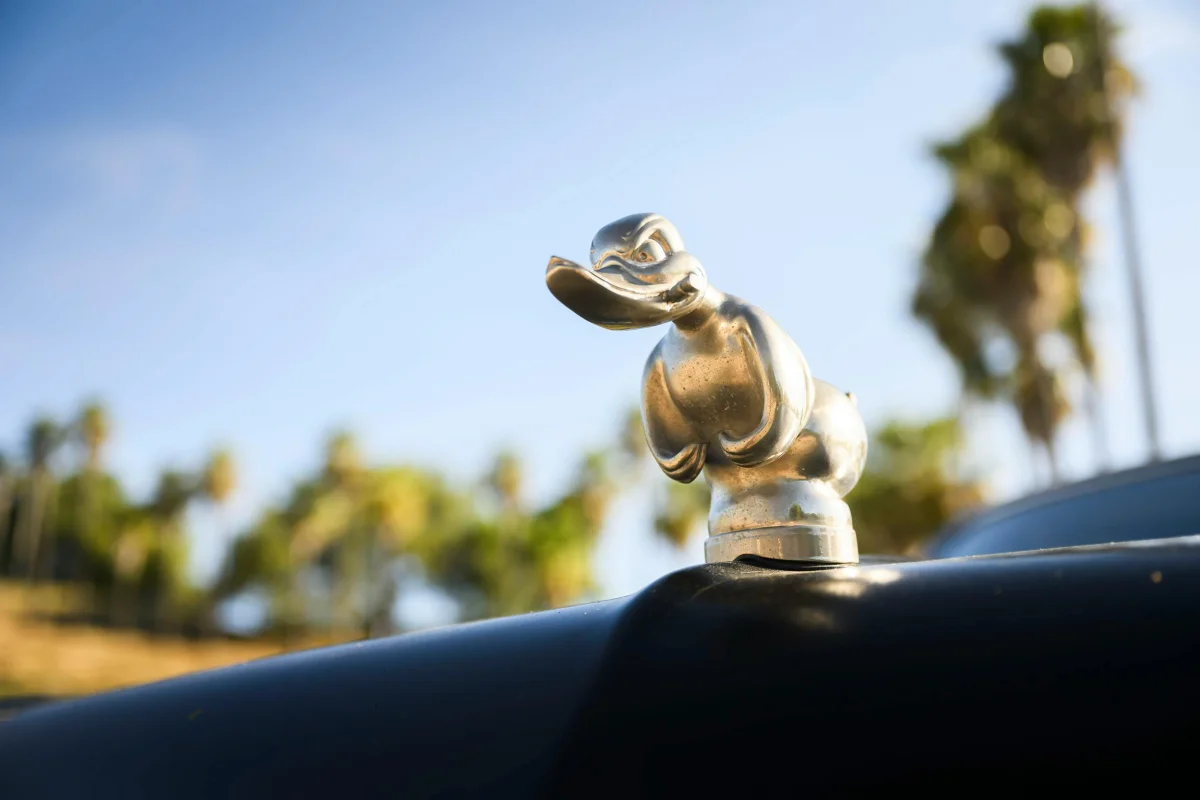
Novas were popular with street racers in part because their V-8 engines were easy to modify and the cars were relatively light. Their understated shape helped, too. In 1969, Hot Rod magazine praised the Nova SS 396’s lack of visual identification and described the return of the sleeper car. The Death Proof version turns that idea inside out: its black finish, skull graphic and angry duck hood ornament make its intentions anything but subtle.
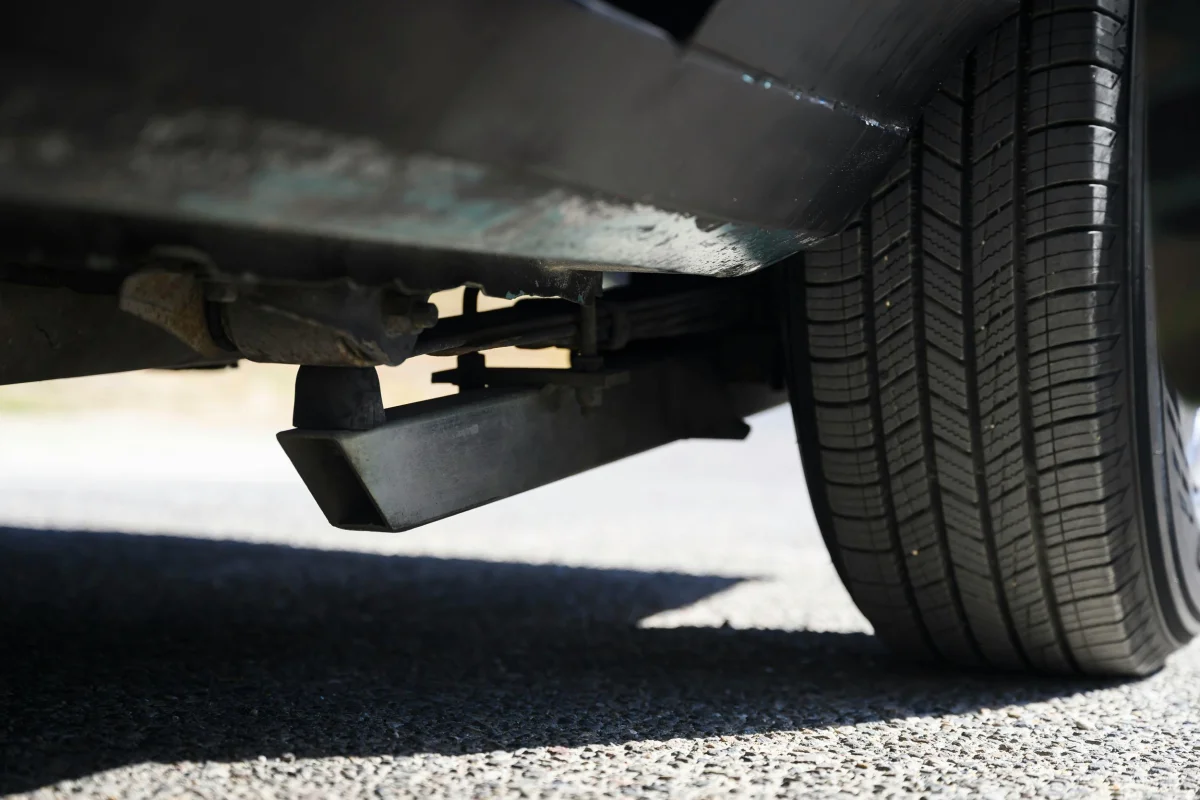
The suspension remains largely standard, and the rear traction bars are the most conspicuous addition. They look at home on a period drag car, though the production crew fitted them mainly for the visual effect. On winding roads, the combination of modest rear weight and older suspension behavior can make weight transfer abrupt, particularly if the transmission shifts while the driver is cornering.
Kanan’s advice is to avoid asking too much of the front tires, brake with the left foot when approaching corners and avoid suddenly lifting off the throttle while steering. A quick change in load can unsettle the rear. These are useful reminders that the Nova’s stunt identity doesn’t make it effortless to drive; it makes preparation and smooth inputs more important.
For all its sinister screen persona, the car feels approachable once its quirks are understood. The engine is eager, the transmission is easy to manage, and the car settles into a straight line at speed. But the hard brakes, indirect steering and sensitive weight transfer belong to an older, lightly built machine. It rewards a driver who pays attention rather than one who assumes the movie’s stunts will translate into casual road manners.
That distinction is central to Hooker’s view of stunt work. Asked whether stunt performers have a death wish, he says the opposite: “I have a life wish. A survival wish. At no point in my career did I ever do anything, ever, that I thought would kill me. It was all about preparation.” Gayle describes the work as a team effort, with weeks of planning behind seconds of action. Everyone has to understand the sequence and their part in it.
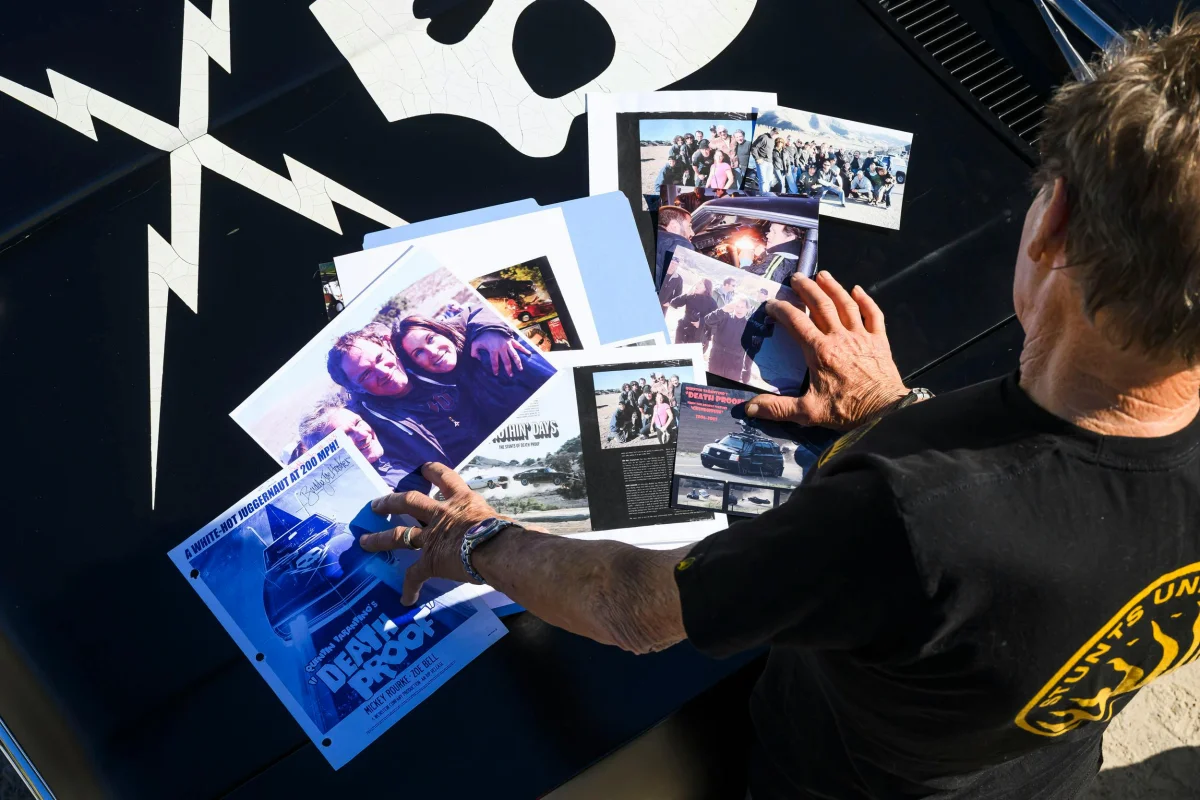
The family’s memories of Death Proof extend beyond the car’s stunts. Gayle and the boys visited the set, and the Nova became a way to understand what their father did for a living. Later, Kanan and Houston made a school movie in which the car protected them. To audiences, it’s the villain’s signature ride; for the Hookers, it represents time together and a glimpse into Buddy Joe’s work.
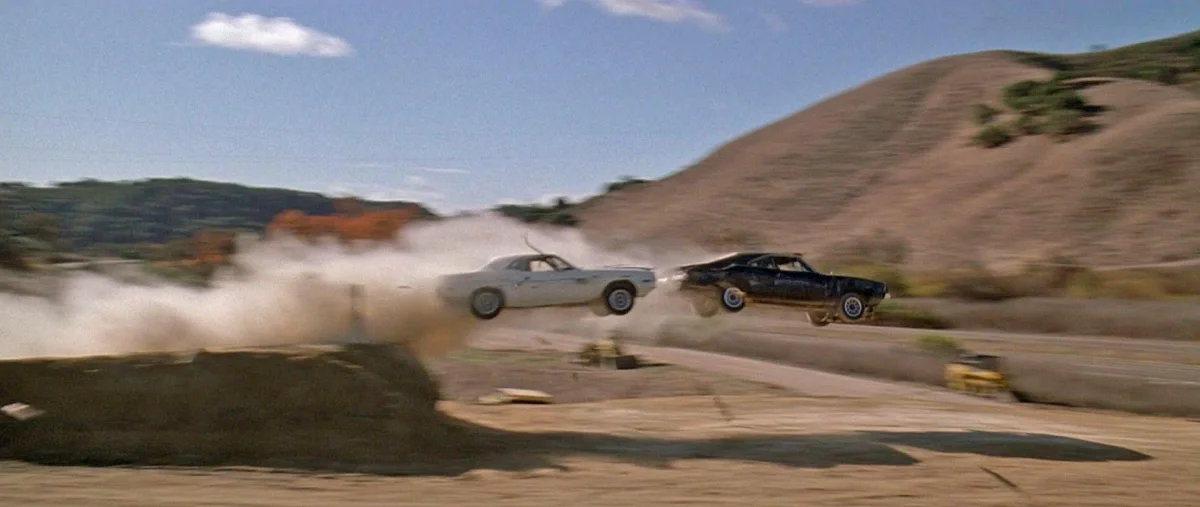
The Santa Ynez roads bring Hooker back to the film’s final chase, which he remembers as some of the more nerve-racking work in the picture. He drove the black Charger, with stunt driver Tracy Keehn-Dashnaw at the wheel of the Challenger and Zoë Bell on its hood. Bell had a cable attached to her harness, routed through pulleys so an effects crew member in the back seat could help create the look of her being thrown around.
Hooker says Tarantino wanted the cars to make forceful contact. The old vehicles had been prepared for the work, but their age left some uncertainty about parts such as axles and wheels. Hooker was cautious about hitting the Challenger harder, because damage to a front wheel could have sent it flipping. Bell, he says, made the impacts look more violent than they were, and her performance helped sell the scene.
He also credits Keehn-Dashnaw as one of the strongest drivers he had worked with. The pair developed a shared sense of timing, learning each other’s moves as they responded to Tarantino’s requests for greater speed and harder contact. For the final crash, Hooker had to approach at a steady pace while Keehn-Dashnaw brought the Challenger down the ridge, timing the meeting point for the camera.
A wet patch changed the plan. The cars spun when they collided, an unplanned result that Tarantino liked. The crew then had to reproduce the accident deliberately for the cameras. That moment captures the balance behind practical screen action: a surprise can become part of the scene, but repeating it still calls for coordination between the drivers and crew.
Stunt drivers rarely become household names, even when their work supplies the physical reality that makes a scene convincing. Hooker’s career shows the range of that work, from horse and motorcycle stunts to precision driving and car rolls. In Death Proof, the Nova is more than a prop: it’s a car that had to start, move, slide and endure the same physical forces the film depicts.
The Hookers still treat the Nova as a family possession, and say they can’t imagine selling it. Its value to them comes from its history: the production, the boys’ teenage years, and the unusual way it let them see their father’s professional world. It’s a rare film car whose story continues through the people who kept it running.
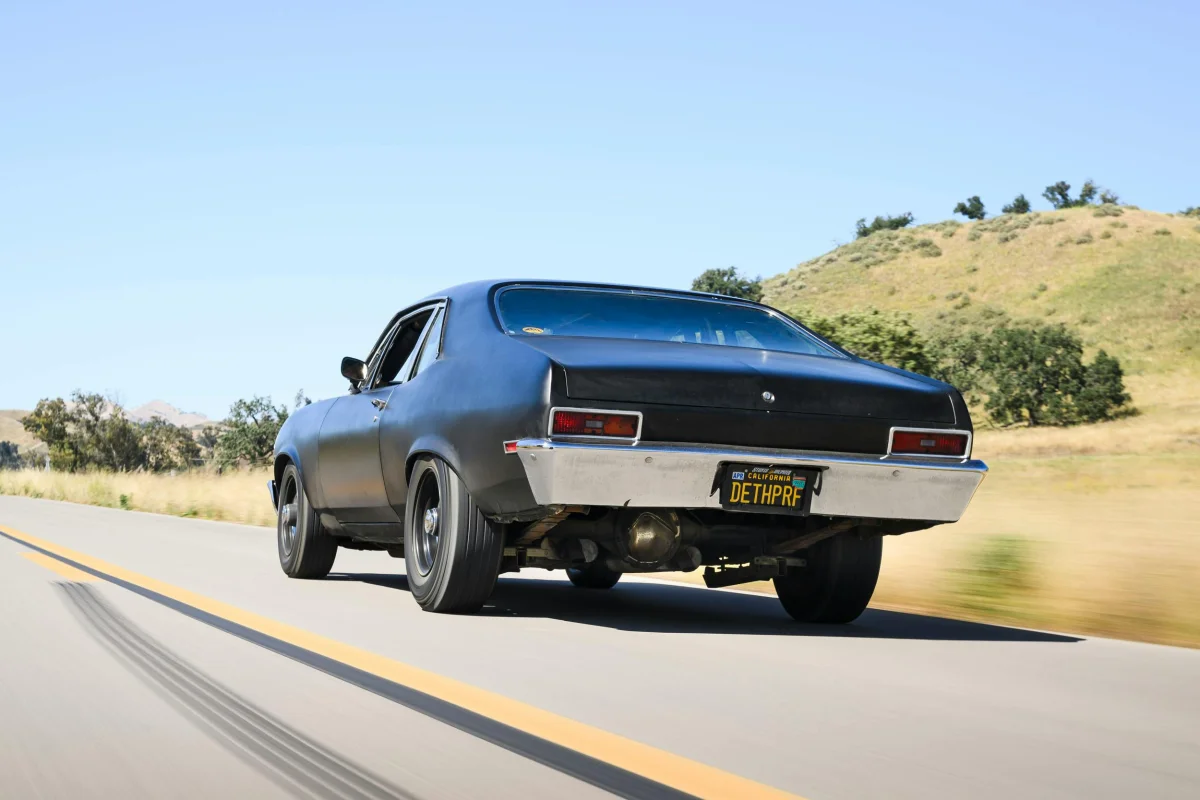
Driving the Nova changes how its screen presence reads. The cage, fuel cell, stripped cabin and blunt mechanical controls turn movie menace into practical engineering choices, while the 383 and low weight explain why the car feels so eager. Its rough road manners also make clear that a stunt car is built around a specific job, not the comfort and ease expected of a modern daily driver.
For Hooker, the car remains tied to a film that demanded real driving and to a career built around careful preparation. For his family, it carries memories that no replica could provide. The Jesus survived the production’s most destructive work, and its best-known stunt car found a home with the driver who knew exactly what it could do.
This story first appeared in the Movies and Cars digital issue of Hagerty Drivers Club magazine. Visit Hagerty’s magazine page for details about membership and its automotive coverage.
Read more about the Hagerty Movies and Cars Celebration and its coverage of cars and film.